Real Estate NFT Marketplaces: How Property Tokens Trade
A real estate NFT marketplace lists property tokens for sale, from whole buildings to small fractional shares. Here is how trading works and what to check first.
On this page
Short answer
A real estate NFT marketplace is a market where property is bought and sold as non-fungible tokens that represent ownership shares or rights in a building. Buyers browse listings, pay with cryptocurrency or a card, and receive tokens in a wallet, while the legal title is held by a company or trust. The marketplace handles listing, payment and transfer, but the legal paperwork behind the token still matters most.
What is a real estate NFT marketplace?
A real estate NFT marketplace is an online market where property is listed, bought and sold as non-fungible tokens, each token standing for a share of a building or a right tied to it. Instead of buying a whole flat or office, a buyer can buy a fraction of one, and the tokens can be traded again on the same marketplace.
The idea combines two older concepts. Fractional ownership lets many people share one asset, and a marketplace gives those shares a place to trade. The NFT part adds a public, tamper-resistant record of who holds which tokens, so ownership can be checked without asking a single company. That record is what makes the marketplace different from a simple crowdfunding page.
Most listings fall into two groups: whole-property tokens, where one token equals one property, and fractional tokens, where a property is split into many small shares. Fractional listings are the more common kind, because they open property investment to buyers with smaller budgets.
Trading is only one half of the story. The other half is the legal structure behind the token, which decides what the buyer actually owns. A token on its own is not a title deed, and that gap is where buyers need to look hardest. For the basics of how property becomes a token, see what real estate tokenization is.
How does buying property on an NFT marketplace work?
Buying on a real estate NFT marketplace follows a fixed sequence, and each step has a check worth doing before money moves. The steps are similar across marketplaces, though the details of payment and custody vary.
- Browse and verify the listing. Check the property documents, the valuation, the legal structure and who the issuer is.
- Set up a wallet and pass checks. Most regulated marketplaces require identity verification before you can buy.
- Place an order. Buy at the listed price or make an offer, then pay with cryptocurrency or a card where the marketplace supports it.
- Receive the tokens. The tokens move to your wallet once payment clears, and the marketplace records the transfer.
- Hold or resell. You can hold for rental income, if the structure pays it, or list the tokens for resale on the same marketplace.
Settlement is usually faster than a traditional property purchase, because the token transfer settles on-chain in minutes. The legal transfer, where one exists, still follows local property law and can take much longer. That split between fast token settlement and slow legal settlement is the most important thing to understand before buying.
What are fractional shares in a property NFT?
Fractional shares split one property into many small tokens, so a buyer can own a slice of a building instead of the whole thing. The share size decides who can buy in and how easily the tokens trade afterwards.
| Share size | Typical buyer | What changes |
|---|---|---|
| Whole property | One buyer or fund | Single owner, slow resale |
| Large shares, 5 to 10 percent | Small funds, wealthy buyers | Few holders, thin trading |
| Small shares, under 1 percent | Individual buyers | Many holders, easier resale |
| Micro shares, token under $100 | Retail buyers | Widest access, most holders |
Smaller shares mean more buyers and livelier trading, but also more holders to coordinate when a decision is needed, such as selling the building or approving a renovation. Most marketplaces solve this by giving the issuer or a manager the right to act, with token holders voting only on major decisions.
Rental income, where the structure pays it, is usually split in proportion to tokens held and paid in stablecoins or to a bank account. The marketplace should state the payment currency, the schedule and the fees before you buy. If it does not, treat that as a warning sign.
Who holds the legal title?
The legal title to a tokenised property is usually held by a company, a trust or a special purpose vehicle, not by the token holders directly. The tokens represent shares in that holding entity or a claim on its income, and the exact rights depend on the documents, not on the token itself.
This structure exists because property law in most countries does not yet recognise a token as a title deed. The holding entity owns the building, and the token holders own a stake in the entity. That works well when the documents are clear, and it fails when they are vague about who can sell, who gets the rent and what happens if the issuer disappears.
Before buying, read the offering documents and check three things: which entity holds the title, what rights the token actually gives, and which country's law governs the arrangement. A marketplace that cannot answer those questions in plain language is not ready for your money. For a guide to building the underlying structure, see how to tokenize real estate.
What fees and costs should you expect?
Fees on a real estate NFT marketplace fall into three groups, and they vary widely between platforms, so compare them before choosing where to buy. No single fee schedule covers the whole market.
| Fee | When it applies | What to check |
|---|---|---|
| Listing or minting fee | When a property is listed | Who pays it, buyer or issuer |
| Trading fee | Each buy or sell | Percentage and minimum charge |
| Management fee | Ongoing, usually yearly | What it covers and how it is charged |
| Network fee | Each on-chain transfer | Which chain, and how busy it is |
| Withdrawal fee | Moving funds or tokens out | Flat fee or percentage |
Management fees deserve the closest look, because they eat into rental income year after year. A fee that looks small as a percentage can take a large slice of a modest yield, so ask for the fee in plain money terms on a typical holding before you commit.
Example (hypothetical): buying a share of a flat
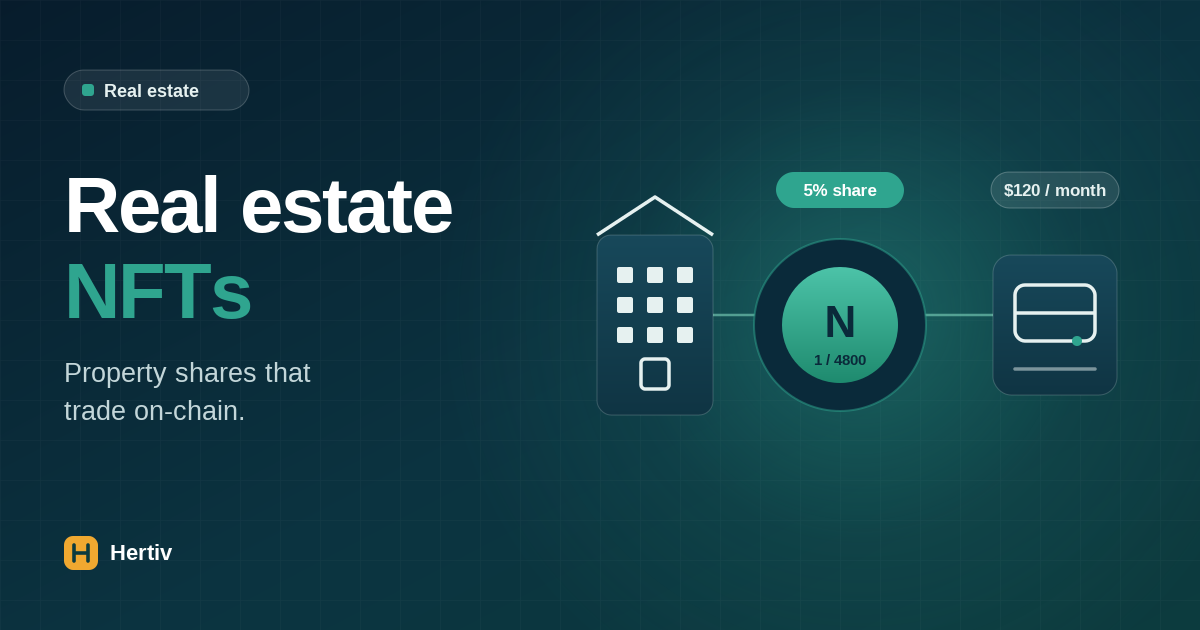
Example (hypothetical): a flat worth $480,000 is listed on a real estate NFT marketplace, split into 4,800 tokens at $100 each. A buyer takes 240 tokens, paying $24,000, which is a 5 percent share of the flat.
The flat earns $2,400 a month in rent. Split across 4,800 tokens, each token earns $0.50 a month, so the buyer's 240 tokens pay $120 a month before fees. After a management fee of $10 a month on that holding, the buyer receives $110 a month.
A year later the buyer sells the 240 tokens at $105 each, receiving $25,200 before trading fees. The gain on the tokens is $1,200, plus $1,320 in rent received over the year. The arithmetic is simple; the hard part is checking that the rent, the fees and the title documents all say what the listing claims.
What are the common mistakes?
The most common mistakes in real estate NFT marketplaces are treating the token as a title deed, ignoring the fee schedule, and buying a listing whose legal documents were never read.
- Assuming the token is the title. In most countries the token is a share or a claim, and the title sits with a holding entity. Read the documents.
- Ignoring thin trading. A token with few buyers can be hard to sell, even if the property itself is sound.
- Skipping fee maths. Management and trading fees can take a large slice of a modest rental yield.
- Trusting the listing alone. Check the valuation, the issuer and the legal structure independently where you can.
- Forgetting tax. Token income and token sales can be taxed differently from direct property, so check local rules first.
For how these marketplaces fit the wider market, NFT marketplace use cases cover what people actually buy and sell, from art to game items.
Key takeaways
- A real estate NFT marketplace trades property tokens, from whole buildings to small fractional shares
- The legal title usually sits with a holding company or trust, not with the token itself
- Smaller shares mean easier resale but more holders to coordinate on big decisions
- Management fees can take a large slice of a modest rental yield, so check them in money terms
- Fast token settlement does not mean fast legal settlement under property law
- Read the offering documents, the title structure and the fee schedule before buying
Frequently asked questions
Is a property NFT the same as owning the property?
Usually not. In most countries the legal title is held by a company or trust, and the token represents a share in that entity or a claim on its income. The exact rights depend on the offering documents, so read them before buying rather than assuming the token is a deed.
Can I earn rent from a property NFT?
Yes, where the structure pays it. Rental income is usually split in proportion to tokens held and paid in stablecoins or to a bank account, after management fees. The marketplace should state the currency, the schedule and the fees before you buy.
How liquid are real estate NFTs?
Less liquid than crypto tokens and often less liquid than the listing suggests. Small fractional shares with many holders trade more easily than large shares, but a thin market can still leave you waiting for a buyer. Check recent trading volume on the listing.
What happens if the marketplace closes?
It depends on the legal structure. If the title is held by an independent entity and the tokens are in your wallet, your claim should survive, but trading and rent collection may stop until a new operator steps in. This is why the holding structure matters.
Do I need a crypto wallet to buy?
Usually yes, because the tokens are delivered to a wallet. Some marketplaces accept card payments and hold the tokens in a custodial wallet for you, which is simpler but means you do not control the keys yourself.
Are real estate NFT marketplaces regulated?
It varies by country. Some property tokens are treated as securities and fall under financial regulation, while others sit in a grey area. Check how the marketplace is licensed in your country and whether the offering follows local securities rules.


