AI
ChatGPT for IT Teams: Where It Helps and Where It Does Not
ChatGPT helps IT teams triage tickets, draft runbooks, explain errors and write scripts, but it cannot see your systems or approve changes. Here is where it fits.
Page 4 of 221.
5282 posts · page 4 of 221
ChatGPT helps IT teams triage tickets, draft runbooks, explain errors and write scripts, but it cannot see your systems or approve changes. Here is where it fits.
ChatGPT helps travellers plan trips, helps operators write guides and answer questions, and supports visitors during the trip. Here is where it works and its limits.
ChatGPT can read invoices and flag signs of fraud such as duplicate billing, altered amounts and fake vendors. Here are the cases it catches and what to verify.
ChatGPT works as a general NLP tool for classification, extraction, summarisation and translation. Here is what it does well and where it still needs a human check.
Composite AI combines several AI techniques — machine learning, rules, knowledge graphs and generative AI — in one system. Learn when the mix beats a single model.
A computer-using agent model reads your screen, decides what to click and types like a person. How CUA models work, which ones exist, and how to run one safely.
Data extraction software pulls structured data from documents, emails and web pages into automated workflows. Here are 8 tools to compare.
Computer vision is what lets AR and VR headsets track where you are, where your hands are, and where virtual objects should sit. Here is how the tracking works.
Environmental perception is how a machine builds a live picture of its surroundings from cameras and sensors. Here is how the perception stack works.
Computer vision for obstacle detection lets machines see what stands in their way and stop or steer around it. Here is how the system works and where it is used.
Computer vision helps self-driving cars see lanes, vehicles and pedestrians, working with radar and lidar. Here is how the perception stack works.
Computer vision tracks punches, speed and footwork in boxing, giving coaches numbers for training. Here is how it works and where it falls short.
Computer vision inspects, sorts and tracks food on the line, catching defects, foreign objects and labelling errors. Here is where it helps and how teams start.
Decision automation tools turn routine ops choices into rules and AI: approvals, routing and triage. Here are 8 tools to compare, with what each one does best.
Computer vision in robotics turns camera images into movement: navigation, grasping, inspection and tracking. Here is how each job works and what a robot needs.
Computer vision in the metaverse tracks avatars, hands and rooms so a virtual world can react to real people. Here is how the pieces work and where they fall short.
Computer vision spots, counts and reads vehicles for traffic, tolling and parking. Here is how vehicle detection works, where it is used, and what a system needs.
Desktop apps need test tools that click real buttons and read real windows. Here are 8 desktop automation testing tools compared, with what each one does best.
Computer vision tags footage, tracks players and picks thumbnails across film, sport and streaming. Here is where it works in media, and what it needs.
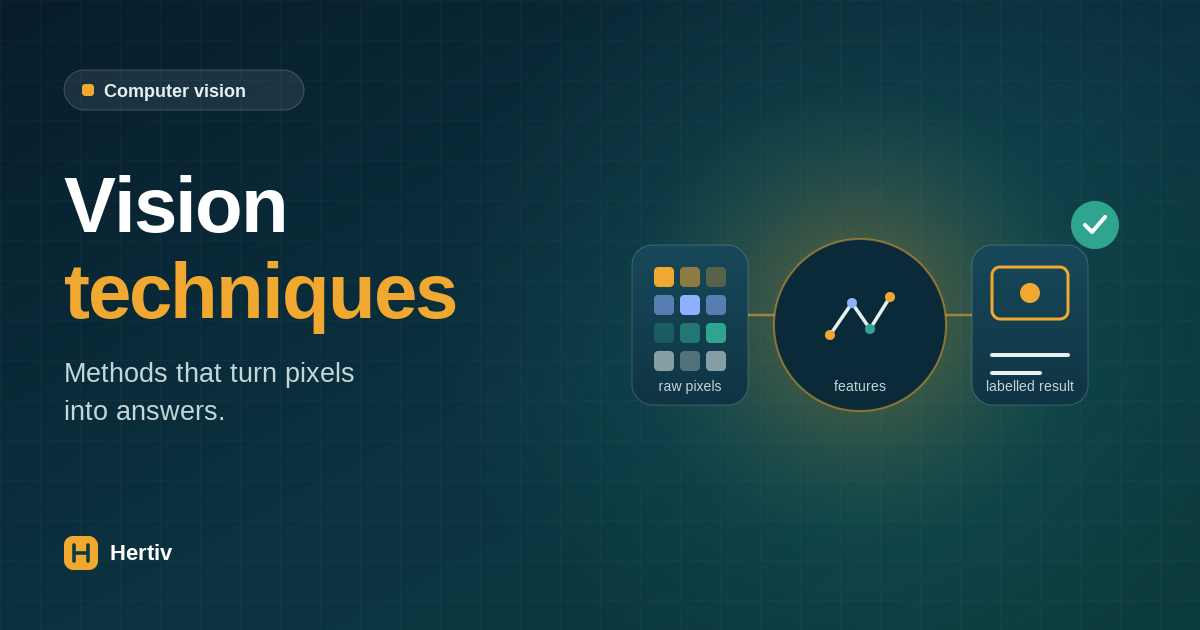
Computer vision techniques range from edge detection to deep neural networks. Here is how the main methods work, when each one fits, and how to pick the right one.
Confidential AI runs models inside hardware-protected enclaves so data stays encrypted while it is used. Learn how it works, where it fits, and what to adopt first.
Continuous AI education means learning in small, regular steps: courses, docs, papers, communities and real projects. Here is how to build the habit.
Experiment tracking software records runs, metrics and models so ML teams can compare and repeat results. Compare eight tools, from MLflow to DVC Studio.
Quantum computing may speed up parts of generative models, while generative models help design quantum circuits. Here is where that convergence stands.
No posts on this page match. Use site search (Ctrl K) to search every post.
A senior engineer reads every request and replies within one business day with questions, a rough range, or a call link.