ICO Regulatory Challenges: What Teams Run Into
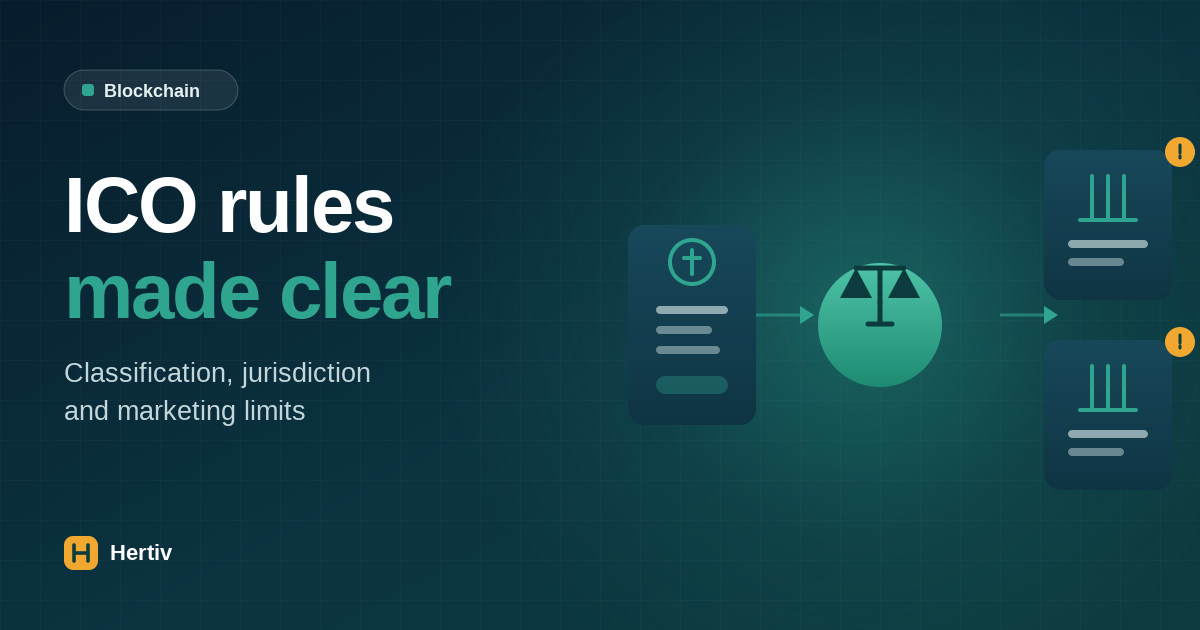
ICO regulatory challenges start with one question: is your token a security? Here are the classification, jurisdiction, KYC and marketing problems teams face.
On this page
Short answer
ICO regulatory challenges are the legal problems of selling tokens: whether the token counts as a security, which country's rules apply, what identity checks investors must pass, and what the team may promise in marketing. They matter because a sale that ignores them can face enforcement, fines or refund demands after the money is raised, even if the product itself works.
What are ICO regulatory challenges?
ICO regulatory challenges are the legal problems a team faces when it sells tokens to raise funds: whether the token counts as a security, which country's rules apply, what checks investors must pass, and what the team can say in public. The sale itself is quick; the rules around it are not.
The hard part is that these challenges overlap. A token classed as a security in one country changes the marketing rules in another, and a weak identity check can turn a small compliance gap into an enforcement case. Teams that plan for the rules early spend less than teams that fix them after launch.
| Challenge | What it means | Where it bites |
|---|---|---|
| Security classification | Token may count as a regulated security | Fundraising and exchanges |
| Jurisdiction | Rules differ by country | Where to incorporate |
| KYC and AML | Identity and source-of-funds checks | Onboarding investors |
| Marketing | Limits on promises and claims | Website and social posts |
| Enforcement | Regulators can act after the sale | Fines and refunds |
| Ongoing duties | Reporting and record-keeping | After the raise closes |
The launch steps themselves are covered in how to launch an ICO legally, which walks through the process in order.
Is your token a security?
The first question is whether your token counts as a security, because the answer decides which rules apply. In the United States, regulators apply the Howey test, which asks whether buyers put in money expecting profits from the work of others. In other countries the test differs, but the idea is the same: a token sold as an investment faces stricter rules than a token sold for use.
Most disputes come from the grey area in between. A token that starts as a way to pay for a service can look like an investment if it is marketed with promises of rising value. A token with a working product behind it is easier to defend than a token sold on a whitepaper alone.
Get a written legal opinion before the sale, not after. The opinion should state how the token is classed in each country where you plan to sell, and what changes would alter that view. A team that cannot explain its classification in one paragraph is not ready to sell.
Why is choosing a jurisdiction so hard?
Choosing a jurisdiction is hard because there is no single global rulebook for token sales. One country may treat your token as a security, another as a utility token, and a third may have no clear rule at all. The choice decides which regulator watches you, which licences you need, and which investors you may accept.
Teams often pick a jurisdiction for its reputation or its low fees and forget the practical questions: can you open a bank account there, can your investors legally buy from your home country, and will an exchange list a token issued there?
The safer approach is to pick the jurisdiction where your main investors live and where you can get clear written guidance, then limit the sale to the countries your lawyers have checked. Selling everywhere at once is how teams end up answering to a regulator they never planned for. The security question sits underneath this choice, which is why the ICO versus STO comparison is worth reading first.
What do KYC and AML checks actually involve?
KYC and AML checks are the identity and source-of-funds checks a team must run on its investors. They exist to stop token sales being used for fraud and money laundering, and most regulators now expect them even for small raises.
In practice the checks mean collecting identity documents, checking names against sanctions lists, and asking large investors where their funds came from. The work is usually done by a specialist provider, but the team stays responsible if the checks are weak.
The cost is real: checks slow onboarding, some investors drop out, and the provider charges per check. But a sale with no checks is the fastest route to an enforcement case, and exchanges will ask for the same records before they list the token. Budget for the checks as part of the raise, not as an afterthought.
What can you say when marketing an ICO?
Marketing an ICO is limited by rules on promises and disclosure. You can describe what the product does and what the token is for, but you cannot promise returns, imply a listing, or suggest the token's price will rise. Regulators read websites, social posts and chat groups, and they treat a promise in a chat the same as one in a whitepaper.
The safest marketing is factual: what the product does today, what the token is used for, who the team is, and what the risks are. A clear risk section is not a weakness; it shows the team understands its duties.
Keep records of everything published, including posts by community managers and influencers paid to promote the sale. If a regulator asks what was promised, the answer should come from your own records, not from memory. For the longer history of how token sales changed, see how token sales moved from ICOs to STOs.
Example (hypothetical): a team launches in two jurisdictions
Example (hypothetical): a team plans to raise funds from investors in two countries. Its lawyers advise it to treat the token as a security in the first country and as a utility token in the second, so it runs two different sales: a registered offer in the first and a public sale in the second.
The legal work takes 10 weeks and costs more than the team expected, but it finds one problem early: the planned marketing promises a listing on a named exchange, which the lawyers remove. The identity checks take each investor about 15 minutes; with 400 investors, that is 100 hours of checks, handled by a provider over three weeks.
The sale raises the planned amount, and six months later the regulator in the first country asks for records. Because the team kept its legal opinions, identity-check files and marketing copies in one place, it answers in a week instead of spending months reconstructing them.
What are the common mistakes?
The most common ICO regulatory mistakes are selling before the legal opinion, marketing with promises, skipping identity checks, and keeping no records.
- Selling tokens before a lawyer has classed them in each country where you plan to sell.
- Promising returns or a listing in marketing, even in a chat group.
- Skipping identity checks to speed up the sale.
- Choosing a jurisdiction for its fees instead of its rules and banking.
- Keeping no copies of marketing, legal opinions or investor checks.
For teams that want help setting up the legal and technical side of a token sale, blockchain consulting is the usual starting point.
Key takeaways
- Get a written legal opinion on your token before any sale
- Pick the jurisdiction where your main investors live
- Budget for identity checks as part of the raise
- Market facts only: no promised returns or listings
- Keep every legal opinion, check and marketing copy in one place
Frequently asked questions
Is an ICO legal?
It depends on the country and on how the token is classed. In most countries an ICO can be legal if it follows the local rules for securities, identity checks and disclosure. A sale that ignores those rules can face enforcement even if the product itself works, so get a legal opinion before you sell.
What is the Howey test?
It is the test United States regulators use to decide whether something counts as a security. It asks whether buyers put in money expecting profits from the work of others. If the answer is yes, the sale faces securities rules. Other countries use different tests, but the idea is similar.
Do small ICOs need KYC checks?
In most cases, yes. Regulators expect identity and source-of-funds checks even for small raises, and exchanges ask for the same records before listing a token. A specialist provider usually runs the checks, but the team stays responsible if they are weak.
Can I market an ICO on social media?
Yes, but the same rules apply as on a website: describe what the product does and what the token is for, and do not promise returns, imply a listing, or suggest the price will rise. Regulators read social posts and chat groups, so keep copies of everything published.
What happens if a regulator calls an ICO unregistered?
The regulator can order the sale stopped, demand fines, or require refunds to investors. The outcome depends on the country and the facts, but the risk is real even for teams that acted in good faith, which is why a legal opinion before the sale matters.
How long does ICO legal work take?
It usually takes weeks to a few months, depending on how many countries are involved and whether the token needs a registered offer. The work includes classification, jurisdiction choice, documents and identity-check setup, so start it before you set a sale date.