Blockchain for Real Estate Startups: Where It Actually Helps
Blockchain helps real estate startups raise funds, close deals faster and prove ownership. Here is where it pays, and where it is still more hype than help.
On this page
Short answer
Blockchain helps real estate startups by turning property into tradeable tokens, automating deals with smart contracts, and keeping ownership records that anyone can verify. The strongest uses are tokenized fundraising, faster closings and fractional investment; title records and data sharing help too, but only where the legal system accepts digital records.
What does blockchain do for a real estate startup?
Blockchain gives a real estate startup a shared, tamper-resistant ledger for property facts: who owns what, what was paid, and what conditions a deal must meet. Instead of each party keeping its own copy of the truth, everyone reads the same record, and changes are visible to all.
That matters in property because deals involve many parties who do not trust each other by default: buyers, sellers, lenders, brokers, notaries and registries. A shared ledger cuts the reconciliation work between them, which is where most delay and cost in a property deal sits.
| Use case | What changes | Who gains |
|---|---|---|
| Tokenized fundraising | Property split into tradeable tokens | Startups raising capital |
| Smart contract deals | Payment releases on agreed conditions | Buyers, sellers, agents |
| Fractional investment | Small investors buy a share, not a building | Retail investors |
| Title and records | Ownership history anyone can check | Buyers, lenders, registries |
| Rental and payments | Rent and deposits tracked on-chain | Landlords, property managers |
Blockchain does not remove the legal work. A token is only as good as the legal claim behind it, and a smart contract cannot force a court to accept it. Startups that succeed treat blockchain as a better record and settlement layer, not as a way around property law.
How does tokenization open up funding?
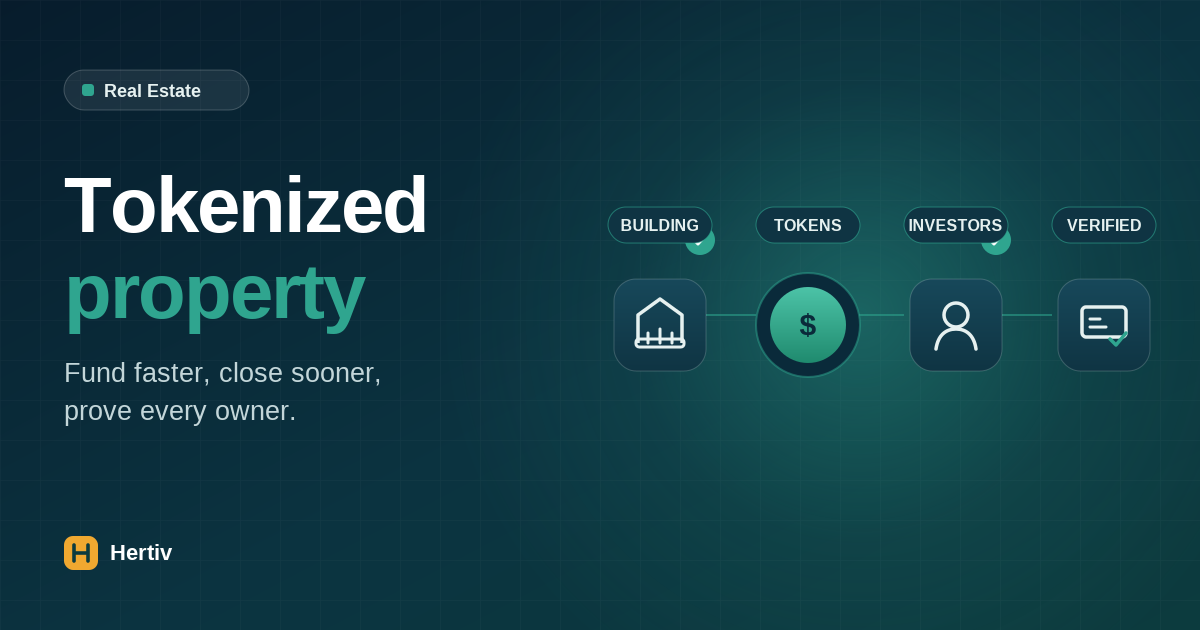
Tokenization opens up funding by splitting a property into many small tokens, each representing a share of the asset or its income. A startup that could not find one buyer for a whole building can instead sell thousands of tokens to many smaller investors.
The practical gain is a wider investor pool and faster settlement. Tokens can change hands without the paperwork of a full property sale, and rental income can be distributed to token holders automatically. That lowers the minimum investment and lets ordinary investors into deals that were once limited to funds.
The hard parts are legal and operational. Each token needs a clear legal structure, usually a company or fund that holds the property, and the startup must handle investor checks, tax reporting and secondary trading rules. For the mechanics, see what real estate tokenization is.
Tokenization also changes the fundraising story. Instead of pitching one fund, a startup pitches a product investors can buy in small amounts. That can speed up a raise, but it also creates ongoing duties: reporting, distributions and investor support that do not end at the sale.
How do smart contracts change a property deal?
Smart contracts change a property deal by encoding its conditions into code that releases money or documents only when those conditions are met. A deposit can be held in escrow and released when the inspection passes, or a rental payment can split automatically between owner, manager and lender.
The gain is fewer intermediaries and less waiting. Escrow agents, manual checks and paper trails shrink when the contract itself enforces the agreed steps. For a startup handling many small deals, that automation is the difference between a process that scales and one that does not.
But code is rigid where property deals are flexible. A late inspection, a disputed repair or a changed closing date all need human handling, so contracts must include pause, dispute and amendment paths. A contract without them will block a deal at the worst moment.
Security review is non-negotiable. A bug in a contract that holds deposits can lock or lose funds, so startups commission an independent audit before launch. See smart contracts in real estate for the common patterns and risks.
What about title records and trust?
Title records are where blockchain's promise meets the legal system. A shared ledger can hold a property's full ownership history, so a buyer can check the chain of title in minutes instead of waiting days for a registry search. That cuts due diligence time and surfaces problems earlier.
The limit is that a ledger entry is only a record, not a legal title, unless the land registry accepts it. Most registries still hold the authoritative record off-chain, so blockchain title tools work best as a fast, verifiable copy that points back to the official source.
Fraud prevention is a real gain even without registry integration. Duplicate sales and forged documents are harder when every transfer is logged and visible, and lenders can verify a property's history before approving a loan. That matters most in markets where title fraud is common.
Startups should be honest about this boundary with customers. Claiming a token is the title when the registry disagrees will break trust and invite legal trouble. The pitch should be faster checks and clearer history, not a replacement for the registry.
How do you start using blockchain in a property startup?
You start by picking one narrow problem where a shared record or automated payment clearly beats the current process, then proving it on a small set of deals before expanding.
- Pick the use case. Tokenized fundraising, automated escrow or fractional investment are the usual first picks. Choose the one with a clear payer and a measurable saving.
- Sort the legal structure. Work with a lawyer to define what a token represents, who can buy it, and how income and voting work.
- Build the minimum ledger. Record ownership, payments and deal conditions on-chain, and keep legal documents linked to the records.
- Run a pilot on real deals. Tokenize one property or automate escrow for a handful of transactions, with staff watching every step.
- Measure and expand. Track time to close, cost per deal and investor satisfaction, then extend to the next property or use case.
The platform choice matters less than the legal and operational design. A well-run pilot on a standard chain teaches more than a custom chain built before the first deal closes. For the build steps, see how to tokenize real estate.
Example (hypothetical): a startup tokenizes one rental building
Example (hypothetical): a startup buys a rental building valued at $2,000,000 and tokenizes it into 20,000 tokens at $100 each. It sells 12,000 tokens to investors, raising $1,200,000, and keeps 8,000 tokens itself.
The building earns $120,000 a year in net rent. Divided across 20,000 tokens, that is $6 per token per year. An investor holding 500 tokens receives $3,000 a year, paid in quarterly slices of $750.
When an investor sells, the tokens move on-chain in minutes, while the legal ownership of the building stays with the company that holds it. The startup charges a 1 percent annual management fee on the token value, which is $20,000 a year at full valuation.
The numbers only work if the legal structure is sound and the rent is real. Tokenization makes the investment divisible and tradeable; it does not make a bad building a good one, and the startup must still manage tenants, maintenance and reporting.
What are the common mistakes?
The most common mistakes are treating a token as a title, skipping the audit, and building a platform before proving one use case on real deals.
- Confusing tokens with title. A token is a claim on a legal structure, not the land registry entry.
- Skipping the smart contract audit. Unreviewed code holding deposits is a loss waiting to happen.
- Ignoring secondary trading rules. Tokens that cannot legally change hands trap investors.
- Building before piloting. A full platform without a proven deal flow burns cash and time.
- Overpromising liquidity. Small token markets can be thin, so exit may take longer than the pitch suggests.
Teams that want help scoping the platform can start with real estate tokenization platform development, which covers the legal and technical pieces together.
Key takeaways
- Blockchain gives property startups a shared ledger for ownership, payments and deal conditions
- Tokenization widens the investor pool by splitting a property into small tradeable shares
- Smart contracts automate escrow and payouts, but need dispute and amendment paths
- Title records on-chain speed up checks, yet the land registry still holds the legal title
- Start with one pilot property and measure time to close and cost per deal
- A token is a claim on a legal structure, not a replacement for property law
Frequently asked questions
What is blockchain in real estate?
Blockchain in real estate is a shared, tamper-resistant ledger that records property ownership, payments and deal conditions. Startups use it to tokenize property, automate deals with smart contracts, and let buyers verify a property's history without waiting on paper records.
How does real estate tokenization work?
A property is placed in a legal structure such as a company or fund, then split into digital tokens, each representing a share of the asset or its income. Investors buy tokens instead of the whole property, and rental income can be distributed to token holders automatically.
Can anyone buy a tokenized property share?
It depends on the legal structure and the market. Some offerings are open to any investor, while others are limited to accredited or professional investors. The startup must run identity checks and follow local securities rules before selling tokens.
Do smart contracts replace lawyers in property deals?
No. Smart contracts automate agreed steps such as holding a deposit or splitting rent, but lawyers are still needed for the legal structure, the contracts themselves, and disputes. Code handles the routine; people handle the exceptions and the law.
Is a blockchain title the same as a legal title?
Not usually. Most land registries still hold the authoritative title off-chain, so a blockchain record is a fast, verifiable copy that points back to the official source. A token is a claim on the legal structure holding the property, not the registry entry itself.
What does it cost to tokenize a property?
Costs vary with the legal setup, the platform and the audit, so most startups get a scoped quote rather than a fixed price. Typical cost items are legal structuring, smart contract development and audit, platform fees, and ongoing reporting. See a vendor site for current pricing.


