Asset Tokenization: Market Opportunities and Key Trends
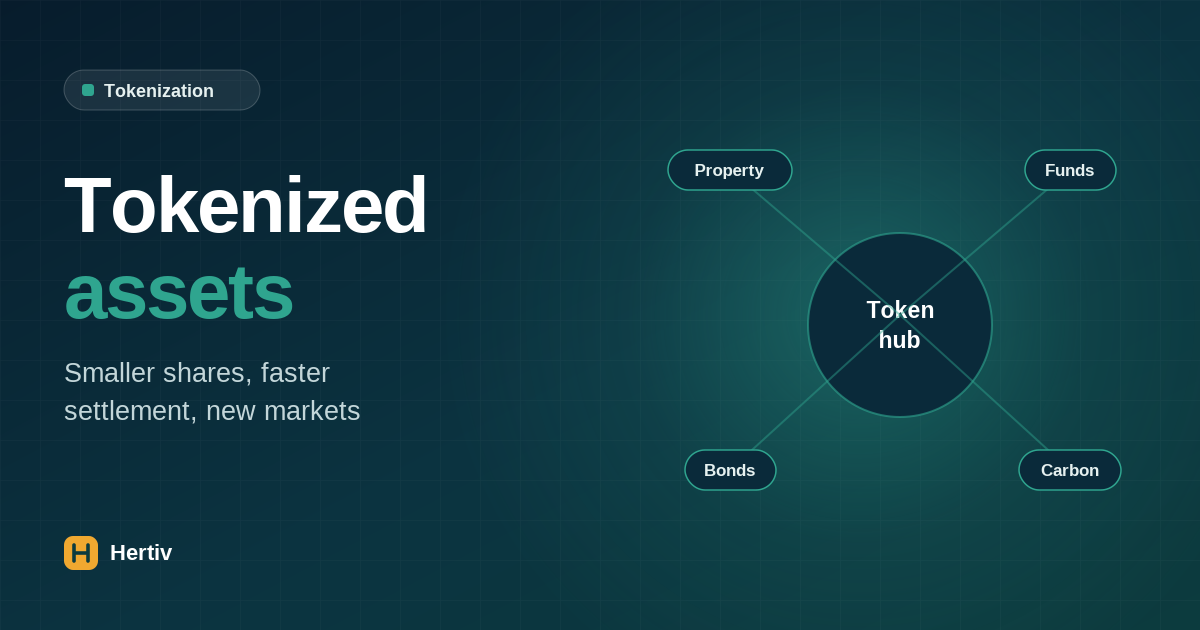
Asset tokenization turns real assets into digital tokens, opening smaller investments, faster settlement and new markets for funds, property and bonds.
On this page
Short answer
Asset tokenization turns ownership of a real asset into digital tokens on a ledger. Each token stands for a share of the asset, and it can be traded, split or used as collateral. The opportunity is not the token itself, but what it changes: smaller investment sizes, faster settlement, and markets for assets that were hard to buy or sell before.
What opportunities and trends shape asset tokenization?
Tokenization matters because many valuable assets are hard to divide and slow to sell. A building, a fund or a bond can take weeks to transfer, and the minimum investment is often high. Tokens change the mechanics: the asset stays where it is, while the tokens that represent it move in minutes.
The trends below cover the asset types where tokenization is furthest along, and the shifts that decide whether it grows: clearer rules, better custody, and settlement that works with existing markets. How tokenization works explains the mechanics behind these trends.
| Trend | Asset type | What changes | Who it helps |
|---|---|---|---|
| Fractional property | Real estate | Smaller minimum investment | Smaller investors |
| Tokenized funds | Investment funds | Faster subscriptions | Fund managers |
| Tokenized bonds | Government and corporate bonds | Faster settlement | Issuers and buyers |
| Carbon credit tokens | Carbon credits | Traceable ownership | Buyers and registries |
| Private equity access | Private funds | Lower entry size | Wealth managers |
| Art and collectibles | Art, wine, cars | Shared ownership | Collectors |
| Tokenized gold | Gold and commodities | 24-hour trading | Traders |
| Stablecoin settlement | Cash leg | Same-day payment | All token markets |
Each trend below explains the opportunity, the catch, and who should care. None of them needs a market forecast to judge: the test is whether the token makes the asset easier to buy, sell or settle than it was before.
Property and funds: fractional real estate and tokenized funds
1. Fractional property: best for smaller real estate investments
Fractional property splits a building into tokens, so an investor can buy a small share instead of the whole building. The rent is shared in proportion to the tokens held, and the tokens can be sold to another investor without selling the building.
It suits investors who want property exposure without a large deposit. The gain is access, but the tokens are only as good as the legal structure behind them, and a buyer must check who holds the title.
- Pros: smaller minimum investment, shared rental income, tradable shares
- Cons: legal structure matters, secondary trading is still thin
2. Tokenized funds: best for faster fund subscriptions
A tokenized fund puts fund shares on a ledger, so an investor can subscribe and redeem through a token instead of paper forms. The fund manager keeps the same portfolio, but the admin work around it gets faster.
It suits fund managers with many small investors. The gain is less paperwork and faster settlement, but the fund must still follow the same rules as a normal fund, and the token does not change that.
- Pros: faster subscriptions, less admin, same fund rules
- Cons: needs licensed custody, rules vary by market
Debt and climate: tokenized bonds and carbon credits
3. Tokenized bonds: best for faster bond settlement
A tokenized bond is a bond issued on a ledger, so the buyer, the seller and the payment settle in the same step. Traditional bonds settle days after the trade, tying up cash in between.
It suits issuers who want a shorter settlement cycle. The gain is speed and a clear record, but the bond must be listed and traded somewhere, or the token has no market to sell into.
- Pros: same-step settlement, clear ownership record, less cash tied up
- Cons: needs a trading venue, rules differ by country
4. Carbon credit tokens: best for traceable climate credits
A carbon credit token represents one credit on a ledger, with its source and history attached. Buyers can check that the credit exists, that it has not been sold twice, and that it was retired after use.
It suits companies buying credits to meet climate targets. The gain is trust in the record, but the token is only as good as the registry behind it, and a bad credit does not become good by being tokenized.
- Pros: traceable history, no double selling, clear retirement
- Cons: depends on the registry, quality varies
Access and collectibles: private equity, art and gold
5. Private equity access: best for lower entry sizes
Private equity funds usually need large minimum investments, which keeps most investors out. Tokens can split a fund interest into smaller pieces, so wealth managers can offer a slice to more clients.
It suits wealth managers serving clients who want private market exposure. The gain is access, but private equity is still illiquid, and a token does not make the underlying fund easier to sell.
- Pros: lower entry size, wider client access, same fund exposure
- Cons: still illiquid, needs licensed distribution
6. Art and collectibles: best for shared ownership
Art, wine and classic cars can be tokenized so several people own shares of one piece. The piece stays in storage or on display, while the tokens change hands between collectors.
It suits collectors who want a share of a work they could not buy alone. The gain is access, but storage, insurance and sale decisions need an agreement between the owners, and that agreement matters more than the token.
- Pros: shared ownership, tradable shares, lower entry cost
- Cons: storage and sale decisions need agreement, thin markets
7. Tokenized gold: best for 24-hour trading
Tokenized gold is a token backed by gold held in a vault, so a trader can buy and sell gold at any hour without moving the metal. The token is redeemed for gold or cash, depending on the issuer.
It suits traders who want gold exposure outside market hours. The gain is round-the-clock trading, but the token is only as good as the vault audit, and the buyer should check how often it is audited.
- Pros: trades any hour, backed by vaulted gold, easy to split
- Cons: depends on audits, issuer trust matters
8. Stablecoin settlement: best for same-day payment
Token trades need a cash leg, and stablecoins provide it. A buyer pays in a stablecoin, the seller receives it at once, and the token moves in the same step, so the trade settles in minutes instead of days.
It suits every token market, because settlement speed is the main gain tokenization offers. The risk is the stablecoin itself: if the issuer fails, the payment leg fails too, so the choice of stablecoin matters as much as the token.
- Pros: same-day settlement, works across markets, simple to use
- Cons: depends on the stablecoin issuer, rules vary
How to choose an asset tokenization opportunity?
Start with the asset, not the token. Ask whether the asset is hard to divide, slow to sell, or closed to small investors. If the answer is no, tokenization adds cost without adding value.
Then check the legal wrapper. A token is a claim on something, and the claim must be enforceable. Read the legal documents before the token, and check who holds the asset, who audits it, and what happens if the issuer fails.
- Pick an asset that is hard to divide or slow to sell.
- Read the legal wrapper and check who holds the asset.
- Check where the token can be traded, and how often.
- Check custody, audits and what happens if the issuer fails.
- Test with a small amount before committing more.
Judge a trend by the friction it removes. If the token does not make buying, selling or settling clearly easier than the old way, it is not yet an opportunity worth chasing.
Common mistakes
The most common mistake is trusting the token instead of the wrapper. A token is only a record; the value sits in the legal claim behind it. If the claim is weak, the token is weak, however good the technology looks.
Another mistake is assuming liquidity. A token can be tradable in theory and untraded in practice. Check how often the token actually changes hands before you buy, and assume you may hold it longer than planned.
A third mistake is ignoring the rules. Tokenized assets follow securities and funds rules in most markets, and the rules differ by country. A structure that works in one market may be illegal in another.
Finally, do not treat a trend as a forecast. The trends above describe what is being built, not what will win. Fund tokenization is the area with the most live examples, so start your research there.
Real estate is the other area with live examples, so real estate tokenization is the second place to look before you judge any opportunity.
Key takeaways
- Tokenization changes the mechanics of ownership: smaller shares, faster settlement, and markets for assets that were hard to trade.
- Fractional property and tokenized funds widen access, but the legal wrapper behind the token decides whether the claim is real.
- Tokenized bonds settle faster, and carbon credit tokens make ownership traceable, but both depend on the registry or venue behind them.
- Stablecoin settlement is the cash leg that makes token trades settle in minutes instead of days.
- Check the legal wrapper, the trading venue and the audit record before judging any tokenization opportunity.
Frequently asked questions
What is asset tokenization in simple terms?
Asset tokenization turns ownership of a real asset, such as a building, a fund or a bond, into digital tokens on a ledger. Each token stands for a share of the asset, and it can be traded or split without selling the asset itself.
Which assets are tokenized most often?
Real estate, investment funds, bonds, carbon credits and gold are the most common. They are valuable, hard to divide, or slow to sell, so tokens add the most value there. Art and private equity are growing, but their markets are smaller.
Do tokenized assets follow the same rules as normal assets?
Yes, in most markets. A tokenized fund follows fund rules, and a tokenized bond follows bond rules. The token changes how the asset is held and traded, but it does not change the law that applies to it.
Can I sell a tokenized asset quickly?
Sometimes. Tokens can be traded in minutes, but only if there is a buyer. Many token markets are still thin, so a token can be tradable in theory and hard to sell in practice. Check trading volume before you buy.
What is the biggest risk in asset tokenization?
The legal wrapper. The token is a claim on an asset, and the claim must be enforceable. If the issuer fails, the audit is weak, or the documents are unclear, the token may not give you what you expect. Read the documents first.
Do I need cryptocurrency to buy tokenized assets?
Usually you pay with a stablecoin or through a regulated platform that accepts normal payment. You do not need to hold volatile crypto, but you do need to understand how the payment leg works, because that is where settlement happens.


