What Is a Hot Wallet, and How Does It Work?
A hot wallet is a crypto wallet connected to the internet, so you can send and receive coins fast. It is easy to use, but it carries more risk than cold storage.
On this page
Short answer
A hot wallet is a cryptocurrency wallet whose private keys live on a device connected to the internet, such as a phone, a browser extension or a web app. That connection makes it fast to send, receive and swap coins, but it also exposes the keys to malware and phishing. Hot wallets suit small amounts you use often, while larger holdings belong in cold storage.
What is a hot wallet?
A hot wallet is a cryptocurrency wallet that stays connected to the internet, so its owner can send and receive coins at any time. The wallet's private keys live on a device that is online, such as a phone, a computer, or a browser extension.
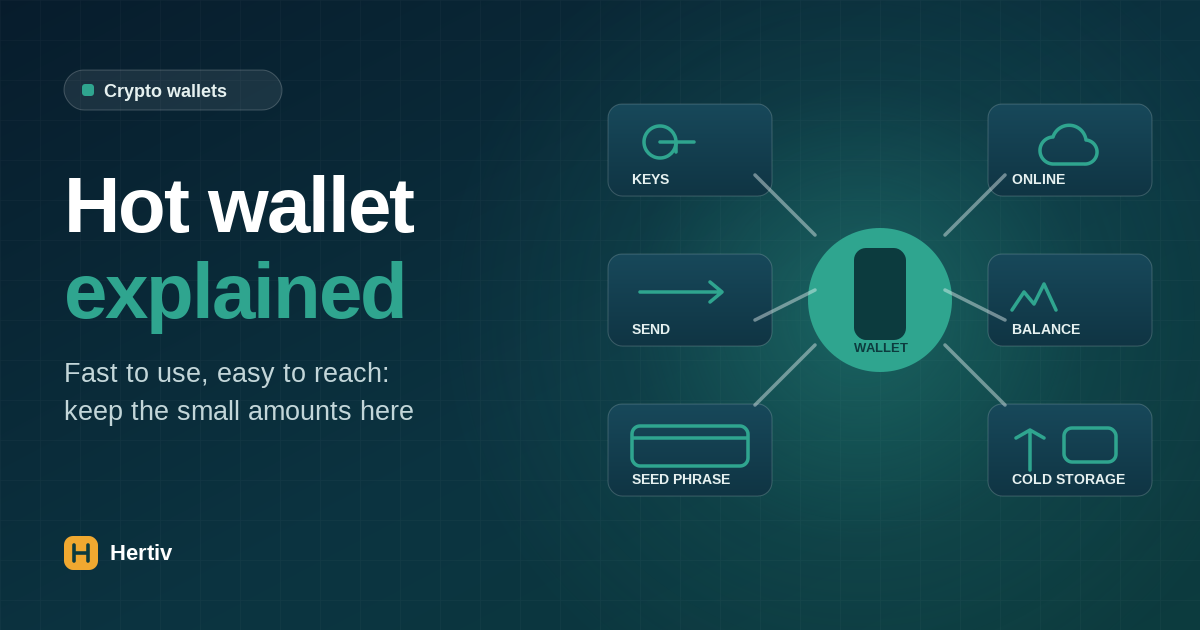
The connection is the point. Because the wallet is online, it can sign a transaction in seconds, check a balance, and swap one coin for another without moving keys to another device. That speed is why most people keep a hot wallet for everyday crypto use.
The trade-off is risk. A device that is online can be reached by malware, fake apps and phishing pages. A hot wallet is therefore best for small amounts you use often, not for savings you plan to hold for years.
Most crypto owners start with a hot wallet because it takes minutes to set up and costs nothing to download. The wallet creates your keys on the device, shows you the seed phrase, and you are ready to receive coins. That ease is also the risk: the same speed that makes it simple also makes mistakes costly, so the habits around it matter as much as the app.
Hot wallet vs cold wallet: what is the difference?
The difference between a hot wallet and a cold wallet is whether the private keys ever touch the internet. The table below compares the two.
| Wallet | Keys stored | Best for | Main risk |
|---|---|---|---|
| Hot wallet | On an online device | Daily spending and trading | Malware and phishing |
| Cold wallet | Offline, on hardware or paper | Long-term savings | Loss or damage of the device |
A cold wallet keeps keys offline, so an attacker on the internet cannot reach them. The cost is speed: moving coins takes extra steps, such as plugging in a device and confirming on its screen. Many owners use both, with a hot wallet for daily use and a cold wallet for the rest.
What types of hot wallets are there?
Hot wallets come in four common forms, and they differ in convenience and in who holds the keys.
- Mobile wallets. Apps on a phone that store keys on the device. They suit daily payments and quick trades.
- Desktop wallets. Software on a computer with more room for advanced features, such as connecting to apps.
- Browser extension wallets. Wallets that live in the browser and connect to web apps with one click.
- Web and exchange wallets. Wallets hosted by a service, where the service holds the keys. They are the easiest to start with, but you trust the service with your coins.
For most people, a mobile or browser wallet is the right start. Exchange wallets are fine for trading, but coins left on an exchange are under the exchange's control, not yours.
How does a hot wallet keep your keys?
A hot wallet keeps your keys as a seed phrase: a list of 12 or 24 words that can rebuild the wallet on any device. When you first set up a wallet, it shows you the phrase once and asks you to write it down on paper.
On the device, the keys are stored in encrypted form and opened with a password, PIN or fingerprint. When you send coins, the wallet signs the transaction on the device and sends only the signed transaction to the network. The keys themselves never leave the device during a normal send.
That design has one weak point: the seed phrase. Anyone who reads it can rebuild your wallet and take the coins. Keep it offline, on paper, in a safe place, and never type it into a website or share it with support staff.
Some wallets add extra protection, such as a PIN for every send, biometric checks, or a time lock on large amounts. These help, but they do not change the basic fact: the keys live on a device that is online. Treat the wallet as a pocket wallet, not a safe.
What are the risks of a hot wallet?
The main risks of a hot wallet are phishing, malware and fake apps, and they all target the same thing: your keys or your approval.
- Phishing. A fake site or message asks you to enter your seed phrase or approve a transaction. A real wallet never asks for your seed phrase.
- Malware. Software on your device can read what you type or swap a payment address. Keep your device updated and install apps only from official stores.
- Fake wallets. Copies of popular wallets appear in app stores and search results. Check the publisher name before installing.
- Exchange failure. Coins in an exchange wallet belong to the exchange's accounts. If the exchange fails, your coins may be hard to recover.
For larger sums, the usual answer is a multisig or hardware setup. What a multisig wallet is explains how several keys can guard one wallet.
Example (hypothetical): buying and sending coins
Example (hypothetical): a user buys 0.5 ETH on an exchange and moves 0.4 ETH to a hot wallet on their phone, keeping 0.1 ETH on the exchange for trading.
They send 0.2 ETH to a friend. The network fee is 0.001 ETH, so the friend receives 0.2 ETH and the wallet holds 0.199 ETH after the send: 0.4 minus 0.2 minus 0.001.
The user writes the seed phrase on paper and stores it at home. A month later the phone is lost, but the seed phrase rebuilds the same wallet on a new phone, with the same 0.199 ETH balance.
What are the common mistakes?
The most common hot wallet mistakes are keeping too much in one wallet, sharing the seed phrase, and trusting the first search result.
- Keeping savings in a hot wallet. Move amounts you do not use often to cold storage.
- Storing the seed phrase online. A photo or a cloud note can be stolen. Paper, kept safe, is better.
- Approving transactions without reading them. Check the address and the amount every time.
- Using a fake wallet app. Check the publisher and the download count before installing.
- Skipping backups. Test the seed phrase on a second device before you put real funds in.
If you are building a wallet product, crypto wallet development trends shows what users now expect from wallet apps.
Before choosing a key design, what an MPC wallet does is worth reading, because it splits control without a single seed phrase.
Key takeaways
- A hot wallet keeps its keys on an internet-connected device, so it is fast but exposed
- Use a hot wallet for small daily amounts and cold storage for the rest
- The seed phrase rebuilds the wallet, so keep it on paper and offline
- Phishing, malware and fake apps are the main risks, not the blockchain itself
- Check the address and amount before approving any transaction
Frequently asked questions
Is a hot wallet safe?
It is safe enough for small daily amounts if you keep the device clean, install apps only from official stores and never share your seed phrase. It is not the right place for life savings, because an online device can be reached by malware and phishing. Move larger sums to cold storage.
What is the difference between a hot wallet and an exchange wallet?
A hot wallet can be self-hosted, with keys on your own device, or hosted by an exchange, with keys held by the service. An exchange wallet is a type of hot wallet, but you trust the exchange with your coins. A self-hosted hot wallet gives you control of the keys.
Can a hot wallet be hacked?
Yes, if malware reaches the device or the owner is tricked into sharing the seed phrase or approving a bad transaction. The blockchain itself is not the weak point. Keeping the device updated, checking addresses and using small amounts limits the damage.
What happens if I lose my phone with a hot wallet?
You can rebuild the wallet on a new device with the seed phrase, and the balance will be the same, because the coins live on the blockchain, not on the phone. Without the seed phrase, the wallet cannot be rebuilt, so the phrase is the real backup.
Do hot wallets charge fees?
Wallets do not usually charge for holding coins, but sending coins costs a network fee, which varies by chain and by how busy the network is. Some wallets add a service fee for swaps. Check the fee shown before you confirm a send.
Should beginners use a hot wallet?
Yes, a hot wallet is the easiest way to start, because it is fast and simple to set up. Start with a small amount, write down the seed phrase on paper, and learn how sending and receiving works before moving larger sums.


