Multisig Wallets Worth Comparing Before You Choose
Safe, Fireblocks, BitGo, Copper, Casa and Liminal compared: which multisig wallet fits teams, institutions, trading desks and individual holders.
On this page
Short answer
The multisig wallets worth comparing depend on your use case: Safe for teams on EVM chains, Fireblocks and BitGo for institutions, Copper for trading desks, Casa for individual Bitcoin holders, and Liminal for teams that want a managed setup.
Which multisig wallets are worth comparing?
The multisig wallets worth comparing are the ones that match your use case: Safe for teams on EVM chains, Fireblocks and BitGo for institutions, Copper for trading desks, Casa for individuals, and Liminal for teams that want a managed setup.
Use the comparison below to shortlist. Cost is described as a model, not a price, because fees change and most vendors quote per setup.
| Wallet | Best for | Key model | Chains |
|---|---|---|---|
| Safe | Teams and DAOs | On-chain multisig | EVM chains |
| Fireblocks | Institutions | MPC | Many chains |
| BitGo | Institutions | Multisig plus custody | Many chains |
| Copper | Trading desks | MPC plus custody | Many chains |
| Casa | Individuals | Multisig keys | Bitcoin focused |
| Liminal | Teams | MPC plus multisig | Many chains |
Shortlist two or three, then test the signing flow with your actual approvers before committing. A wallet that your team finds awkward will be bypassed, which defeats the point.
Safe
1. Safe: best for teams and DAOs on EVM chains
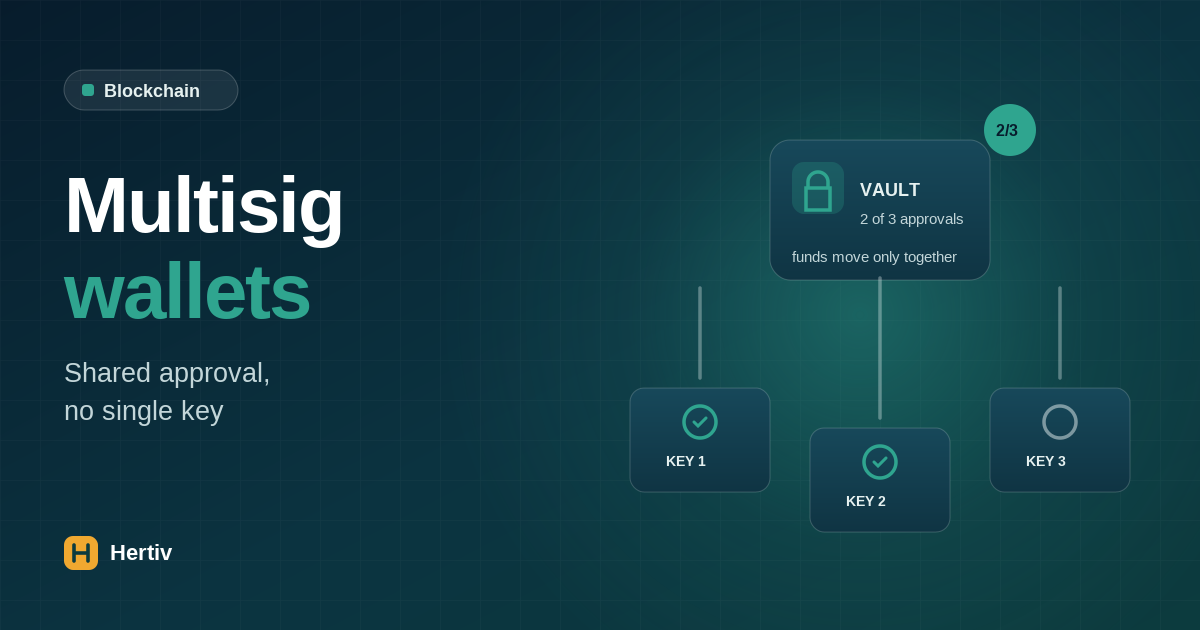
Safe is the most widely used on-chain multisig wallet for Ethereum and EVM-compatible chains. A team sets a threshold, such as two of three signers, and every transaction needs that many approvals before it executes on chain.
Because the rules live in a smart contract, anyone can verify them, and the setup is transparent. The trade-off is that it works best on EVM chains, and gas fees apply to each on-chain action.
Pros
- Transparent on-chain rules anyone can verify
- Large ecosystem of apps and integrations
- Flexible thresholds and signer sets
Cons
- Mainly EVM chains, not Bitcoin
- Gas fees on every on-chain action
- Needs care when changing signers
Fireblocks
2. Fireblocks: best for institutions that need policy controls
Fireblocks is an institutional platform built on multi-party computation, with policy rules, transaction screening and integrations for trading, staking and settlement. It suits funds, exchanges and custodians that move large volumes under strict controls.
The platform is designed for operations teams rather than individuals. Setup and pricing are enterprise-grade, so it fits organisations that already have compliance and operations staff.
Pros
- Policy rules and approval workflows built in
- Wide chain and asset coverage
- Trading and settlement integrations
Cons
- Enterprise pricing and onboarding
- More complex than a simple multisig
- Less suited to small teams
BitGo
3. BitGo: best for institutions that want custody plus multisig
BitGo combines multisig wallets with regulated custody, so institutions can hold assets with a qualified custodian while keeping approval rules they control. It covers many chains and supports staking and settlement workflows.
BitGo fits teams that need a custodian for regulatory or client reasons. The trade-off is cost and a heavier onboarding process than a self-managed wallet.
Pros
- Regulated custody alongside multisig
- Broad chain and asset support
- Staking and settlement tools
Cons
- Higher cost than self-managed options
- Onboarding takes time
- Less control than a fully self-hosted setup
For the underlying pattern, multisig wallet use cases explains where shared approval pays off.
Copper
4. Copper: best for trading desks that need fast settlement
Copper is built for trading desks and funds that need to move assets between venues quickly without leaving them on an exchange. Its MPC wallets and settlement network let counterparties trade while assets stay in custody.
The strength is speed and off-exchange settlement. The trade-off is that it is aimed at professional trading operations, not at small teams or individuals.
Pros
- Fast off-exchange settlement
- Designed for trading workflows
- MPC signing without a single key
Cons
- Aimed at professional desks, not small teams
- Enterprise pricing
- Setup needs an operations team
Casa
5. Casa: best for individuals protecting Bitcoin
Casa is a multisig wallet for individuals who hold Bitcoin and want to remove the single-key risk. A typical setup uses several keys across devices and locations, with Casa holding one key for recovery and the user holding the rest.
Casa fits long-term holders who want self-custody without managing everything alone. It is Bitcoin focused, so it is not the choice for teams holding many different tokens.
Pros
- Simple multisig for individuals
- Recovery support if a key is lost
- Clear, guided setup
Cons
- Bitcoin focused, limited other assets
- Subscription cost
- Not built for team workflows
Liminal
6. Liminal: best for teams that want a managed multisig setup
Liminal offers MPC and multisig wallets as a managed service for exchanges, funds and Web3 teams. It covers many chains and adds policy controls, approvals and audit trails for operations teams.
Liminal suits teams that want shared control without running their own key infrastructure. As with any managed service, the team should confirm export and recovery options before committing.
Pros
- Managed setup, less infrastructure to run
- Policy controls and audit trails
- Wide chain coverage
Cons
- Managed service, not fully self-hosted
- Pricing is quoted per setup
- Smaller ecosystem than the largest platforms
To compare the two shared-control models, see MPC vs multisig wallets.
How to choose a multisig wallet
Choose a multisig wallet by who approves, what you hold and how fast you need to move. A DAO on Ethereum needs something different from a trading desk or a Bitcoin holder.
- List your approvers and set the threshold before looking at products.
- Check chain and asset support for everything you actually hold.
- Test the signing flow with real approvers, including recovery of a lost key.
- Confirm fees, custody terms and what happens if the vendor stops operating.
- Run a small live transfer first, then move the rest in stages.
Key management is only part of the decision. If you need help designing custody and approval flows, MPC wallet development covers the architecture choices.
Common mistakes when choosing a multisig wallet
The most common multisig mistakes are setting a threshold nobody can meet, storing all keys in one place, and never testing recovery.
- Threshold too high. Three of five sounds safe until two signers are travelling and funds are stuck.
- Keys in one place. Several keys on one laptop or in one office defeat the point of multisig.
- No recovery test. A lost key discovered during an emergency is far worse than a lost key found in a drill.
- Choosing by brand alone. A wallet built for institutions will frustrate a small team, and a simple wallet will not fit a fund.
- Ignoring the exit. Confirm how signers are changed and how assets move if you switch providers.
- Approving without checking. A multisig only helps if signers actually review what they approve.
Rules on custody and stablecoins also affect wallet choice in Europe. See what the MiCA regulation requires for the framework that applies there.
Key takeaways
- Safe is the transparent default for teams and DAOs on EVM chains
- Fireblocks and BitGo fit institutions that need policy controls or regulated custody
- Copper is built for trading desks that need fast off-exchange settlement
- Casa suits individuals protecting Bitcoin; it is not a team or multi-asset wallet
- Set the threshold and test recovery before moving real funds
Frequently asked questions
What is a multisig wallet?
A multisig wallet needs more than one approval to move funds. A team might set a rule that two of three signers must approve each transaction. The rule is enforced by a smart contract or by a key-sharing scheme, so no single person or stolen key can drain the wallet alone.
How many signers should a multisig wallet have?
It depends on the team size and how fast funds must move. Three signers with a two-of-three threshold is a common start for small teams. Larger teams often use five signers with a three-of-five threshold. The threshold must stay reachable when someone is away, or funds get stuck.
Is MPC the same as multisig?
No. Multisig uses several separate keys and on-chain rules that anyone can verify. MPC splits one key into shares held by different parties, so signing happens jointly without a single key existing anywhere. Both spread control, but they differ in transparency, chain support and recovery.
Can a multisig wallet lose funds if one key is lost?
Usually not, if the threshold allows it. In a two-of-three setup, losing one key still leaves two signers who can approve. The risk is losing enough keys to fall below the threshold, or never testing recovery. That is why recovery drills matter before real funds move.
Do multisig wallets work on Bitcoin?
Yes. Bitcoin supports multisig natively, and wallets such as Casa are built around it. The setup differs from EVM chains, where multisig is usually a smart contract, but the idea is the same: several keys must approve before funds move.
What does a multisig wallet cost?
Costs vary widely. Self-managed on-chain wallets mainly cost gas fees per transaction. Managed and institutional platforms charge setup and subscription fees, usually quoted per organisation. Ask vendors for the full fee model, including recovery and support, before comparing.


