What Is a Multisig Wallet, and When Should You Use One?
A multisig wallet needs several keys to approve a transaction, so no single person can move funds alone. Learn how it works and where it fits.
On this page
Short answer
A multisig wallet is a wallet that needs approval from more than one key before it sends a transaction. Instead of one person holding all the control, a group agrees in advance how many of the keys must sign, so funds can only move when the agreed number of people approve. It is the simplest way to share control of crypto without trusting one person.
What is a multisig wallet?
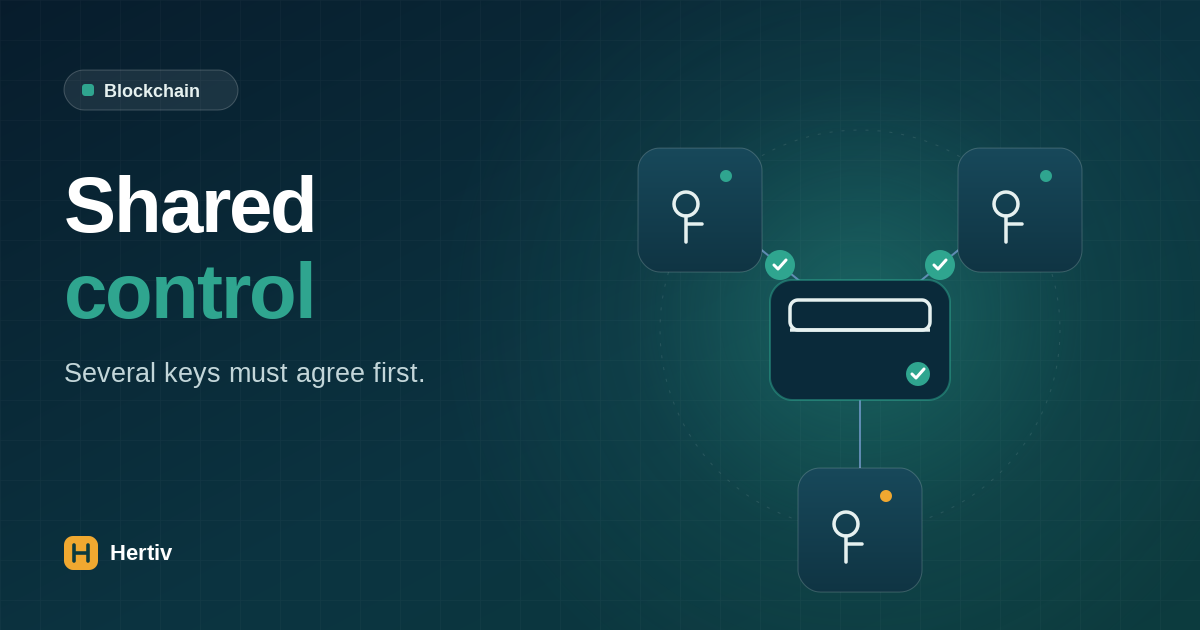
A multisig wallet is a wallet that requires several signatures to move funds, instead of one. The wallet is set up with a number of keys and a threshold: for example, three keys exist and any two of them must approve a transaction before it goes through. This is written as 2-of-3.
The keys belong to different people, or to different devices held by the same person. No single key can move money on its own, and losing one key does not lock the wallet, because the other keys can still reach the threshold.
The table below shows the common setups and what each one protects against. The right threshold depends on how many people are involved and what happens if someone is away or loses a key.
| Setup | Keys needed | Best for | Risk if one key is lost |
|---|---|---|---|
| 2-of-3 | Any 2 of 3 | Small teams, couples | None: two keys remain |
| 3-of-5 | Any 3 of 5 | Company treasuries | None: four keys remain |
| 2-of-2 | Both keys | Two-party escrow | Funds locked until key is found |
| 3-of-3 | All 3 | Maximum control | Funds locked until key is found |
How does a multisig wallet work?
A multisig wallet works by storing its rules on the chain, not in any one person's hands. When the wallet is created, the owners list the public keys and the threshold, and the chain enforces that rule on every transaction.
Sending funds takes two steps. First, one owner proposes a transaction: the destination, the amount and any attached data. Then the other owners review it and sign with their own keys. Once enough signatures are collected, the transaction can be sent. Until then, nothing moves.
This changes the security model. An attacker who steals one key gets nothing, because one signature is not enough. A single careless click cannot drain the wallet, because the other owners see the proposal before it executes. The wallet's safety comes from the group, not from one device staying secure.
Owners can also set rules about who can propose a transaction. In most teams any owner may propose, while only the group may approve. That split keeps the wallet usable day to day without giving any one person the power to move funds alone.
Where do multisig wallets make sense?
Multisig wallets make sense wherever money belongs to more than one person, or where one person wants a safety net against their own mistakes. The common cases are easy to recognise.
- Team treasuries. A startup or project holds its funds in a 3-of-5 wallet, so no founder can move money alone and the team can still act if one person is travelling.
- Community treasuries. A decentralised group lets its elected signers approve spending, so the community can see every proposal before it executes.
- Escrow between two parties. A buyer and seller use a 2-of-2 wallet, or a 2-of-3 wallet with an arbitrator, so funds release only when both sides agree.
- Family and inheritance. Keys are split between family members, so funds can be recovered if one person loses access or dies.
- Personal backup. One person keeps keys on a phone, a hardware device and a safe, so losing any one device does not lose the funds.
The shared pattern is that the wallet protects against one failure: one stolen key, one careless person, one lost device. If your funds would be at risk from any single failure, a multisig setup is worth considering.
How do you set up a multisig wallet?
You set up a multisig wallet by deciding who holds keys, choosing the threshold, and testing the setup with a small amount before moving real funds.
- Choose the owners. List the people or devices that will hold keys, and agree who they are before anything is created.
- Pick the threshold. Choose a number that blocks a single bad actor but still lets the group act when someone is away. For most teams that is a simple majority.
- Create the wallet. Use a well-known multisig tool for your chain, enter the public keys, and confirm the threshold on screen before funding it.
- Test with a small amount. Send a tiny sum, propose a transaction, collect the signatures, and confirm it arrives. Then test losing access to one key.
- Write down the recovery plan. Record who holds which key, where backups live, and what happens if a signer leaves or loses a device.
For teams building the wallet into a product, crypto wallet development work usually starts with this same decision: who signs, and how many must agree.
Example (hypothetical): a team treasury with 3-of-5 keys
Example (hypothetical): a five-person startup holds its operating funds in a 3-of-5 multisig wallet. Each founder holds one key on a hardware device, and any three signatures can approve a payment.
One month the team makes 20 payments. Each payment needs 3 signatures, so the team collects 20 times 3, which is 60 signatures in the month. No single founder can move money alone, and if two founders are on holiday, the other three can still pay the bills.
Then one founder loses a hardware device. The wallet still works, because 4 keys remain and only 3 are needed. The team replaces the lost key by creating a new wallet with a fresh key and moving the funds, which takes one afternoon. The numbers are invented to show the arithmetic, not a real setup. The point is that the threshold, not any single key, is what protects the funds.
What are the common mistakes?
The common mistakes with multisig wallets are choosing the wrong threshold, losing track of who holds keys, and never testing recovery.
- A threshold that is too high. A 3-of-3 wallet locks the funds if one key is lost. Leave room for one failure.
- Keys held by one person. Three keys on three devices owned by the same person protect against device loss, not against that person being compromised.
- No recovery plan. If nobody knows who holds which key, the wallet becomes a puzzle when someone leaves.
- Skipping the small test. The first transaction should be tiny. A mistake with a test amount is a lesson; a mistake with the treasury is a loss.
- Ignoring the chain's fees. Every signature can cost a fee, so a high threshold on an expensive chain adds up over many transactions.
Teams that need help choosing between multisig and other key setups can compare it with how a cryptocurrency is created and the wallet choices that follow.
Key takeaways
- A multisig wallet needs several keys to approve, not one
- The threshold decides the balance between safety and convenience
- Team treasuries, escrow and family funds are the main use cases
- Test with a small amount and write down the recovery plan
- One stolen key cannot move funds when the threshold is above one
Frequently asked questions
What is the difference between multisig and MPC?
Multisig stores the approval rule on the chain: several separate keys must sign. MPC splits one key into shares held by different parties, so no complete key exists anywhere. Both remove single points of failure, but multisig is simpler to audit and MPC keeps the setup invisible on-chain.
Is a multisig wallet safer than a normal wallet?
It is safer against one key being stolen or one person acting alone, which is the most common failure. It is not safer against every risk: if enough signers are compromised, or the threshold is set badly, funds can still be lost. Safety comes from the setup, not the label.
Can I use multisig for personal funds?
Yes. Many people use a 2-of-3 wallet with keys on a phone, a hardware device and a safe. Losing any one device does not lock the funds, and a thief who takes one device cannot move anything. It adds a step to every payment, so it suits savings more than daily spending.
What happens if a signer leaves the team?
The wallet must be replaced. Create a new wallet with the new set of signers, move the funds, and retire the old one. This is why the recovery plan should name who replaces a signer and how quickly. Never leave a departed member holding a live key.
Do multisig wallets work on every chain?
Most major chains support multisig, either natively or through smart contracts, but the tools and costs differ. Check that your chain has a well-maintained multisig tool before you commit, and test the full signing flow on a test network first.
Does multisig cost more in fees?
Usually yes, because each signature adds data to the transaction and some chains charge per signature. The extra cost is small for occasional treasury payments but adds up for frequent small transfers, so multisig suits larger, less frequent payments best.


