Stablecoin Merchant Acceptance: How It Works for Shops
Stablecoin merchant acceptance lets a shop take payment in a stablecoin and choose whether to keep the coins or convert them to local currency.
On this page
Short answer
Stablecoin merchant acceptance means a shop or online store takes payment in a stablecoin, a crypto token designed to hold a steady value against a currency such as the US dollar, instead of only cards or bank transfer. The merchant can keep the coins, convert them to local currency at once, or split the payment between the two.
What is stablecoin merchant acceptance?
Stablecoin merchant acceptance is the ability of a shop to take payment in a stablecoin. A stablecoin is a crypto token designed to hold a steady value, usually by being backed by reserves of a currency such as the US dollar. Because the value stays close to that currency, a merchant can price goods in dollars and receive the same amount in stablecoins without the swings of other crypto tokens.
It works for online stores, marketplaces and physical shops. Online, the customer picks the stablecoin option at checkout and pays from a wallet. In a shop, the customer scans a QR code or taps a payment link, and the payment is confirmed on the blockchain within seconds or minutes, depending on the network.
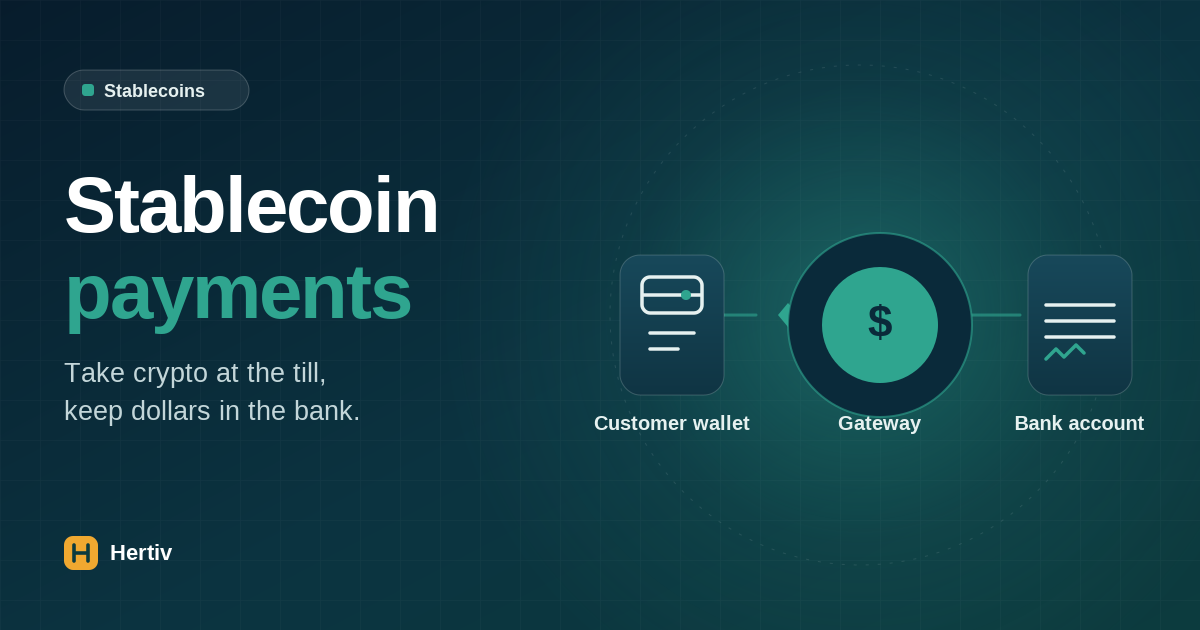
The merchant does not need to become a crypto expert. A payment gateway handles the wallet interaction, the network confirmation and the conversion choice, so the shop sees a normal sale in its own system. The difference from card payments is mainly in fees, settlement speed and who carries the risk while the payment clears.
How does a customer pay with stablecoins?
A stablecoin payment follows the same shape as a card payment, with a wallet instead of a card. The customer chooses the option, confirms the amount and signs the payment in their wallet, and the merchant gets a confirmation.
- Checkout. The customer picks stablecoin payment and chooses the coin and the network, such as a dollar-backed coin on a low-fee network.
- Amount shown. The shop shows the exact amount in stablecoins, matching the price in local currency.
- Wallet confirmation. The customer opens their wallet, checks the amount and the address, and confirms the payment.
- Network confirmation. The transaction is confirmed on the blockchain, which usually takes seconds to a few minutes.
- Merchant notified. The gateway tells the shop the payment arrived, and the order moves to fulfilment.
The main difference from a card is that the payment is final once confirmed. There is no chargeback in the card sense, so the shop needs a clear refund policy for stablecoin orders and a way to send the coins back if a return is agreed.
For a closer look at the service behind the checkout button, see how a stablecoin payment gateway handles the payment, the conversion and the settlement.
What does the merchant receive?
What the merchant receives depends on the settlement choice made when the gateway was set up. Most gateways offer three options, and the merchant can change the choice later as volume grows.
| Settlement choice | What the merchant gets | Best for |
|---|---|---|
| Keep the coins | Stablecoins in the merchant wallet | Paying suppliers in crypto |
| Auto-convert to fiat | Local currency in the bank account | Normal accounting and payroll |
| Split settlement | Part coins, part fiat | Testing crypto payments |
Auto-conversion is the most common choice for shops that want nothing to change in their accounting. The gateway converts the stablecoins at the moment of payment and sends local currency to the bank, so the shop's books look the same as they do for card sales. Keeping the coins suits merchants who pay suppliers or staff in stablecoins and want to avoid converting back and forth.
Split settlement is a useful middle step. A shop can keep a small share in stablecoins to learn how the flow works, while the rest converts to fiat. That limits the exposure while the team builds confidence in the process.
What does it cost and how fast is settlement?
Stablecoin payments usually cost less than card payments, and they settle faster. The exact figures depend on the network, the gateway and the merchant's volume, so treat the numbers below as the shape of the costs, not a price list.
A card payment typically carries a percentage fee plus a fixed fee per transaction, and the money reaches the merchant's bank one to three business days later. A stablecoin payment carries a small network fee for the blockchain transaction plus the gateway's fee, which is often a smaller percentage than a card fee. Settlement in stablecoins is near-instant once the network confirms, and conversion to fiat usually completes within a day.
The saving matters most for cross-border sales. A card payment from another country can add currency conversion and international fees, and settlement can take longer. A stablecoin payment crosses borders the same way it crosses the street, which is why shops selling to customers abroad are often the first to try it.
There are costs beyond the fee, though. The team must handle refunds in crypto, train support staff on wallet questions, and keep records for tax. Those costs are small, but they are real, and a shop that ignores them will find the first month messier than the sales pitch suggested. The rails behind the payment are covered in more detail in the guide to stablecoin payment rails.
What are the risks and rules?
Stablecoin acceptance carries four risks a merchant should understand before launch: the coin losing its peg, refunds, tax treatment and regulation. None of them is a reason to avoid the option, but each needs a plan.
- Depeg risk. A stablecoin can trade below its target value if its reserves or its issuer come under doubt. Auto-converting to fiat at the moment of payment limits this exposure.
- Refunds. Stablecoin payments are final, so the shop needs a written refund process and a wallet to send refunds from.
- Tax. How crypto receipts are treated for tax varies by country, and the records must show the value in local currency at the time of the sale. Get advice from a local tax adviser before launch.
- Regulation. Rules for stablecoins differ by country and are changing fast. In some markets the issuer must be licensed, and in others the merchant's duties are still being written. Check the rules in each market you sell to.
The practical answer is to start small. Accept one well-known stablecoin on one low-fee network, auto-convert to fiat, and cap the share of orders paid in crypto until the team is comfortable. That keeps the learning cheap and the risk small.
Choosing a gateway is part of the risk plan. A crypto payment gateway that handles conversion, compliance checks and reporting removes most of the work, but the merchant still owns the refund policy and the customer relationship.
Example (hypothetical): an online store adds stablecoin checkout
Example (hypothetical): an online store takes 1,000 orders a month at an average of $80, which is $80,000 a month in sales. About 10% of customers, or 100 orders a month, choose to pay in stablecoins once the option is added.
On a card, each $80 order costs the store about $2 in fees, at an assumed rate of 2.5%. On a stablecoin payment, the network and gateway fees together cost about $0.50 per order. The saving is $1.50 on each of the 100 stablecoin orders, or $150 a month, which is $1,800 a year.
The store also settles faster. Card money arrives in one to three business days, while stablecoin payments confirm in minutes and convert to fiat within a day. The store spends a day setting up the gateway and an hour a week on support questions about wallets, which it treats as a learning cost. The saving is modest at this volume, and it grows with the share of customers who pay in stablecoins.
What are the common mistakes?
The most common mistakes are accepting too many coins at once, forgetting refunds, and treating crypto receipts as if they were cash in the till.
- Too many coins and networks. Each extra coin adds support questions and reconciliation work. Start with one coin on one network.
- No refund process. Stablecoin payments are final, so a return without a refund plan becomes a dispute.
- Ignoring tax records. Every sale needs its local-currency value recorded at the time of payment, or the accounts will not reconcile.
- Promising instant refunds. A refund still needs a manual step and a wallet, so promise a clear timeframe, not instant payment.
- No staff training. Support staff who cannot answer a wallet question will lose the sale and the customer's trust.
- Keeping coins without a plan. Holding stablecoins makes sense only if the business has a use for them, such as paying suppliers.
Key takeaways
- Stablecoin acceptance lets a shop take dollar-backed crypto payments at checkout or at the till
- The merchant can keep the coins, auto-convert to local currency, or split the payment
- Fees are usually lower than cards and settlement is faster, especially across borders
- Payments are final, so the shop needs a written refund process before launch
- Start with one coin on one network and auto-convert until the team is confident
Frequently asked questions
What is stablecoin merchant acceptance?
Stablecoin merchant acceptance means a shop or online store takes payment in a stablecoin, a crypto token designed to hold a steady value against a currency such as the US dollar. The merchant can keep the coins, convert them to local currency at once, or split the payment between the two.
Do customers need a crypto wallet to pay?
Yes. The customer pays from a wallet that holds the stablecoin, either by scanning a QR code in a physical shop or by connecting the wallet at online checkout. The wallet shows the exact amount before the customer confirms, so there are no surprises.
Is stablecoin payment safe for merchants?
The payment itself is confirmed on the blockchain and cannot be reversed like a card chargeback, which removes one kind of fraud. The merchant still faces depeg risk, refund handling and tax record keeping, which is why most shops start with auto-conversion to fiat.
How are stablecoin sales taxed?
It depends on the country. Most tax systems treat a crypto receipt as income at its local-currency value on the day of the sale, and the records must show that value. Because the rules differ and change often, a local tax adviser should confirm the treatment before launch.
Which stablecoin should a shop accept first?
A well-known dollar-backed stablecoin on a low-fee network is the usual starting point, because customers are most likely to hold it and the fees stay low. Adding more coins later is easy once the first one works, so there is no need to offer a long list on day one.
Can stablecoins help with international sales?
Yes. A stablecoin payment crosses borders the same way it crosses the street, without the currency conversion and international fees that cards add. That makes it attractive for shops selling to customers abroad, though the tax and regulatory rules of each market still apply.


