How Blockchain Is Changing Peer-to-Peer Lending
Blockchain is changing peer-to-peer lending by putting loan terms, collateral and repayments into smart contracts. Here is how it works, what it fixes and the risks.
On this page
Short answer
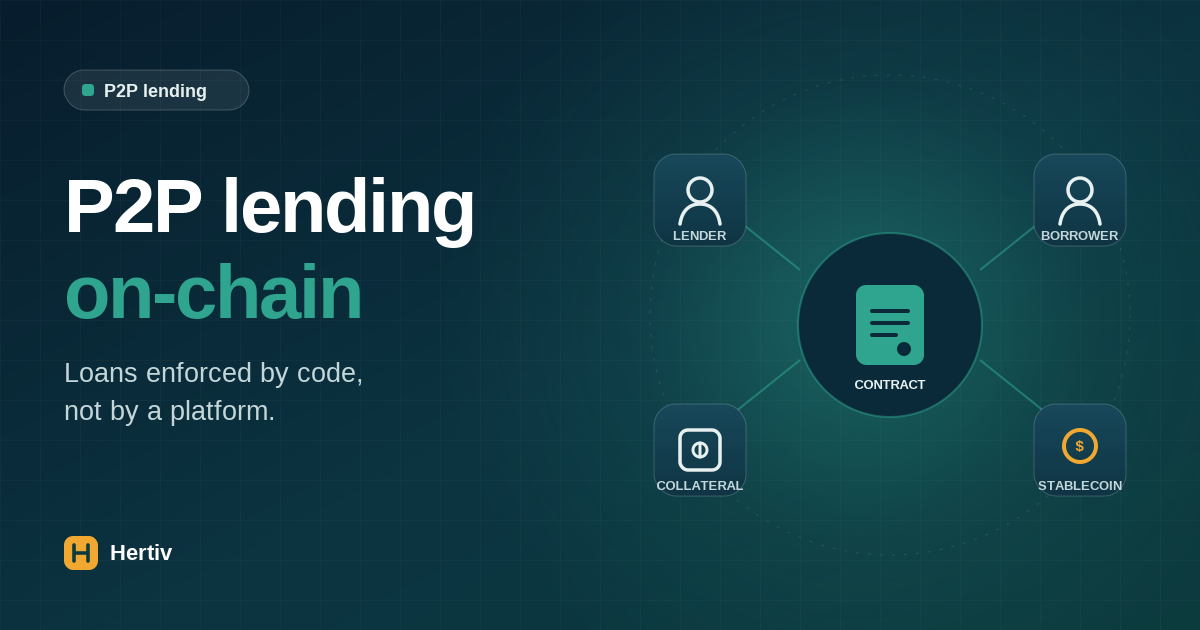
Peer-to-peer lending with blockchain is lending where the loan agreement, the collateral and the repayments are recorded and enforced on a blockchain instead of only in a lender's database. Smart contracts hold the collateral, release the funds and collect repayments to the agreed schedule, so neither side has to trust the platform's word alone.
What does blockchain change about peer-to-peer lending?
Peer-to-peer lending with blockchain is lending where the loan agreement, the collateral and the repayments are recorded and enforced on a blockchain instead of only in a lender's database. Smart contracts hold the collateral, release the funds and collect repayments to the agreed schedule, so neither side has to trust the platform's word alone.
Traditional peer-to-peer lending already cuts out the bank: a platform matches lenders with borrowers and takes a fee. Blockchain changes what the platform itself must be trusted for, because the loan terms live in code that both sides can read and neither side can quietly change.
The idea is not new, but it has moved from experiments to working products as stablecoins made on-chain lending practical. A borrower can now pledge crypto as collateral and receive a stablecoin loan within minutes, without a bank account in the same country as the lender.
How does a blockchain peer-to-peer loan work?
The flow below is the common shape. The details vary by platform — some use pooled lending, others match one lender to one borrower — but the collateral and the contract are the parts that stay the same.
| Step | What happens | Who acts |
|---|---|---|
| 1. List the loan | Borrower states amount, term and rate | Borrower |
| 2. Lock collateral | Crypto or tokenised assets move into the contract | Borrower |
| 3. Fund the loan | Lender sends stablecoins to the contract | Lender |
| 4. Repay | Borrower pays instalments to the contract | Borrower |
| 5. Release or liquidate | Collateral returns on full repayment, or sells on default | Smart contract |
Because the contract is public code, a borrower can check the interest, the fees and the liquidation price before accepting. That transparency is the main difference from a traditional platform, where the same terms sit in a document few borrowers read. The what is DeFi lending guide explains the wider lending market this sits inside.
What problems does blockchain solve in peer-to-peer lending?
The clearest gains are in trust and settlement. A lender does not need to believe the platform's report about a loan, because the contract and the collateral are visible on chain. A borrower in one country can borrow from a lender in another without either side using the same bank.
| Problem | Old way | Blockchain way |
|---|---|---|
| Trust in the platform | Platform holds the records | Contract and collateral are on chain |
| Settlement speed | Bank transfers take days | Stablecoin transfer settles in minutes |
| Cross-border lending | Needs matching banks and FX | Same stablecoin both sides |
| Collateral handling | Custodian holds the asset | Contract locks it automatically |
| Record keeping | Platform database, hard to audit | Public ledger, easy to check |
The gains are smaller where the problem is not trust but credit: blockchain cannot tell whether a borrower will repay a loan that has no collateral. That is why most working products are backed by crypto collateral or by real-world assets held by a custodian.
Liquidity is another gain. In a pooled model, lenders deposit stablecoins into a shared pool and the contract lends from it, so a borrower does not wait for one lender to fund the whole loan. The trade-off is that pooled lenders share the losses as well as the returns.
What are the risks?
The risks are real and different from traditional lending. A bug in the loan contract can lock or lose funds, and a sharp fall in the collateral's price can trigger a liquidation before the borrower can react.
Regulation is the other risk. Lending rules differ by country, and a platform that serves borrowers in several places must fit each one's licensing and consumer-protection rules. Some platforms limit themselves to crypto-backed loans to stay inside clearer rules. The guide to building P2P crypto lending software covers the same duties from the builder's side.
Volatility cuts both ways. A borrower who pledges a volatile asset can lose it in a market fall, while a lender who accepts a stablecoin loan takes the risk that the stablecoin itself loses its peg.
Example (hypothetical): a tokenised small-business loan
Example (hypothetical): a small importer borrows $50,000 in a stablecoin for 12 months at 8 per cent annual interest, pledging crypto worth $75,000 as collateral. The interest is $50,000 times 8 per cent, or $4,000, and the platform charges a 1 per cent fee, or $500.
The borrower repays $50,000 plus $4,000 plus $500, which is $54,500 over the year. The lender receives the interest minus the platform's share, and the collateral stays locked in the contract until the last repayment lands.
If the collateral's value falls below the agreed level, the contract sells enough of it to cover the loan. That automatic sale is what lets the lender offer the loan without a credit check, and it is also the risk the borrower must understand before pledging.
What are the common mistakes?
The most common mistakes in blockchain peer-to-peer lending are about collateral and trust. Borrowers focus on the rate and skip the liquidation terms; lenders focus on the return and skip the audit.
- Pledging collateral without understanding liquidation. Know the price at which the contract sells your collateral, and how fast.
- Trusting a contract nobody audited. An unaudited loan contract is a risk, however good the platform looks.
- Ignoring the rules in the borrower's country. Lending licences and consumer protection still apply when the loan is on chain.
- Borrowing against a volatile asset for a long term. A long loan against a falling asset ends in liquidation.
- Assuming the platform guarantees repayment. The contract enforces the terms; it does not insure the borrower.
For the traditional side of the same market, the guide to launching P2P lending software covers the platform, the licence and the borrower checks.
Is blockchain peer-to-peer lending regulated?
Lending is regulated in most countries, and adding a blockchain does not remove the rules. A platform that lends to consumers usually needs a lending licence, identity checks and clear disclosures, wherever its servers sit.
Crypto-backed loans sit in a greyer area in some places, because the loan is secured and the borrower is often a business rather than a consumer. Even then, anti-money-laundering checks and sanctions screening apply to the platform.
Borrowers and lenders should check the platform's licence and where it is registered before using it. A platform that cannot say which regulator oversees it is a warning sign, not a feature.
Key takeaways
- Blockchain moves the loan agreement, collateral and repayments into smart contracts both sides can read
- Collateral is locked in the contract and released on repayment, or sold automatically on default
- Settlement in stablecoins takes minutes and works across borders without matching banks
- Blockchain fixes trust and settlement, not credit: unsecured borrowers still need a credit check
- Contract bugs, collateral price falls and unclear regulation are the main risks
- Check the platform's licence and the contract audit before pledging or lending anything
Frequently asked questions
What is blockchain peer-to-peer lending?
Blockchain peer-to-peer lending is lending where the loan agreement, the collateral and the repayments are recorded and enforced on a blockchain. Smart contracts hold the collateral, release the funds and collect repayments to the agreed schedule, instead of a platform keeping the records alone.
How is blockchain P2P lending different from normal P2P lending?
Normal P2P lending relies on the platform to hold records and handle defaults. Blockchain lending puts the terms, the collateral and the repayments into a smart contract that both sides can read and neither side can quietly change. Settlement is also faster, because stablecoin transfers settle in minutes.
Do I need collateral for a blockchain P2P loan?
Most working products require it. The borrower pledges crypto or tokenised assets worth more than the loan, and the contract sells the collateral if its value falls below the agreed level. Unsecured on-chain lending exists, but it is rare and usually limited to borrowers with an on-chain history.
Is blockchain P2P lending safe?
It removes some risks and adds others. The contract removes the need to trust the platform's records, but a bug in the contract, a fall in the collateral's price or a platform operating without a licence can all cause losses. Check the audit and the licence before using any platform.
Can I borrow in one country and lend from another?
Yes, that is one of the main uses. A borrower and a lender in different countries can use the same stablecoin without sharing a bank, which removes the FX and transfer delays of traditional cross-border lending. Local lending rules still apply to each side.
What happens if the borrower does not repay?
The smart contract sells the locked collateral to repay the lender, usually after the collateral's value falls below a set level or the loan term ends unpaid. If the collateral is worth less than the loan, the lender can lose the difference, which is why most loans ask for more collateral than the loan amount.


