How Brands Can Use the Metaverse for Retail
Retail brands use the metaverse for virtual stores, 3D try-on and loyalty, but most pilots fail on unclear goals. Here is what works and how to run a first test.
On this page
Short answer
Brands use the metaverse for retail by opening virtual stores, offering 3D try-on, hosting launch events and running loyalty programmes inside shared virtual spaces. It works best for products people want to see in 3D or try before buying, such as furniture, fashion and cars. Start with one small, measurable pilot tied to a real store goal, not a full virtual flagship.
What does the metaverse mean for retail?
The metaverse for retail means selling and showing products inside shared virtual spaces, where shoppers walk a 3D store, view products from every angle and talk to staff or other shoppers. It is a store you visit through a screen or a headset, not a website with flat photos.
Most retail metaverse work today runs on ordinary screens, not headsets. A shopper opens a web page, walks an avatar through a virtual store and clicks a product to see it in 3D. Headset-only experiences reach far fewer people, so brands that insist on headsets first usually reach a tiny audience.
The idea is older than the word metaverse. Games and virtual worlds have sold digital clothes and furniture for years. What is new is that retail brands now treat these spaces as a sales channel with real products, real prices and real delivery, not just as marketing stunts. To see the wider picture, read what the metaverse is and how its parts fit together.
What retail brands actually do in the metaverse
Retail metaverse work falls into a few clear patterns. The strongest ones help a shopper decide, not just look around. A virtual store that only copies a physical store adds little; a store that lets you try a sofa in your own room does.
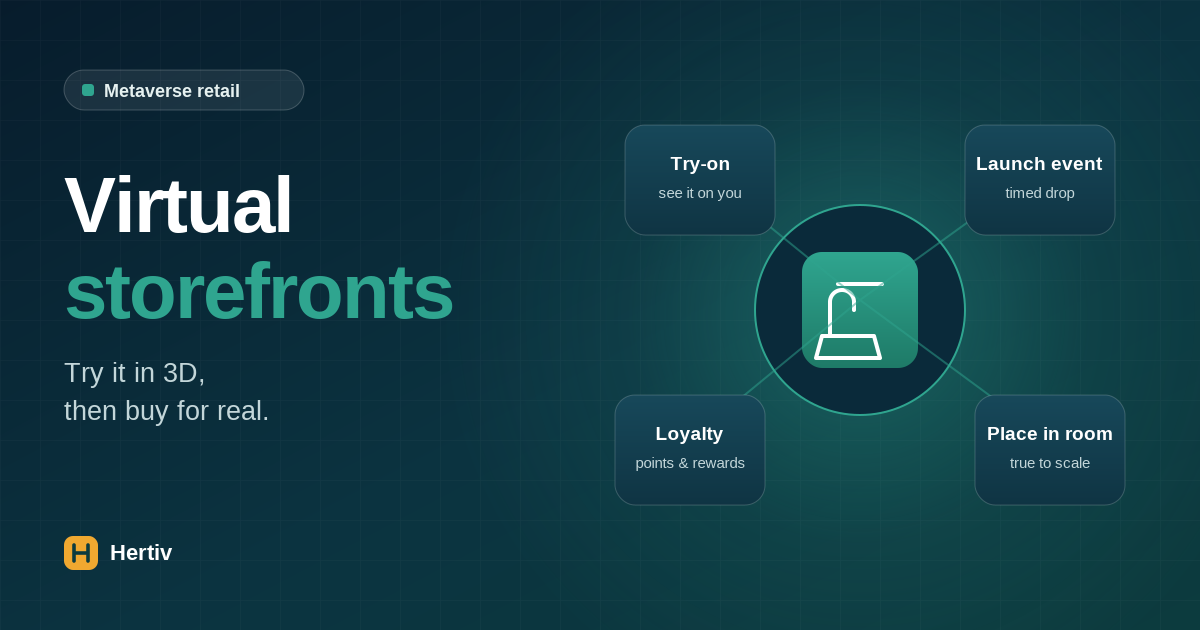
| Use case | What the shopper does | Best for |
|---|---|---|
| Virtual store | Walks a 3D store and browses products | Flagship ranges and new collections |
| 3D try-on | Tries clothes, glasses or makeup on screen | Fashion, beauty and eyewear |
| Place in your room | Views furniture or appliances at home scale | Furniture and home goods |
| Launch events | Joins a timed virtual launch with other fans | Limited drops and new products |
| Loyalty and rewards | Earns points or digital items for visits | Repeat shoppers and members |
Try-on and place-in-your-room solve a real problem: shoppers cannot judge fit or size from a flat photo. Launch events solve a different one: they create a reason to visit at a set time. Loyalty works only when the reward is worth the effort of visiting, so tie it to real discounts or early access.
Which use cases pay off first
The use cases that pay off first are the ones tied to a purchase decision. Try-on and room placement reduce returns and raise confidence, so they are easy to measure. A virtual store with no try-on and no clear path to checkout is harder to justify.
Start with products that are hard to judge online. Furniture, cars, glasses and fitted clothing all benefit from 3D views. Products that are already easy to buy online, such as books or basic groceries, gain little from a virtual store.
Check your audience before you build. If your shoppers are mostly on mobile phones, build for phones first and treat headsets as a bonus. Metaverse use cases for business covers the wider set of options, including training and collaboration, so you can see where retail fits.
What it costs and what to measure
A first retail pilot usually means a small 3D store, a handful of products and a simple checkout link. The main costs are 3D models, the virtual space itself and someone to run the pilot. Prices vary widely by vendor and scope, so get quotes and check the vendor site before you budget.
Measure what the pilot changes, not how many people visit. Useful measures are try-on completions, add-to-cart rate from the virtual store, return rate for products bought through it, and repeat visits. Visits alone tell you nothing about sales.
Set a decision rule before launch: if try-on completions or sales beat the agreed target, expand; if not, stop and learn. Without a rule, pilots drift on for months with no clear outcome. Digital twins in the enterprise metaverse shows how 3D models of real products and spaces are built and kept up to date.
How to start in 5 steps
Start small, measure one thing, and expand only when the numbers support it. A pilot that tries to do everything at once usually does nothing well.
- Pick one goal, such as fewer returns on fitted clothing or more pre-orders for a launch.
- Choose one product range that is hard to judge from flat photos.
- Build a small 3D store or try-on flow that works on phones, with a clear path to checkout.
- Invite a small group of real shoppers and watch how they use it, not just what they say.
- Compare try-on completions, sales and returns against your normal online store, then decide.
Keep the pilot live for a full sales cycle so you see normal buying, not launch-week excitement. A two-week pilot during a sale tells you little about everyday demand.
A worked example: a furniture pilot
Example (hypothetical): a furniture brand builds a small virtual showroom with 10 sofas. In the first month, 200 shoppers visit, and 40 of them use the place-in-your-room view. That is 40 out of 200, or 1 in 5 visitors trying the feature.
Of those 40, 8 place an order, which is 8 out of 40, or 1 in 5. The other 160 visitors who skip the feature place 8 orders between them, which is 8 out of 160, or 1 in 20. The try-on group converts four times as often, which is the signal the brand needs.
The 8 try-on orders are worth 8 × $400 = $3,200 in sales. The pilot cost is separate and must be counted, but the conversion gap tells the brand that the feature, not the virtual store alone, is doing the work. That is the finding to build on.
Common mistakes
Most retail metaverse pilots fail on goals, not on technology. A clear goal, a phone-first build and a decision rule fix most of them before they start.
- Building a full virtual flagship before testing one use case.
- Requiring a headset when most shoppers are on phones.
- Measuring visits instead of try-on completions, sales or returns.
- Copying a physical store instead of solving a buying problem.
- Launching with no decision rule, so the pilot runs on forever.
- Treating the metaverse as a marketing stunt with no path to checkout.
Key takeaways
- Start with one use case, not a flagship.
- Try-on and room views cut returns.
- Build for phones first, headsets second.
- Measure sales, not visits.
Frequently asked questions
Do shoppers need a headset to visit a virtual store?
Usually not. Most retail metaverse experiences run in a web browser on a phone or computer, where shoppers move an avatar through a 3D store. Headset versions exist, but they reach a much smaller audience, so brands that build for phones first reach far more shoppers.
What is the difference between a virtual store and a website?
A website shows flat photos and lists; a virtual store lets shoppers walk a 3D space, view products from every angle and try items in 3D. The difference matters only when the 3D view helps a buying decision, such as judging size, fit or how furniture looks in a room.
How much does a retail metaverse pilot cost?
It varies widely by scope, vendor and the number of 3D models needed. A small pilot with one product range costs far less than a full virtual flagship. Get quotes from several vendors and check the vendor site for current pricing before you budget.
Which products sell best in the metaverse?
Products that are hard to judge from flat photos sell best: furniture, cars, glasses, fitted clothing and beauty. Products that are already easy to buy online, such as books or basic groceries, gain little from a virtual store and are better left to a normal website.
How do you measure a metaverse retail pilot?
Measure try-on completions, add-to-cart rate from the virtual store, return rate for products bought through it, and repeat visits. Visits alone tell you nothing about sales. Set a decision rule before launch so you know when to expand and when to stop.
Can small brands use the metaverse for retail?
Yes, if they start small. A single try-on feature or a small virtual showroom for one product range is within reach for a small brand. The mistake is trying to copy a large brand's virtual flagship. Start with one use case tied to a clear goal, such as fewer returns.


