How API-Driven Tokenization Works, Step by Step
API-driven tokenization lets a developer mint, transfer and check tokens with API calls, so a product can offer tokenized assets without building a platform.
On this page
Short answer
API-driven tokenization turns real assets into blockchain tokens through API calls instead of a built platform. A developer sends a request to mint, transfer or check a token, and the provider handles the smart contract, the compliance checks and the custody. The product keeps its own interface and users, while the tokenization work runs behind an API, which makes it the fastest way for a team to add tokenized assets.
What is API-driven tokenization?
API-driven tokenization is a way to turn real assets into blockchain tokens by calling an API, instead of building a tokenization platform. A developer sends a request to mint a token, move it or check who owns it, and the provider runs the smart contract, the compliance checks and the custody behind the scenes. The product keeps its own screens and users; the token work happens through the API.
The difference from a full platform is who does the work. Building in-house means writing contracts, running nodes and passing audits yourself. A managed service means using someone else's dashboard. API-driven tokenization sits between the two: the provider runs the chain work, and your code drives it through requests.
| API call | What the provider does | What your app does |
|---|---|---|
| Create asset | Sets up the token and its rules | Sends the asset details and documents |
| Check investor | Runs identity and eligibility checks | Sends the investor details |
| Mint tokens | Writes the tokens to the chain | Confirms the amount and the buyer |
| Transfer | Moves tokens between wallets | Starts the transfer and shows the result |
| Check ownership | Reads the chain record | Shows the holder and the balance |
Teams choose this route when they want tokenized assets inside a product they already run, without hiring a blockchain team. For the general mechanism of turning an asset into a token, see how tokenization works.
What does a tokenization API actually do?
A tokenization API does three things: it creates and moves tokens, it runs the checks that decide who may hold them, and it reports what happened. The mint call creates tokens for an asset, the transfer call moves them, and the status call reads the chain to confirm who holds what. Around those calls sit the checks: identity, eligibility and limits.
The API also handles the parts a developer should not write by hand. It signs transactions with a managed key, pays the network fee, retries a failed transaction, and returns a clear error when a call is rejected. A team that tried to do this directly would spend months on key handling and fee logic before minting a single token.
Most providers also send webhooks: a message to your server when a mint completes, a transfer settles or a check fails. Webhooks let your app update its own records without asking the API every minute, which keeps the two systems in step.
How does a mint-by-API flow work, step by step?
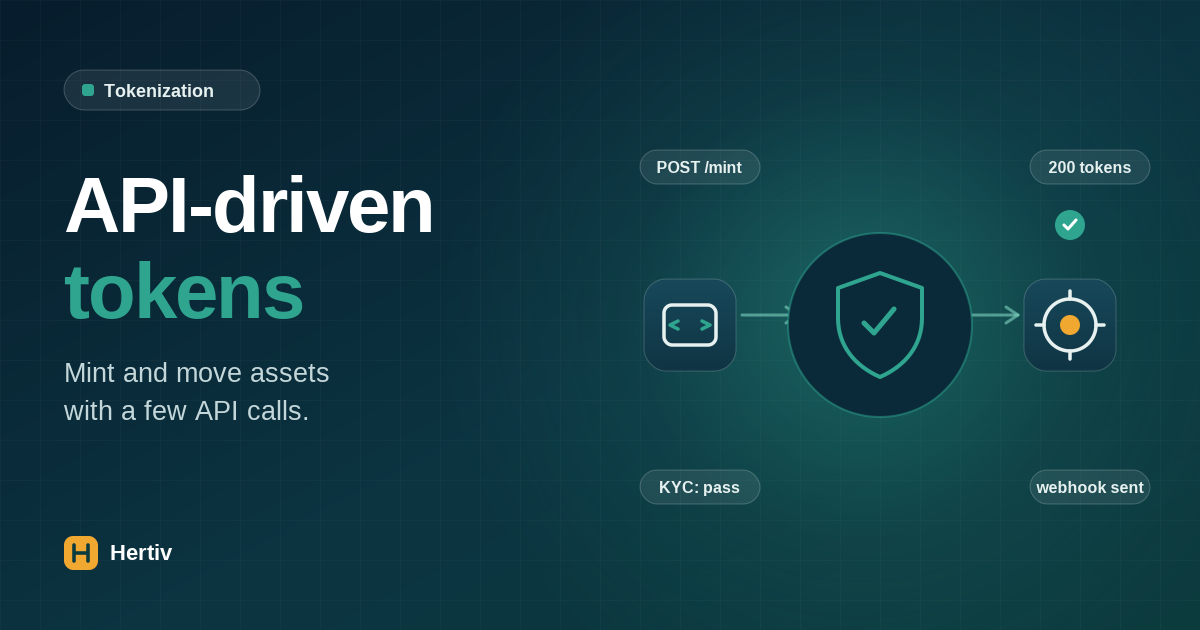
A mint-by-API flow moves from asset to token in six steps, and each step has a clear owner. The provider runs the chain steps; your app supplies the facts and shows the result to the user.
- Register the asset. Your app sends the asset details, the legal documents and the token rules, such as the total supply and who may hold the tokens.
- Check the investor. The provider runs identity and eligibility checks on the buyer and returns a pass or a fail.
- Take the payment. Your app confirms the buyer paid, in money or in a stablecoin, and sends the confirmation to the API.
- Mint the tokens. The provider writes the tokens to the chain and returns the transaction record.
- Confirm on-chain. Your app reads the transaction status and shows the buyer their balance.
- Record the result. Both sides store the transaction record, so an auditor can replay the whole flow later.
Steps two and three are the ones teams underestimate. Identity checks and payment confirmation are where most mints fail, and a clear error at that point is better than a token minted for the wrong person.
What checks run before a token is minted?
Before a token is minted, three checks run: identity, eligibility and limits. Identity confirms who the buyer is. Eligibility confirms the buyer may hold this asset, which can depend on where they live and what kind of investor they are. Limits confirm the amount fits the rules, such as a minimum investment or a cap per buyer.
These checks exist because a token is a regulated asset in most places, not just a database row. A provider that mints without them puts the asset owner at risk, and the tokens may be frozen or the offering shut down. The checks are the reason API-driven tokenization is not just a mint call.
Good providers run the checks in order and stop at the first failure, with a clear reason your app can show the user. A vague "check failed" helps no one; the buyer needs to know whether to fix a document, wait for a review, or accept that they cannot buy this asset.
Example (hypothetical): a fund tokenizes shares through an API
Example (hypothetical): a small property fund wants to sell shares to 200 investors. Onboarding each investor by hand takes about 30 minutes of staff time for documents, checks and payment confirmation, which adds up to 200 times 30, or 6,000 minutes, about 100 hours.
Through a tokenization API, the fund's app sends each investor's details to the check call, and the API returns a pass or a fail. Staff review only the failures, about 3 minutes per investor on average, which is 200 times 3, or 600 minutes, about 10 hours. The mint itself runs automatically for the investors who pass.
The saving is about 90 hours, but the bigger change is that the fund can take investors in parallel instead of one at a time. The API returns a record for every step, so the fund's auditor can replay each mint from the transaction log.
What are the common mistakes?
The most common API-driven tokenization mistakes are treating the mint call as the whole job, skipping the check errors, and ignoring webhooks. Each one turns a working integration into a support queue.
- Mint first, check later. Tokens minted before the checks pass may need to be frozen or burned.
- Ignoring error reasons. A vague error hides whether the buyer failed identity, eligibility or payment.
- No webhook handling. Without webhooks, your app and the chain drift apart and balances go stale.
- One key for everything. A single API key with full rights is a single point of failure; scope keys per job.
- No retry plan. A failed transaction that is retried blindly can mint twice; check status before retrying.
Start with one asset and a small group of investors, and run the API beside the manual process until the records match. For the wider build-or-buy decision, how RWA tokenization works shows the steps a platform must cover.
The legal and operational work around it is covered in how to implement tokenization, which is worth reading before the first mint.
When is API-driven tokenization the right choice?
API-driven tokenization is the right choice when your product already has users and you want to add tokenized assets without building a blockchain team. A fund, a marketplace or a fintech app with an existing interface fits this pattern: the API adds the token work, and the product keeps its screens.
It is the wrong choice when the asset needs custom contract logic that no provider supports, or when the team wants full control of the keys and the chain. In those cases, building in-house or using a managed platform with custom contracts fits better, even though it costs more.
Ask three questions before choosing. Does the provider support your asset type and your buyers' countries? Do its checks cover your legal needs? And can your team handle webhooks and retries, or do you need the provider to do more? If the answers are yes, an API is usually the fastest route to a working product. For help weighing the options, RWA tokenization is a good place to start the conversation.
Key takeaways
- API-driven tokenization adds token minting, transfers and checks through API calls, not a built platform.
- The provider runs the contracts, custody and fees; your app supplies facts and shows results.
- Identity, eligibility and limits must pass before any token is minted.
- Webhooks keep your app and the chain in step; without them, balances go stale.
- Start with one asset and a small investor group, and run the API beside the manual process.
Frequently asked questions
What is API-driven tokenization?
API-driven tokenization turns real assets into blockchain tokens through API calls. A developer sends requests to create an asset, check an investor, mint tokens or move them, and the provider runs the smart contract, the compliance checks and the custody. The product keeps its own interface while the token work runs behind the API.
How is API-driven tokenization different from tokenization as a service?
Tokenization as a service is a managed platform with a dashboard, while API-driven tokenization is the same work driven by code. The API route suits teams that already have a product and want tokens inside it, while the dashboard route suits teams that want to run offerings without writing code.
Do I need to write smart contracts to use a tokenization API?
No. The provider writes and audits the contracts, and your code only calls the API. You still need to understand the token rules, such as who may hold the tokens and what the limits are, because those rules are set when the asset is registered.
What happens if an API call fails halfway through a mint?
A good provider returns a clear status, and your app should check the status before retrying. Retrying blindly can mint twice. The safe pattern is to ask the API for the transaction status first, then retry only if no mint happened.
Are API-driven tokens legally compliant?
The API runs the identity and eligibility checks, but the asset owner stays responsible for the legal setup. The offering documents, the investor rules and the jurisdiction still need legal review. The API is a tool for carrying out the rules, not a replacement for them.
What does a tokenization API cost?
Providers usually charge per call, per asset or a monthly fee, and the exact price depends on the asset type and the volume. Since prices change and vary by provider, the safe step is to check the vendor's own pricing page, or ask for a quote for your volume.


