AI Virtual Medical Assistants: How Clinics Use Them
AI virtual medical assistants draft notes, sort inbox messages and handle scheduling. Here is what they do, where a clinician decides, and how to pick one.
On this page
Short answer
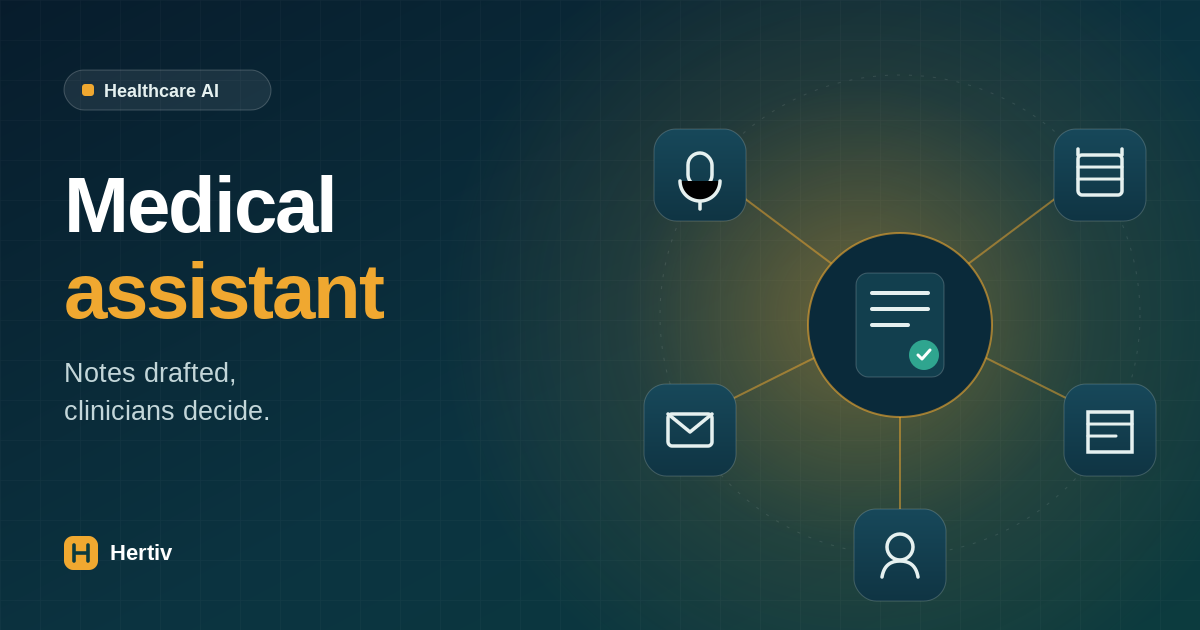
An AI virtual medical assistant is software that takes routine admin and drafting work off a care team's plate, such as writing visit notes, sorting patient messages, booking appointments and preparing referral letters. A clinician still reviews and signs everything, so the assistant saves time on paperwork without making clinical decisions on its own.
What is an AI virtual medical assistant?
An AI virtual medical assistant is software that helps a clinic or care team with the admin work around patient care, such as drafting visit notes, sorting inbox messages, booking appointments and preparing referral letters. It works from the clinic's records and the clinician's instructions, and a clinician reviews everything it produces.
It is not a doctor and it does not diagnose patients. Its job is the paperwork that fills a clinician's day: turning a consultation into a structured note, pulling the relevant history into a referral, or drafting a reply to a patient message. The clinical decisions stay with the clinician.
The name covers several tools, and they differ in what they touch:
| Task | What the assistant drafts | Who checks it |
|---|---|---|
| Visit notes | Structured note from the consultation | The clinician |
| Inbox triage | Sorted messages with draft replies | The clinician or nurse |
| Scheduling | Appointment offers and reminders | Front desk staff |
| Referrals | Referral letter with history attached | The clinician |
| Prior authorisation | Forms filled from the record | Admin staff |
| Follow-up | Check-in messages after a visit | The care team |
For the patient-facing side of the same idea, see virtual AI healthcare companions, which support patients directly rather than the care team.
What does it do for a care team?
An AI virtual medical assistant does the drafting and sorting that eats a care team's day, starting with visit notes and inbox messages.
Visit notes are the biggest win. The assistant listens to the consultation, with the patient's consent, and drafts a structured note in the clinic's format. The clinician reads it, corrects anything wrong and signs it, which is faster than writing the note from scratch after the patient leaves.
Inbox triage is next. Patient messages arrive all day, and most need a short reply or a booking, not a clinician's full attention. The assistant sorts them by urgency, drafts replies for routine ones and flags the ones that need a clinician, so the urgent messages are seen first.
Scheduling, referrals and prior authorisation fill the rest. The assistant offers appointment slots, drafts referral letters with the relevant history attached, and fills authorisation forms from the record. None of this is clinical judgement, which is why it is safe to automate with a human check. The drafting side is close to the conversational tools in AI chatbot development, which covers how chat and drafting tools are built.
How does it fit into a clinic's day?
An AI virtual medical assistant fits into a clinic's day by sitting between the patient contact and the record, drafting first and letting a clinician approve.
- Before the visit. The assistant pulls the patient's history, recent results and open tasks into a short brief for the clinician.
- During the visit. It records the consultation, with consent, and drafts the note in the clinic's format.
- After the visit. The clinician reviews and signs the note, and the assistant sends the follow-up messages and referral drafts.
- Between visits. It sorts inbox messages, books appointments and chases missing forms, flagging anything urgent.
- At the end of the day. The clinician clears the review queue, and the assistant files everything in the record.
The pattern matters more than any single feature: the assistant drafts, the clinician decides. A clinic that skips the review step is not saving time, it is handing clinical records to software that can get details wrong.
Where does it stop? Accuracy and safety limits
An AI virtual medical assistant stops at clinical judgement: it drafts and sorts, but it does not diagnose, prescribe or decide who needs urgent care.
Accuracy is the first limit. A note drafted from a consultation can miss a detail, mishear a drug name or attach the wrong history to a referral. That is why every draft needs a clinician's eyes before it is signed. A clinic that measures the assistant should measure the correction rate, not just the time saved.
Privacy is the second limit. The assistant works with patient records, so it must meet the clinic's data rules, keep audio and drafts inside approved systems, and let patients opt out of recording. A tool that sends consultation audio to a server the clinic has not approved is not a time saver, it is a compliance problem.
The third limit is scope. The assistant handles routine admin well and unusual cases badly. A patient with a complex history, a rare condition or a sensitive situation needs a person from the start, and the assistant should route those cases to one rather than drafting around them.
Example: a clinic frees four hours a day
Example (hypothetical): a clinic sees 40 patients a day, and each visit needs a note. Writing each note by hand takes about 10 minutes, so notes take 40 times 10 minutes, which is 400 minutes, or about 6 hours and 40 minutes of clinician time a day.
The clinic adds an AI virtual medical assistant. The assistant drafts each note during the visit, and the clinician reviews and signs it in about 4 minutes. Review takes 40 times 4 minutes, which is 160 minutes, or about 2 hours and 40 minutes.
Notes now take 160 minutes instead of 400, saving 240 minutes, which is 4 hours a day. The clinic uses that time for two more appointments and for clearing the inbox, which had been running a day behind. The saving only holds because the clinician still reviews every note: a signed note with a wrong drug dose costs far more than the time it saved.
How to choose an AI virtual medical assistant
You choose an AI virtual medical assistant by checking what it touches, how it handles patient data, and whether it fits the record system you already use.
- List the tasks. Pick the two or three admin tasks that cost the most time, such as notes and inbox triage, and judge the tool on those alone.
- Check the record integration. The assistant must read from and write to your record system, or staff will copy text between systems and lose the saving.
- Read the data handling. Where does audio go, how long is it kept, and can patients opt out of recording? Get the answers in writing.
- Run a small trial. Use it with one clinician for two weeks and count the correction rate on drafts, not just the time saved.
- Confirm the review step. Make sure every draft lands in a review queue that a clinician actually clears, with no auto-signing.
For teams building health software rather than buying it, AI for healthcare providers and health tech covers the wider build picture.
What are the common mistakes?
The most common AI virtual medical assistant mistakes are auto-signing drafts, skipping the trial, and letting the tool touch cases it should not.
- Auto-signing drafts. A note the clinician never read is a clinical record with nobody responsible for it.
- Skipping the trial. Buying for the whole clinic before one clinician has tested the correction rate hides the real cost.
- Recording without consent. Patients must know the visit is recorded and be able to opt out, or the clinic has a trust and compliance problem.
- Letting it triage urgent cases. Anything that could be urgent should reach a person fast, not sit in a draft queue.
- Ignoring the record integration. An assistant that cannot write to your record system creates copy-paste work instead of removing it.
- Measuring time saved only. A tool that saves an hour and introduces one wrong dose a week is not saving anything.
Key takeaways
- An AI virtual medical assistant drafts notes, sorts messages and fills forms for care teams
- It saves time on paperwork, but a clinician must review and sign every draft it produces
- Visit notes and inbox triage are the biggest wins; both need a human check before they count
- Check data handling and record integration before buying, and trial it with one clinician first
- It never diagnoses, prescribes or decides urgency: those stay with a clinician
Frequently asked questions
What is an AI virtual medical assistant?
It is software that helps a care team with admin work around patient care, such as drafting visit notes, sorting inbox messages, booking appointments and preparing referrals. A clinician reviews and signs everything it produces.
Does an AI medical assistant diagnose patients?
No. It drafts and sorts, but it does not diagnose, prescribe or decide who needs urgent care. Those decisions stay with a clinician, and anything that could be urgent should reach a person fast.
How much time does a medical assistant save?
It depends on the clinic, but visit notes are usually the biggest saving, since drafting is faster than writing from scratch. Measure the correction rate on drafts as well as the time saved, because corrections eat into the saving.
Is patient consent needed for AI note-taking?
Yes. Patients must know the consultation is being recorded and be able to opt out. The clinic should also be able to say where the audio goes, how long it is kept and who can access it.
Does it work with our record system?
That is the first question to ask. The assistant must read from and write to the record system the clinic already uses, or staff will end up copying text between systems and losing the time it was meant to save.
What is the difference from a health assistant app?
A medical assistant supports the care team with clinical admin such as notes and referrals. A health assistant app supports the patient with reminders, symptom guidance and booking. They serve different people.