AI-Powered Nutritional Guidance: What It Does and When to Trust It
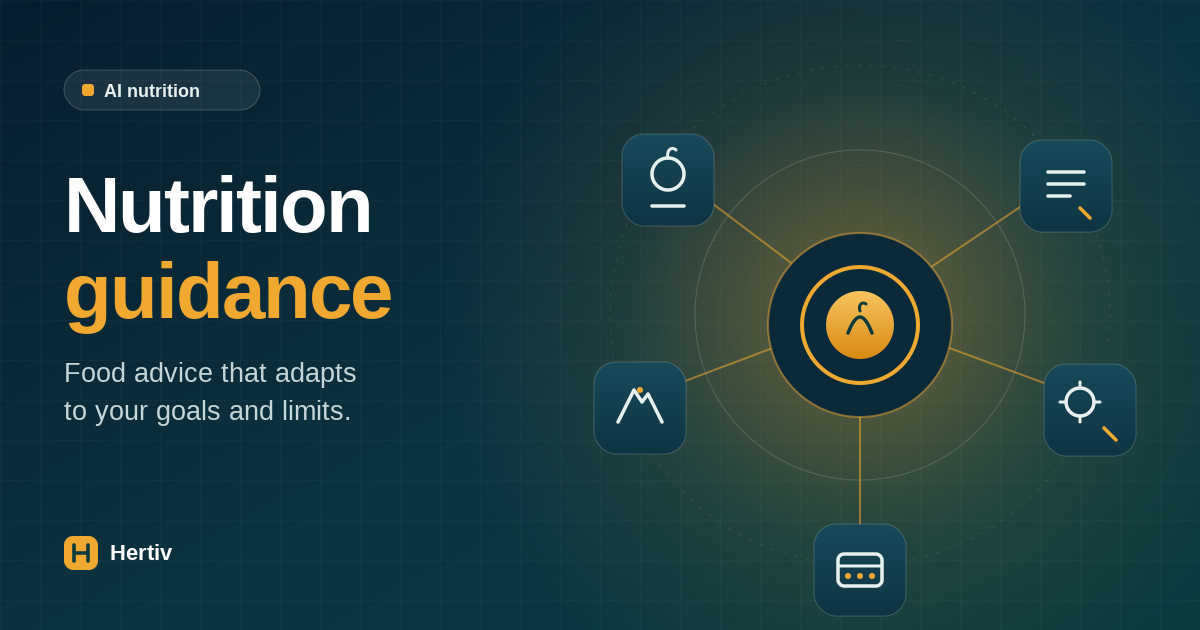
AI-powered nutritional guidance turns your food log, goals and health limits into daily meal suggestions. Here is how it works and when to ask a doctor instead.
On this page
Short answer
AI-powered nutritional guidance is software that turns what you eat, your goals and your health limits into daily food suggestions, using a model trained on nutrition data. It explains the trade-offs behind each suggestion and adapts when your day changes, but it is a helper, not a clinician.
What is AI-powered nutritional guidance?
AI-powered nutritional guidance is software that turns what you eat, your goals and your health limits into day-to-day food suggestions, using a model trained on nutrition data rather than a fixed meal plan. It reads a food log, a recipe or a shopping list and answers in plain language: what to eat more of, what to cut back on, and why.
It differs from a calorie counter. A counter records numbers; a guidance tool explains the trade-offs behind them and adjusts when your day changes. If you skip lunch, it suggests a lighter dinner instead of repeating the same plan.
| Kind of guidance | What it does | Who it suits |
|---|---|---|
| Daily meal suggestions | Builds meals from foods you like | People starting a routine |
| Label and recipe checks | Reads a label and explains it simply | Shoppers and home cooks |
| Goal tracking | Tracks protein, fibre and energy over weeks | People with a weight or fitness goal |
| Condition-aware plans | Flags foods that clash with a condition | People managing diabetes or allergies |
| Shopping lists | Turns a week of meals into a list | Busy households |
| Habit coaching | Nudges small changes, one at a time | People who want steady progress |
The guidance is only as good as the data behind it. A tool that knows your age, activity, allergies and goals gives useful advice; one that only knows your weight gives generic advice.
How does it build a plan for you?
It builds a plan in three passes. First it collects your starting point: age, height, weight, activity level, food likes and dislikes, allergies and any condition your doctor has flagged. Then it sets daily targets for energy, protein, fibre and the nutrients that matter for your goal. Finally it fills those targets with foods you actually eat.
The model checks each suggestion against a nutrition database, so a swap is judged on more than calories. Replacing white rice with lentils, for example, changes fibre and protein as well as energy, and the tool should say so.
Good tools explain their reasoning. If a suggestion seems odd, you should be able to see the numbers behind it: the portion, the nutrient totals and the goal it serves. A tool that hides its working is hard to trust and hard to correct.
Plans should adapt. Your weight, training load and schedule change, so the targets should be reviewed every few weeks rather than set once and left alone.
What data does it need, and what should stay private?
It needs enough detail to be useful, and no more. The basics are your age, height, weight, activity level and goal. Food logs, recipes and shopping history make the advice personal. Medical details such as diabetes, kidney disease or a severe allergy matter only when the tool claims to handle them.
Health data is sensitive, so check how a tool stores it before you share it. Look for a clear privacy policy, a way to delete your data, and no sale of health data to advertisers. If a free tool will not say how it makes money, assume your data is part of the answer.
Be careful with photos of meals and health records. A photo of a plate is harmless on its own, but a linked medical record is not. Share the minimum the tool needs to do its job, and keep the rest out. Data security and compliance guidance covers the basics of handling health data safely.
If you have a medical condition, treat the tool as a helper, not a clinician. It can flag a risky pattern, but the decision about what you should eat belongs to you and your doctor.
Where does it help most?
It helps most where the work is repetitive and the rules are clear. Planning a week of balanced meals, checking whether a new product fits your goals, and spotting a pattern in your eating are all jobs a model does well, because they use the same facts every time.
It is useful for people who cook at home and want variety without a dietitian on call. It suggests swaps from foods already in the kitchen, which beats a plan built around ingredients you never buy.
It also helps people who need to watch one number closely, such as sugar or salt. A tool that flags a high-sugar snack at the moment you log it is more useful than a monthly report you never read.
It helps least where the problem is not food at all. Stress eating, disordered eating and eating disorders need human support, not a smarter meal plan. A responsible tool says so and points to a professional instead of offering another recipe.
How to use it well in six steps
Using nutritional guidance well means treating it as a draft, not a prescription. Follow these steps to get value from it without handing over your judgement.
- Set one clear goal. Pick a single outcome, such as steadier energy or more protein, and tell the tool. Vague goals produce vague plans.
- Log honestly for two weeks. Record what you actually eat, including snacks and drinks. The model can only learn from real data.
- Check the first plan by hand. Read the portions and the nutrient totals. If a day looks wrong, say so and ask for a fix.
- Ask why, not just what. A good tool explains each suggestion. If it cannot explain, treat the advice with caution.
- Review progress monthly. Compare your goal with what changed. Adjust the targets instead of blaming the tool.
- Keep your doctor in the loop. Share the plan with a clinician if you have a condition, and follow their advice over the app's.
Most people give up on food tools in the first month because logging feels like work. A tool that lets you photograph a meal or speak a log entry is easier to keep using than one that needs every gram typed in.
Example (hypothetical): a busy parent plans a week of dinners
Example (hypothetical): a parent of two wants more protein at dinner without cooking two separate meals. She logs a typical week: chicken twice, pasta three times, takeaway twice. The tool shows protein averaging 55 grams a day against a target of 90, and fibre averaging 14 grams against a target of 25.
The tool suggests five swaps that keep the same cooking time. Lentils join the pasta on two nights, adding about 9 grams of protein and 8 grams of fibre per serving. Eggs replace cereal at breakfast on three days, adding about 12 grams of protein each morning. A yoghurt-based sauce replaces a creamy one once a week.
After three weeks the numbers move: protein averages 84 grams a day, fibre 23 grams, and the shopping bill is roughly the same because lentils and eggs cost less than the takeaway they replaced. The parent keeps the two takeaway nights, because a plan that bans them would not last.
The lesson is small and practical. The tool did not invent a new diet; it found the cheapest gaps in a real week and filled them with foods the family already liked.
What are the common mistakes?
The most common mistakes come from trusting the tool too much or too little. People either follow every suggestion without question, or they ignore the tool the moment it disagrees with a habit.
- Following a plan built on bad data. If your food log misses snacks and drinks, the targets are built on fiction. Log everything for two weeks first.
- Chasing a single number. Hitting a calorie target while ignoring protein, fibre and variety is a poor trade. Judge the whole day, not one metric.
- Treating guidance as medical advice. A general tool cannot diagnose or manage a condition. Conditions need a clinician, not an app.
- Expecting instant results. Eating patterns change over weeks, not days. Give a plan at least a month before judging it.
- Picking a tool that will not explain itself. If you cannot see why it suggests something, you cannot spot its mistakes.
- Sharing more health data than needed. Give the tool the minimum it needs, and check its privacy policy first.
If you are building a nutrition product and want the guidance to stay accurate and safe, AI product development covers how to design and test it properly.
Key takeaways
- It explains food choices, not just counts calories, and adapts when your day changes.
- It is only as good as the data you give it, so log honestly for two weeks first.
- Health data is sensitive: share the minimum and check the privacy policy.
- It helps most with repetitive jobs like meal planning and spotting patterns.
- For a medical condition, a clinician's advice always comes before the app's.
Frequently asked questions
Is AI nutritional guidance the same as a diet plan?
No. A diet plan is a fixed set of meals, while AI guidance builds suggestions from your food log, goals and limits, then adjusts them as your week changes. It explains why each swap helps instead of handing you a list to follow blindly.
Can it help with diabetes or allergies?
It can flag foods that clash with a condition you have told it about, and it can track sugar or salt closely. But it cannot diagnose or manage a condition, so share the plan with your doctor and follow their advice over the app's.
Do I need to log every meal?
Logging helps for the first two weeks, because the tool learns from real data. After that, many people log only the meals that change, such as eating out, and let the tool fill in the routine days.
How do I know if the advice is good?
A good tool shows its working: the portion, the nutrient totals and the goal each suggestion serves. If it cannot explain a suggestion, treat the advice with caution and check it yourself.
Is my health data safe in these apps?
It depends on the app. Look for a clear privacy policy, a way to delete your data, and no sale of health data to advertisers. Share only what the tool needs to do its job.
Can it replace a dietitian?
No. A dietitian understands your history, your condition and your habits in a way a model cannot. AI guidance is useful for day-to-day planning between visits, not as a replacement for professional care.