AI Patient Appointment Scheduling: How It Works
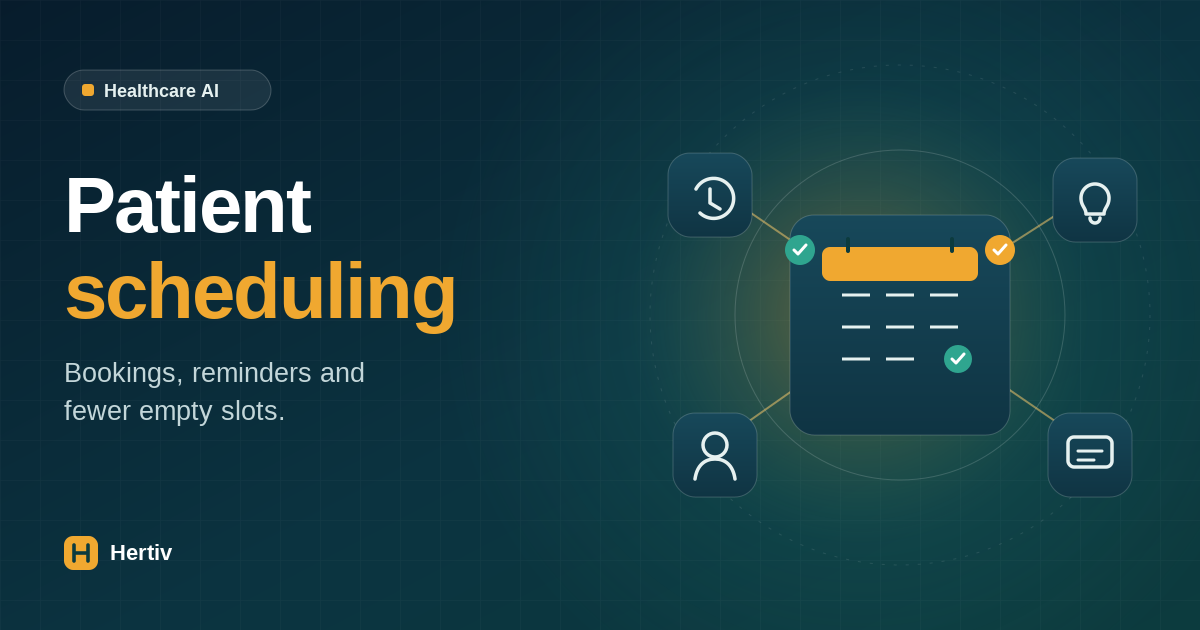
AI patient appointment scheduling matches patients to slots, sends reminders and fills gaps. Here is how it works, what it needs, and where it goes wrong.
On this page
Short answer
AI patient appointment scheduling is software that books, confirms and reschedules medical appointments by matching patient requests to clinician availability, room capacity and urgency. It replaces phone queues and manual diaries with a system that reads a request, offers a slot and handles the follow-up automatically.
What is AI patient appointment scheduling?
AI patient appointment scheduling is the use of software to manage the full booking cycle: a patient asks for an appointment, the system finds a suitable slot, confirms it, reminds the patient, and reschedules it if something changes. It works across phone, web, app and messaging channels.
The difference from an online booking form is judgement. A form shows free slots and leaves the choice to the patient. An AI scheduler reads the request, weighs urgency, the right clinician, the right appointment length and the clinic's rules, then offers the best fit rather than every free slot.
It is used by GP practices, dental clinics, hospitals and specialist services. The goal is the same everywhere: fewer empty slots, shorter waits for urgent cases, and less time spent by staff on the phone.
What does the AI actually do?
The AI does five jobs in the booking cycle: understand the request, match it to a slot, confirm and remind, fill gaps, and learn from what happened. Each job reduces a different kind of waste.
| Job | What the AI does | Who benefits |
|---|---|---|
| Understand the request | Reads free text or speech and picks the visit type | Patients, who book in plain words |
| Match to a slot | Weighs urgency, clinician and length | Clinicians, who get the right cases |
| Confirm and remind | Sends reminders in the patient's channel | Clinics, with fewer no-shows |
| Fill gaps | Offers cancelled slots to a waitlist | Patients waiting for a slot |
| Learn from outcomes | Tracks which slots go unused | Managers, who fix the schedule |
The matching step is where most of the value sits. A routine follow-up can take any slot, but a new patient with a worrying symptom needs an early slot with the right clinician. Getting that triage right matters more than speed. See AI for healthcare providers and health tech for the wider set of clinical tools that share the same patient data.
How does a booking flow through the system?
A booking flows through the system in six steps, from the patient's first message to the confirmed appointment in the diary.
- The patient asks. They type or say what they need, such as a follow-up, a new symptom or a repeat prescription review.
- The system classifies the request. It picks the visit type and flags urgency based on the words used and the patient's record.
- It checks the rules. It applies clinic rules: which clinicians do this visit, how long it takes, and what must happen first.
- It offers slots. It shows two or three options that fit, not the whole diary, so the patient can choose quickly.
- It confirms and reminds. It books the slot, sends a confirmation, and reminds the patient before the visit.
- It handles changes. If the patient cancels, the slot goes to the waitlist automatically.
Human staff stay in the loop for the cases the system cannot judge. Anything flagged as urgent, unclear or sensitive goes to a person, and the system records why it handed over. A build guide for this kind of assistant is covered in how to build an AI healthcare scheduling assistant.
Example: a clinic cuts its empty slots
Example (hypothetical): a dental clinic with four dentists runs 160 appointment slots a week. Before the change, 24 slots a week go empty because of late cancellations and no-shows, and reception spends about 30 hours a week on booking calls.
After the change, the system sends reminders two days and two hours before each visit, and cancelled slots are offered to a waitlist of 90 patients. Empty slots fall from 24 to 9 a week, so 15 more patients are seen each week. Reception time on booking calls falls from 30 hours to 12 hours a week, and the saved 18 hours go to in-person patient help.
The clinic counts success by filled slots and by complaints, not by how many bookings were automated. If patients complain that they cannot reach a person, the automation has gone too far.
What does a clinic need before it starts?
A clinic needs clean diaries, clear rules and a fallback to a person before AI scheduling helps. The software is the easy part; the rules are the work.
- Clean calendars. Clinician availability, room capacity and leave must be accurate, or the system will offer slots that do not exist.
- Written triage rules. Which symptoms need an early slot, which visits need a specific clinician, and what must never be booked automatically.
- Patient contact data. Reminders only work if phone numbers and email addresses are current.
- A human fallback. A phone line that reaches a person for urgent, complex or distressed patients.
- Consent and privacy. Patients should know their request is read by software, and health data must stay inside the clinic's approved systems.
Voice booking is a common add-on for patients who prefer to call. AI voice agent development for phone and voice channels covers how phone-based booking is built.
What are the risks and limits?
The risks of AI appointment scheduling are wrong triage, lost access for some patients, and over-trust in the system. Each one needs a named safeguard.
- Wrong triage. A system can misread a serious symptom as routine. Urgent flags and a human review step are the safeguard.
- Lost access. Patients without a smartphone or with limited English can be locked out. A phone line and in-person booking must stay open.
- Over-trust. Staff can stop checking the diary because the system usually gets it right. A weekly manual review catches drift.
- Data errors. A wrong phone number means no reminder, and a wrong record means the wrong visit type. Data hygiene is part of the job.
- Privacy. Appointment requests contain health information. They must not be sent to tools or vendors outside the clinic's approved list.
What are the common mistakes?
The most common appointment scheduling mistakes are automating before the rules are written, removing the phone line too early, and measuring bookings instead of filled slots.
- Automating unwritten rules. If triage rules live only in receptionists' heads, the system will guess and get it wrong.
- Removing human access. Closing the phone line forces vulnerable patients into a channel they cannot use.
- Measuring bookings, not attendance. A booked slot that nobody attends is worse than an empty slot, because it blocks the diary.
- Reminders that annoy. Too many reminders train patients to ignore them. Two is usually enough.
- No waitlist. Without a waitlist, a cancelled slot stays empty even when patients are waiting.
- Ignoring the data. If nobody reviews which slots go empty, the schedule never improves.
Key takeaways
- AI scheduling matches patient requests to slots by urgency, clinician, length and clinic rules
- It understands the request, matches a slot, confirms, reminds, fills gaps and learns
- Reminders plus a waitlist cut empty slots more than automation alone
- Clean calendars, written triage rules and a human fallback come before the software
- Urgent cases must always reach a person, and phone booking must stay open
- Measure filled slots and complaints, not how many bookings were automated
Frequently asked questions
What is AI patient appointment scheduling?
It is software that books, confirms and reschedules medical appointments by matching patient requests to clinician availability, room capacity and urgency. It reads the request, offers the best-fitting slots, sends reminders, and fills cancelled slots from a waitlist, replacing phone queues and manual diaries.
How does AI scheduling reduce no-shows?
It sends reminders in the patient's preferred channel, usually two days and two hours before the visit, and makes rescheduling easy so patients move appointments instead of missing them. Clinics that add a waitlist also fill cancelled slots quickly, so fewer slots go to waste.
Can AI scheduling handle urgent cases?
It can flag them, but it should not decide them alone. The system uses triage rules to mark urgent requests and route them to a human, who confirms the slot. Anything unclear, sensitive or flagged as urgent must reach a person rather than being booked automatically.
What happens when a patient cancels?
The slot is offered automatically to patients on the waitlist, in order of urgency and waiting time. If nobody on the waitlist takes it, the slot stays visible for new bookings. The goal is to fill the gap within hours, not days.
Do patients still need to phone the clinic?
Yes, and the phone line should stay open. Some patients cannot use an app or website, and some requests are too complex or sensitive for a form. A good system keeps phone booking alongside digital booking and lets staff see the same diary.
Is patient data safe in AI scheduling systems?
It is safe when the system runs inside the clinic's approved tools and follows health data rules for the region. Appointment requests contain health information, so they must not be sent to outside tools or vendors that are not approved, and patients should know their request is read by software.