Why NFTs Matter for Brands
NFTs let brands reward loyal customers, gate access to products and events, and sell digital collectibles. They work best when the token does something useful.
On this page
Short answer
NFTs matter for brands because they turn a one-time purchase into an ongoing relationship: a token can carry membership, rewards, event access and resale rights in one place. They work when the token gives the holder something useful, a discount, early access or a collectible they want, and they fail when the token is only a picture with no benefit attached.
What is an NFT for a brand?
An NFT for a brand is a unique digital token on a blockchain that represents membership, ownership of a digital item, or access to something a brand offers. Unlike a regular coupon or loyalty card, the token lives in the customer's wallet and can be checked, transferred or resold without the brand running a database.
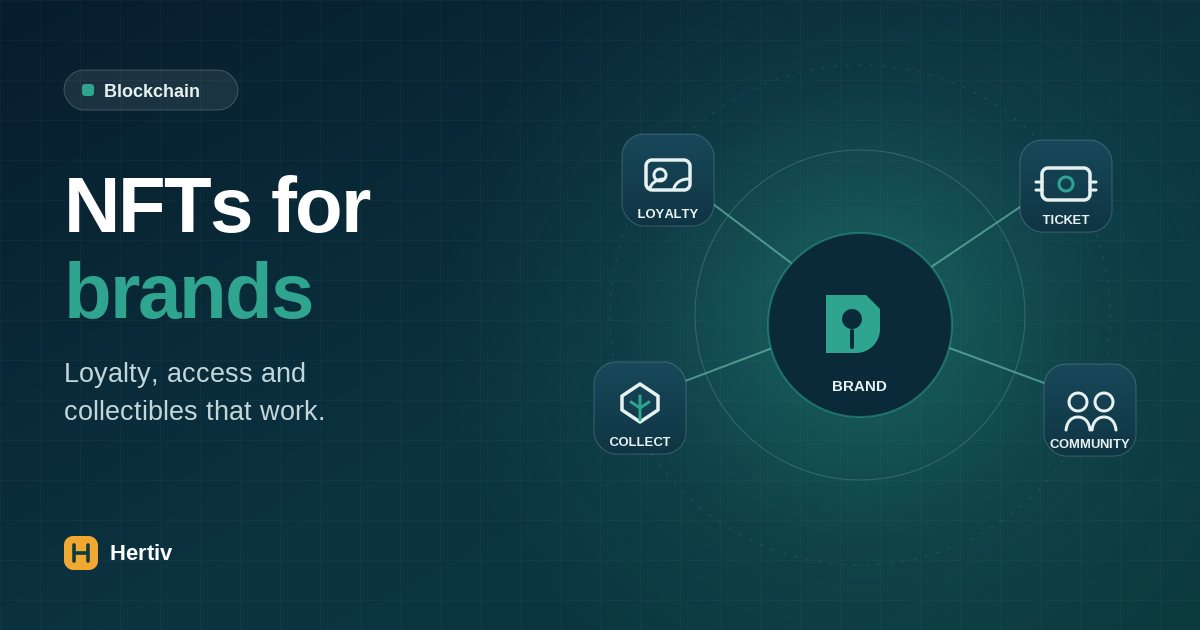
Brands use NFTs in four main ways, and most programmes combine two or more of them:
| Use | What the holder gets | Example in practice |
|---|---|---|
| Membership | Ongoing perks and status | Loyalty tier with member discounts |
| Collectible | A digital item to keep or trade | Limited art or character drops |
| Ticket | Entry to an event | Concert or launch access |
| Product pass | Early or exclusive buying rights | First access to a limited release |
The common thread is that the token is useful after the sale. A token that does nothing once claimed is a souvenir, not a programme, and customers treat it that way. If the basics are unclear, what an NFT is covers the starting point.
Why do brands use NFTs?
Brands use NFTs because they solve three problems that loyalty cards and email lists handle badly: proving who holds what, letting customers trade or transfer benefits, and keeping the relationship alive between purchases.
- Proof without a database. A wallet can prove membership at the door or at checkout, even across partners.
- Transferable benefits. A ticket or pass can be resold or gifted, which spreads the brand to new people.
- Ongoing contact. Each token is a channel the brand can use for drops, votes and early access.
- Scarcity that is easy to check. Anyone can see how many tokens exist and who holds them.
The strongest reason is retention. A customer who holds a brand token has a reason to come back, to claim a perk, join a drop or check a new benefit, while a customer with only a receipt has no reason to return. NFTs in social media show the same pattern in community building.
Retail brands in particular use tokens for loyalty and early access, and AI and tokenization for retail and e-commerce covers the wider picture for shops and online stores.
What makes an NFT programme work?
An NFT programme works when the token gives the holder a clear benefit, the claim process takes minutes, and the brand keeps adding value after launch. Programmes that launch with a single drop and no plan for what comes next usually fade within weeks.
Three design choices matter most. First, pick one benefit to lead with, a discount, early access or a collectible, and make it obvious. Second, keep the claim flow simple: a wallet, a link and a clear next step. Third, plan the next three benefits before launch, so holders have a reason to stay.
Legal and tax treatment also matter. A token that looks like an investment can attract rules that a loyalty token does not, so get advice on how your token is described and sold before you commit.
What does an NFT brand programme cost?
An NFT brand programme costs a mix of design, smart contract work, minting and ongoing community management. The figures below are planning ranges, not quotes, and they vary with the chain, the art and the size of the drop.
| Part | Planning range | What drives it |
|---|---|---|
| Art and design | $5,000-$25,000 | Number of items and artist fees |
| Smart contract and minting | $5,000-$30,000 | Chain, audit and minting method |
| Platform and wallet support | $3,000-$15,000 | Claim flow and customer support |
| Community and marketing | $2,000-$10,000 per month | Size of audience and drop cadence |
Most of the cost is people, not tokens. A programme with a part-time community manager and a simple contract can run on the low end, while a large drop with custom art and an audit sits at the high end.
How to launch an NFT programme in five steps
A brand NFT programme launches in five steps, and the order matters: the benefit comes first, the token second, and the marketing last.
- Define the benefit. Pick one thing the token gives, a discount, early access or a collectible, and write it in one sentence.
- Choose the chain and wallet. Pick a chain your customers can use cheaply and a wallet they already have.
- Build the contract and claim flow. Keep the mint simple, test the claim path with real users, and get the contract reviewed.
- Plan the first three benefits. Decide what holders get in month one, two and three before the drop.
- Launch small, then grow. Start with a limited group, fix the claim flow, then open it wider.
The contract is the part that needs care. NFT smart contracts explain how the token rules are written and checked.
Example: a coffee chain launches a loyalty NFT
Example (hypothetical): a coffee chain with 40 shops launches a loyalty NFT that gives holders a free drink each month and early access to seasonal menus. It mints 5,000 tokens and gives one to each customer who joins the loyalty programme in the first month.
In the first month, 2,000 holders claim the free drink, and each spends an average of $12 on food with the visit, which adds $24,000 in food sales. Another 800 holders use early access to buy a limited seasonal drink, spending $9 each, which adds $7,200. The programme brings in $31,200 in related sales in its first month, before counting the drinks given away.
The chain keeps the programme going by adding a new seasonal benefit each month and by letting holders gift a token to a friend. The token stays useful, so holders keep coming back.
What are the common mistakes?
The most common brand NFT mistakes are launching a token with no benefit, making the claim process hard, and treating the drop as the end of the programme instead of the start.
- A token with no benefit. Customers claim it once and never return.
- A claim flow that needs a crypto wallet tutorial. Most customers will give up.
- No plan after launch. Holders need a reason to stay past the first week.
- Overpromising resale value. A loyalty token is not an investment, and saying otherwise creates legal risk.
- Ignoring support. Holders will ask how to claim, transfer and use the token, and someone has to answer.
Key takeaways
- A brand NFT is a token that carries membership, rewards, access or ownership in a customer's wallet
- NFTs work for brands when the token gives a clear benefit after the sale
- The strongest uses are loyalty, gated access, tickets and limited collectibles
- Most of the cost is people and design, not the tokens themselves
- Plan the first three benefits before launch, and never describe a loyalty token as an investment
Frequently asked questions
Why would a brand use an NFT instead of a loyalty card?
A loyalty card lives in the brand's database, while an NFT lives in the customer's wallet and can be checked, transferred or resold without the brand running the system. That makes it useful across partners and events, and it gives the customer something they can keep or pass on.
Do customers need crypto to use a brand NFT?
Not always. Many brand programmes let customers claim a token with an email and a simple wallet the brand sets up for them, so no crypto purchase is needed. The claim flow should be tested with people who have never used a wallet before.
What is the simplest NFT programme a brand can launch?
A membership token that gives holders a monthly perk, such as a discount or early access to a product. It needs one clear benefit, a simple claim flow and a plan for the next few benefits, and it can start with a small group before opening wider.
How much does a brand NFT programme cost?
Costs vary with art, contract work and community size, but a small programme can start in the low tens of thousands of dollars, with a few thousand a month for community management. Most of the cost is people and design, not the tokens themselves.
Can an NFT help a brand sell more?
It can, when the token drives repeat visits, a monthly perk, early access or a collectible that brings holders back. It does not help when the token has no benefit, because customers claim it once and never return.
What legal issues should brands check before launching an NFT?
Check how the token is described and sold, since a token that looks like an investment can attract rules that a loyalty token does not. Get advice on the wording, the terms and any resale promises before you commit to a launch.


