White Label NFT Marketplace: How It Works and What to Check
White label NFT marketplaces let a business launch its own branded place to mint, list and sell NFTs. Here is what one includes and how it works.
On this page
Short answer
A white label NFT marketplace is a ready-made platform for buying and selling NFTs that a business rebrands as its own, instead of building the marketplace from scratch. It comes with minting, listings, payments and user accounts already built, and the owner adds its own name, logo, colours and domain. The underlying smart contracts and infrastructure stay the same; only the brand on top changes.
What is a white label NFT marketplace?
A white label NFT marketplace is a ready-made platform for buying and selling non-fungible tokens that a business rebrands as its own. Instead of writing the marketplace code from scratch, the business buys or licences a finished product, adds its name, logo, colours and domain, and opens it to its own users.
The platform handles the parts every marketplace needs: user wallets, NFT minting, listings, auctions or fixed-price sales, and payments. The owner controls the branding, the fees and which collections are listed. The vendor keeps the core software updated, while the owner runs the business on top of it.
This is different from listing on a public marketplace. On a public marketplace you rent space inside someone else's brand and rules. With a white label platform you own the storefront, the user accounts and the fee structure, which is why brands, artists and gaming studios choose it when they want their own trading venue.
What does a white label NFT marketplace include?
A white label NFT marketplace should include the storefront, the minting flow, the trading tools and the admin controls. If any of these are missing, the owner will need extra work or a second vendor to fill the gap.
| Part | What it does | Why it matters |
|---|---|---|
| Storefront | Branded pages for collections, items and creators | This is what buyers see first |
| Minting | Turns files or game items into NFTs on a chain | Creators need it to list anything |
| Listings and sales | Fixed price, auction and offers | Different items sell in different ways |
| Wallet and payments | Connects buyer wallets and settles payment | Without it, no sale can complete |
| Royalties | Sends a share of resales to the creator | Keeps creators loyal to the platform |
| Admin panel | Fees, users, collections and reports | The owner needs control without code |
Ask the vendor to show each part working on a demo, not just on a slide. A minting flow that looks simple in a sales call can hide extra steps, such as manual approval or a separate wallet setup, that slow real users down. For the contract side, smart contract development covers how the minting and royalty rules are written.
How does a white label NFT marketplace work?
A white label NFT marketplace works by connecting a branded front end to smart contracts that record ownership on a blockchain. The buyer sees a normal shop; the chain records the transfer behind the scenes.
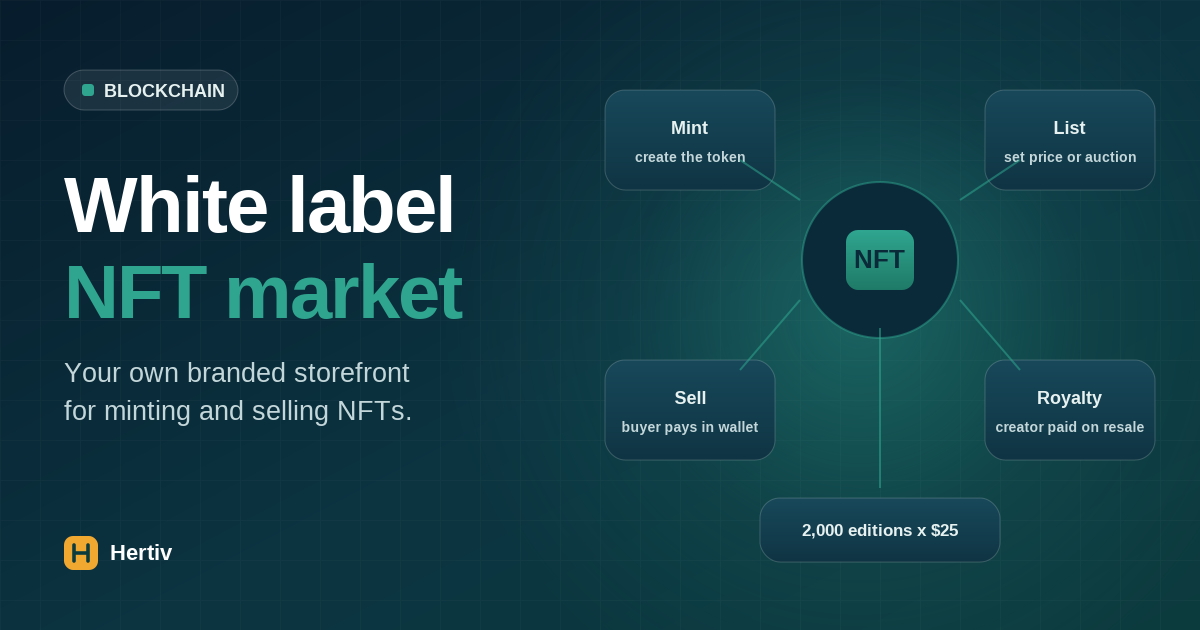
- A creator mints an NFT. They upload a file, set a price or auction terms, and the platform writes a token to the chosen chain.
- The item is listed. It appears on the branded storefront with its image, description and price.
- A buyer connects a wallet. The wallet holds the funds and the NFTs, so no account password is needed for payment.
- The sale settles on chain. The smart contract moves the token to the buyer and the payment to the seller, minus the platform fee and any royalty.
- Ownership is recorded. The token now sits in the buyer's wallet, and the buyer can resell it on the same marketplace.
Gas fees and chain choice affect the experience. A chain with high fees makes cheap items hard to sell, while a chain with low fees may have fewer buyers. Most white label platforms support one or two chains at launch and add more later.
What does a white label NFT marketplace cost?
The cost of a white label NFT marketplace depends on the licence model, the chain, and how much custom work the owner wants. Vendors price differently, so check the vendor site for current plans before budgeting.
Common cost parts are a one-time setup or licence fee, a monthly platform fee, a share of each sale, and the cost of custom branding or extra features. Some vendors charge a flat fee and no sale share; others charge little up front and take a larger cut of each transaction. The cheapest headline price is not always the cheapest over a year of trading.
There are also costs outside the vendor invoice. Gas fees for minting and transfers, wallet support, customer service and marketing all need a budget. A marketplace with no marketing plan will have few listings and fewer buyers, whatever the platform costs. For a sense of the build side, NFT marketplace development cost breaks down where the money goes.
Example (hypothetical): a small art collective launches its own marketplace
Example (hypothetical): a small art collective with 40 artists wants its own marketplace instead of paying fees on a public one. It licences a white label platform, adds its name and colours, and lists 2,000 editions at $25 each.
If all 2,000 editions sell, total sales are 2,000 x $25 = $50,000. The platform takes a 2.5% fee, which is $1,250, and each artist keeps the rest of their own sales. The collective also sets a 5% royalty on resales, so when a $25 edition later resells for $40, the artist receives $2.
The collective's real cost is not just the platform fee. It also pays for minting gas, a part-time support person and promotion to its mailing list. The launch works because the collective already has buyers; a marketplace without an existing audience would need far more marketing spend before the first sale.
What are the common mistakes?
The most common white label NFT marketplace mistakes are choosing a platform before knowing the audience, ignoring the chain choice, and underestimating support and marketing costs.
- No audience first. A marketplace with no buyers and no sellers is an empty shop. Line up creators and buyers before launch.
- Wrong chain. Picking a chain your buyers do not use means they must buy new tokens and learn a new wallet before they can trade.
- Hidden fees. A low licence fee can hide a high sale share or paid add-ons for basic features like royalties.
- No royalty plan. If royalties are unclear or unenforced, creators leave for a platform that pays them on resales.
- Skipping support. Wallet problems and failed transactions need fast help, or buyers will not come back.
How to choose a white label NFT marketplace
You choose a white label NFT marketplace by testing the buying and selling flow yourself, then comparing fees, chains and support on equal terms.
- List your must-haves. Write down the chains, sale types, royalty rules and branding you need, and reject vendors that miss any of them.
- Test the demo as a buyer and a seller. Mint an item, list it, buy it and check the fees and the time each step takes.
- Read the fee schedule in full. Add licence, monthly and per-sale fees for a realistic year of trading, not just the first month.
- Check the contract and exit terms. Ask who owns the user data and the listings, and what happens if you stop using the vendor.
- Ask about support and updates. Confirm response times, chain upgrades and who fixes a bug in the smart contracts.
If you are building the marketplace itself, a partner for blockchain development can review the vendor's contracts and architecture before you sign.
And for the minting side, what NFT minting is explains the step buyers and creators will use most.
Key takeaways
- A white label NFT marketplace is a ready-made trading platform rebranded as your own
- Storefront, minting, listings, payments, royalties and an admin panel are the core parts
- Sales settle through smart contracts, with the platform fee and royalty taken at the same time
- Budget for licence, per-sale fees, gas, support and marketing, not just the licence
- Test the demo as both a buyer and a seller before signing
Frequently asked questions
What is the difference between a white label and a custom NFT marketplace?
A white label marketplace is a finished product you rebrand, so it launches in weeks and costs less up front. A custom marketplace is built from scratch, which takes longer and costs more but gives full control over every feature, chain and contract.
Can I move my marketplace to another vendor later?
It depends on the contract. Some vendors let you export user data and listings, while others keep the contracts and data on their side. Ask about ownership, export formats and exit fees before you sign, not after.
Which blockchain should a white label NFT marketplace use?
Use the chain your buyers already use, because they will not switch wallets and buy new tokens just to trade on your site. Check where your audience already holds NFTs, then confirm the vendor supports that chain and its fee levels.
How do royalties work on a white label marketplace?
A royalty is a share of each resale that goes back to the original creator, set in the smart contract or the platform rules. The rate and whether it is enforced vary by chain and vendor, so confirm both before promising royalties to creators.
Do I need a crypto wallet to run a white label marketplace?
Your users need wallets to buy and sell, but the owner does not need to hold crypto to run the business. Many platforms also offer card payments through a payment partner, which lets buyers without a wallet still purchase.
Is a white label NFT marketplace good for a small brand?
It can be, if the brand already has an audience that wants to buy. The platform removes the build cost, but it does not create demand. A small brand with loyal buyers often does better than a large launch with no audience.


