What Is a P2P Crypto Exchange and How Does It Work?
A P2P crypto exchange connects buyers and sellers directly and holds the coins in escrow until payment clears. Here is how a trade works and what to check first.
On this page
Short answer
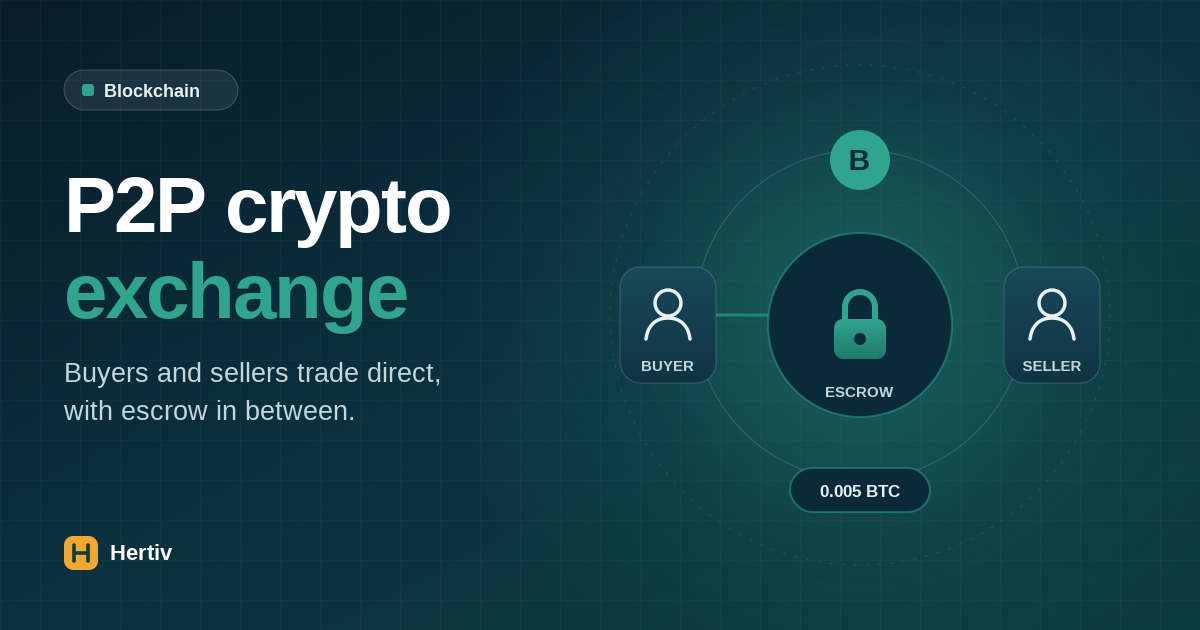
A P2P crypto exchange is a marketplace where people trade cryptocurrency directly with each other instead of buying from the exchange itself. The platform matches buyers and sellers, holds the seller's coins in escrow while the buyer pays, and releases them only when the payment is confirmed.
What is a P2P crypto exchange?
A P2P crypto exchange is a marketplace where buyers and sellers trade cryptocurrency directly with each other. Unlike a standard exchange, the platform does not set the price or sell you coins from its own stock. It matches two people, shows the offers, and holds the seller's coins in escrow until the buyer has paid.
The letters P2P stand for peer to peer. Each trade is a deal between two users, and the price, payment method and limits are set by the seller who posted the offer. You pick an offer that fits, send the payment through the method the seller accepts, and the platform releases the coins to your wallet.
Most P2P exchanges support bank transfer, mobile money, cash in person and payment apps. That is why they are popular in places where card payments or a local exchange are hard to use. If you want to compare the main venues first, see the best P2P crypto exchanges shortlist.
How does a P2P trade actually work?
A P2P trade follows the same steps on most platforms. Knowing the order helps you spot when something is off.
- Find an offer. Filter by coin, currency, payment method and price. Check the seller's completion rate and number of past trades.
- Open the trade. Enter the amount you want. The seller's coins move into escrow at once, so they cannot sell the same coins to someone else.
- Pay the seller. Send the money through the agreed method and mark the trade as paid. Use only the payment details shown inside the trade window.
- Wait for confirmation. The seller checks the payment and confirms receipt. The platform then releases the coins from escrow to your wallet.
- Leave feedback. Rate the trade. Your rating feeds the seller's record and helps the next buyer judge them.
If the seller does not confirm, or you never paid, either side can open a dispute. A support agent then reviews the payment proof and the chat record before deciding who keeps the coins.
Custodial or non-custodial: which kind of P2P exchange is it?
P2P exchanges come in two shapes, and the difference is who holds the coins during the trade.
| Feature | Custodial P2P exchange | Non-custodial P2P exchange |
|---|---|---|
| Who holds coins in escrow | The platform | A smart contract |
| Account needed | Yes, with identity checks | Often just a wallet |
| Payment methods | Many, including bank and cash | Mostly bank and payment apps |
| Disputes | Support team decides | Contract rules or arbitrators decide |
| Speed | Minutes once payment clears | Minutes, plus block confirmation time |
Custodial platforms are easier for first-time buyers because support can step in when a trade goes wrong. Non-custodial platforms give you more control, since no company holds your coins, but you must read the contract terms yourself. A decentralized P2P exchange explains the non-custodial model in more detail.
Teams that want to run a marketplace rather than trade on one can read how to build a P2P crypto exchange for the builder side of the same model.
What payment methods do P2P exchanges support?
Payment choice is the main reason people use P2P exchanges. A seller can accept almost any method the platform allows, and buyers filter offers by the method they can actually use.
Bank transfer is the most common method for larger trades because it leaves a clear record. Mobile money and payment apps suit smaller, faster trades. Some sellers accept cash in person, which needs care: meet in a public place, count the cash before you mark the trade as paid, and never hand over money before the coins are in escrow.
Gift cards and prepaid codes appear on some platforms, but they carry a higher scam rate because a code can be used and then claimed as unused. New buyers should avoid payment methods that cannot be traced or reversed until they understand the risks.
How do P2P exchanges keep trades safe?
Escrow is the main safety tool. The seller's coins are locked when the trade opens, so the seller cannot run off with the buyer's money and the coins at the same time. The platform releases them only after the seller confirms the payment.
Reputation is the second layer. Sellers build a record of completed trades, response times and feedback. A seller with hundreds of completed trades and a high completion rate has more to lose from a bad deal than a brand-new account does.
Identity checks are the third layer on custodial platforms. Sellers verify their identity before they can post offers, which makes it harder to run a scam account and start again. Even so, escrow and reputation only help if you stay inside the platform: never agree to pay outside the trade window, and never share your account password or wallet seed phrase with anyone.
Example (hypothetical): buying $300 of bitcoin
Example (hypothetical): Sara wants to buy 0.005 bitcoin. The market price is $60,000 per bitcoin, so 0.005 bitcoin is worth $300 at market. She finds a seller asking $60,600 per bitcoin, which is 1% above the market price.
At the seller's rate, 0.005 bitcoin costs $303. The platform charges a fee of 0.5% of the trade value, which is $1.52. Sara pays $304.52 in total and receives 0.005 bitcoin once the seller confirms her bank transfer.
The extra $4.52 is the cost of the payment method and the seller's margin. A cheaper offer would save money, but the seller's record matters too: a seller with 2,000 completed trades and a 99% completion rate is often a safer pick than a new seller with a slightly lower price.
What are the fees and limits?
Fees on P2P exchanges are usually lower than on standard exchanges, but they vary by platform and by who posts the offer. Makers who post offers often pay no fee, while takers who accept an offer pay a small percentage of the trade value.
Check the fee page of the platform you use, since the exact rate is set by the vendor. This article does not quote prices, so see the vendor site for current figures.
Limits are set by the seller, not the platform. An offer may allow trades from $10 to $1,000, and sellers often raise the limit for buyers with a verified account and a clean record. Daily and monthly limits from identity checks also apply on custodial platforms.
Watch the spread as well as the fee. A seller can charge 2% above the market price and advertise no fee, which costs more than a seller at market price with a 0.5% fee. Compare the total amount you pay for the coins you receive, not the fee line alone.
What are the common mistakes?
The most common mistake is paying outside the platform. A seller who asks you to pay through a different chat app or a personal account can take the money and never confirm the trade, and the platform cannot help because the trade never existed in its system.
Another mistake is marking a trade as paid before you have actually paid. That tells the seller the money is on its way, and if the payment then fails, the dispute is harder to win. Only mark a trade as paid after the money has left your account.
A third mistake is ignoring the seller's record to chase the lowest price. A price far below the market rate is often bait. Check the completion rate, the number of past trades and recent feedback before you open a trade, and start with a small amount on your first trade with a new seller.
Key takeaways
- A P2P exchange matches buyers and sellers; the platform does not sell the coins itself.
- Escrow locks the seller's coins until the buyer pays, which is the main safety tool.
- Custodial platforms use company support for disputes; non-custodial ones use smart contracts.
- Compare the total cost, including the seller's price above market, not just the fee.
- Never pay outside the trade window, and only mark a trade as paid after you have paid.
Frequently asked questions
Is a P2P crypto exchange safe?
It can be safe when you use escrow, pick sellers with a strong record and stay inside the platform. The main risk is paying outside the trade window or trusting a new seller with a price far below the market rate. Start with a small trade until you know the platform.
Do P2P exchanges need identity checks?
Custodial P2P exchanges usually ask for identity documents before you can trade or raise your limits. Non-custodial platforms often let you trade with just a wallet, though payment methods may still need a verified account.
Why are P2P prices different from the market price?
Each seller sets their own price, so offers sit above or below the market rate depending on the payment method, the seller's costs and demand. A bank transfer offer is usually close to market, while cash or gift card offers carry a wider gap.
What happens if the seller never confirms my payment?
You can open a dispute and the platform reviews the payment proof and the chat record. If the proof shows you paid, the platform releases the escrowed coins to you. Keep your payment receipt until the trade is finished.
Can I sell crypto on a P2P exchange?
Yes. You post an offer with your price, payment methods and limits, and buyers open trades with you. Your coins go into escrow when a trade opens and are released to the buyer once you confirm their payment.
How is a P2P exchange different from a normal exchange?
A normal exchange sells you coins from its own order book at the market price. A P2P exchange only matches you with another person, and the price and payment method are agreed between the two of you, with escrow in between.


