Best Stablecoin Wallets for Everyday Use
The best stablecoin wallets hold USDT and USDC across several chains, keep keys under your control and make sending simple. Compare six options before you pick one.
On this page
Short answer
The best stablecoin wallets are self-custody wallets that support USDT and USDC on the chains you actually use, show fees before you confirm, and keep the recovery phrase under your control. MetaMask, Trust Wallet, Coinbase Wallet, Phantom, Exodus and Ledger cover most needs between them.
Which stablecoin wallets are worth using?
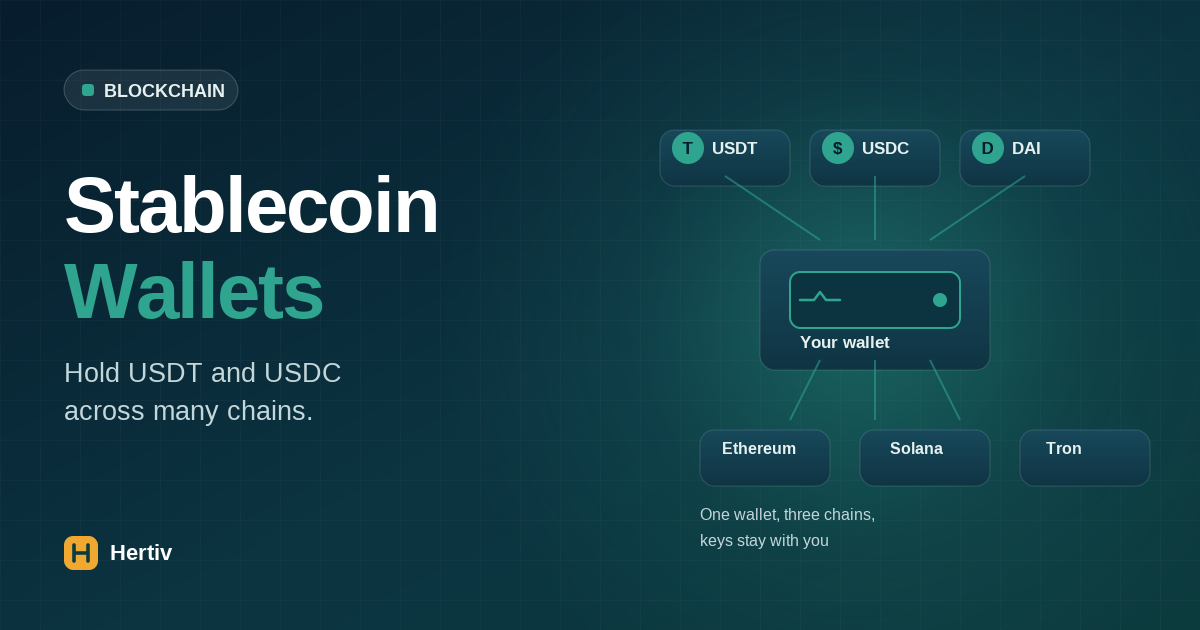
Stablecoins such as USDT and USDC are used for payments, saving and moving money between exchanges, so the wallet that holds them matters. A good stablecoin wallet supports the coins you use, on the chains you use, keeps the keys under your control, and makes sending and receiving simple.
| Wallet | Stablecoins | Chains | Key control |
|---|---|---|---|
| MetaMask | USDT, USDC, DAI and more | Ethereum and EVM chains | Self-custody |
| Trust Wallet | USDT, USDC and more | Many chains | Self-custody |
| Coinbase Wallet | USDC, USDT and more | Many chains | Self-custody |
| Phantom | USDT, USDC and more | Solana, Ethereum and more | Self-custody |
| Exodus | USDT, USDC and more | Many chains | Self-custody |
| Ledger | USDT, USDC and more | Many chains | Hardware, keys offline |
All six wallets below are self-custody, which means you hold the recovery phrase and no company can freeze your funds. That control is the main reason to choose them over leaving stablecoins on an exchange. The differences are in chains, ease of use and how the wallet handles fees.
Before picking one, check whether it supports the exact coin and chain you need, because a USDT balance on one chain cannot be spent on another without a bridge.
Fees are set by the network, not the wallet, and they change with demand, so check the current fee on the vendor site or in the app before a transfer. The sections below describe what each wallet does well and where it falls short.
1. MetaMask: best for Ethereum and EVM chains
1. MetaMask: best for Ethereum and EVM chains
MetaMask is a browser extension and mobile wallet that holds USDT, USDC, DAI and other stablecoins on Ethereum and EVM-compatible chains such as BNB Chain, Polygon and Arbitrum. It connects to decentralised apps, so you can swap, lend or pay without moving funds to another wallet first.
Its strength is reach: most Ethereum apps support it, and adding a new EVM chain takes a few taps. Its weak point is the learning curve. New users must manage networks, gas fees and token approvals, and a wrong network choice can send funds to an address that cannot use them. Keep the recovery phrase offline and never share it with anyone who asks.
- Pros: works with most Ethereum apps; supports many EVM chains; large user base and guides.
- Cons: network and fee settings confuse new users; no built-in support for non-EVM chains such as Solana.
2. Trust Wallet: best for many chains in one app
2. Trust Wallet: best for many chains in one app
Trust Wallet is a mobile wallet that holds stablecoins across many chains, including Ethereum, BNB Chain, Solana and Tron. One app covers USDT and USDC in their common forms, which suits people who receive stablecoins on different chains and want one place to see them.
Its strength is breadth: you can add a chain, receive funds and swap inside the app without a desktop. Its weak point is that the same breadth can confuse. USDT exists on many chains, and the wallet shows each balance separately, so you must check which chain a payment uses before sending. If you are new to wallets, read our guide to what a hot wallet is first.
- Pros: many chains and coins in one mobile app; simple receive and swap flows.
- Cons: same coin on different chains is shown as separate balances; support answers come from community channels.
3. Coinbase Wallet: best for a simple start
3. Coinbase Wallet: best for a simple start
Coinbase Wallet is a self-custody mobile and browser wallet, separate from the Coinbase exchange account. It holds USDC, USDT and other stablecoins on several chains, and it is built for people who want a plain interface with clear send and receive screens.
Its strength is clarity: the app explains each step, shows the fee before you confirm, and keeps the recovery phrase setup short. Its weak point is that it is a hot wallet, so the keys live on your phone. That is fine for everyday amounts, but large holdings belong in cold storage. Compare the two approaches in our hot wallet vs cold wallet guide.
- Pros: clear interface for new users; fee shown before confirming; works on mobile and browser.
- Cons: keys are on the device, so it suits everyday amounts rather than large holdings.
4. Phantom: best for Solana stablecoins
4. Phantom: best for Solana stablecoins
Phantom began as a Solana wallet and now supports Ethereum and other chains too. It holds USDT and USDC on Solana, where transfers are fast and fees are low, and it connects to Solana apps for swaps and payments.
Its strength is speed on Solana: sending USDC takes seconds and the fee is a small fraction of a cent in most cases. Its weak point is that its Solana features are stronger than its other chains, so users who mainly use Ethereum may find the extra chains thin. Check the vendor site for the current list of supported chains before you rely on it for a payment.
- Pros: fast, low-fee Solana transfers; clean interface; built-in swap.
- Cons: best on Solana, with fewer features on other chains.
5. Exodus: best for desktop and mobile together
5. Exodus: best for desktop and mobile together
Exodus is a desktop and mobile wallet that holds USDT, USDC and other stablecoins across many chains, with a built-in exchange for swaps. The same wallet syncs between desktop and phone, so you can check a balance on one device and send from the other.
Its strength is the calm, visual design: balances, charts and swap screens are easy to read, and the built-in swap avoids a trip to an exchange. Its weak point is that swaps inside the wallet can carry a wider spread than a large exchange, so compare the rate before a big swap. As with any hot wallet, the recovery phrase is the keys to everything, so store it offline.
- Pros: desktop and mobile in one wallet; built-in swap; easy-to-read design.
- Cons: in-wallet swap rates can be worse than a large exchange; hot wallet, so not for large holdings.
6. Ledger: best for large stablecoin holdings
6. Ledger: best for large stablecoin holdings
Ledger is a hardware wallet: the keys live on a small device and never touch the internet, while the companion app shows balances and prepares transfers. It holds USDT, USDC and other stablecoins across many chains, and every transfer must be confirmed on the device itself.
Its strength is safety for larger amounts. Even if your computer is compromised, the keys stay on the device and a transfer cannot go through without your physical confirmation. Its weak point is friction: you must buy the device, keep it charged and nearby, and confirm each transfer by hand. For a full picture of the trade-off, see our guide to what a cold wallet is.
- Pros: keys stay offline; every transfer needs a physical confirm; supports many chains and coins.
- Cons: costs money and adds a step to every transfer; losing the device and the phrase together means losing access.
How to choose a stablecoin wallet
Choosing a wallet comes down to four checks. Work through them in order before you move funds.
- Match the coin and chain. Write down the exact stablecoin and chain you will use, such as USDT on Tron or USDC on Solana, and confirm the wallet supports that pair.
- Decide how much it will hold. Everyday spending suits a hot wallet on your phone. Larger savings suit a hardware wallet with keys offline.
- Check the send flow. Try a small test transfer first. Confirm the fee, the address and the chain before sending a larger amount.
- Plan the backup. Write the recovery phrase on paper, store it somewhere safe, and never type it into a website or share it in a chat.
- Check the app source. Download the wallet only from the vendor site or the official app store listing, and check the name carefully before installing.
If you accept stablecoins from customers, the same checks apply, plus one more: confirm how your accounting will record each receipt. A wallet that exports a clear history saves hours at the end of the month. For payment flows, see our guide to crypto payment gateways.
What are the common mistakes?
The most common mistake is sending a stablecoin on the wrong chain. USDT on Ethereum cannot be spent as USDT on Tron, and recovering a wrong-chain transfer is often impossible. Always check the chain on both sides before you send.
A second mistake is keeping large amounts in a hot wallet because it is convenient. A third is storing the recovery phrase as a photo or a note on the same phone as the wallet. A fourth is trusting a wallet downloaded from a search ad or a copied listing. Get the app from the vendor site, test with a small amount, and keep the phrase offline.
Key takeaways
- Pick the wallet by coin and chain first; a stablecoin on the wrong chain cannot be spent there.
- All six wallets here are self-custody, so you hold the recovery phrase.
- Hot wallets suit everyday amounts; large holdings belong on a hardware wallet.
- Test with a small transfer before moving a larger amount.
- Store the recovery phrase offline and never share it.
Frequently asked questions
Which wallet is best for USDT?
It depends on the chain. MetaMask suits USDT on Ethereum and EVM chains, Trust Wallet covers USDT on many chains, and Phantom suits USDT on Solana. Check the exact chain first, because USDT on one chain cannot be spent on another.
Are stablecoin wallets free?
The wallet apps listed here are free to download, except Ledger, which needs a hardware device. Network fees still apply to every transfer, and they change with demand, so check the fee in the app before you confirm.
Is it safe to keep stablecoins in a hot wallet?
A hot wallet is safe for everyday amounts if you keep the app updated and the recovery phrase offline. For larger savings, a hardware wallet is safer because the keys never touch the internet.
Can I use the same wallet for USDT and USDC?
Yes, all six wallets in this guide hold both USDT and USDC. The catch is the chain: each balance is tied to one chain, so confirm the coin and the chain together before you receive or send.
What happens if I send a stablecoin on the wrong chain?
The funds usually go to an address on the wrong chain and are very hard to recover. Some exchanges can help in specific cases, but many wrong-chain transfers are lost. Always check the chain before sending.
Do I need a wallet to receive stablecoin payments?
Yes, you need a wallet address on the chain the payer uses. Give the payer the exact address and chain, then check the receipt in the wallet before you treat the payment as done.


