5 Factors That Drive NFT Gaming Platform Development
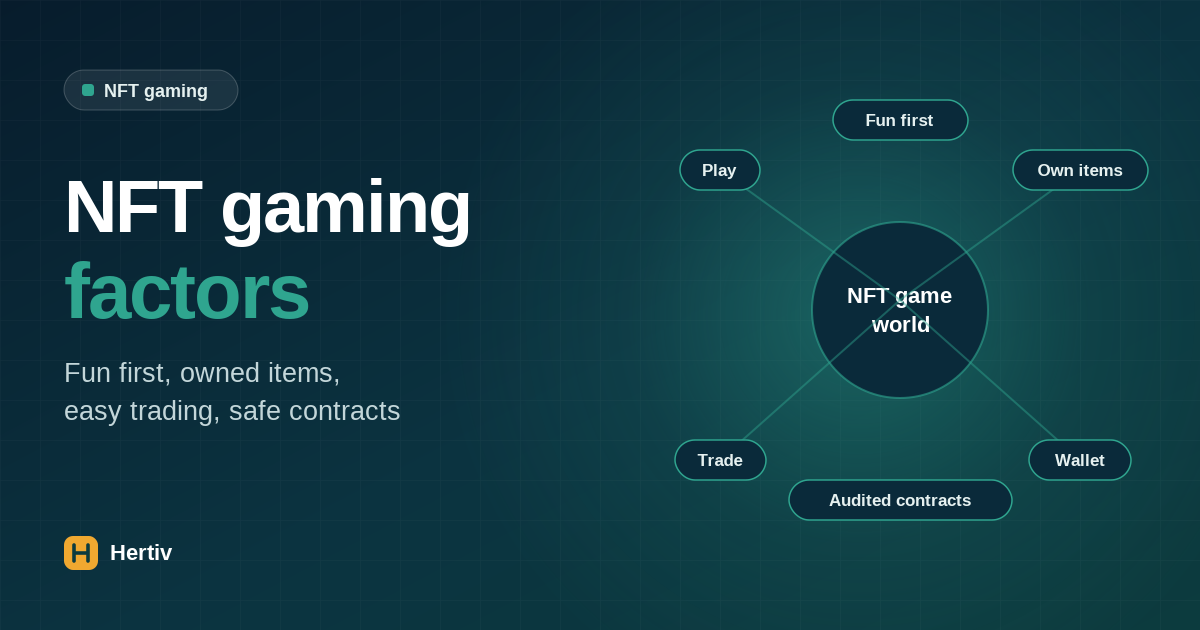
NFT gaming platforms grow when the game is fun first, players truly own their items, and trading, wallets and security are simple enough for people new to crypto.
On this page
Short answer
NFT gaming platforms let players own in-game items as tokens, trade them with other players, and earn rewards for play. Five factors decide whether such a platform grows: the game itself, the way items are owned, how easy trading is, how simple the wallet feels, and how safe the whole system is. Get those five right and players stay; get them wrong and the platform empties.
5 factors that drive NFT gaming platform development
A platform is not a game with tokens added at the end. The factors below shape the design from the start, and each one affects the others: a fun game with a hard wallet still loses players, and an easy wallet with a dull game still loses them.
| Factor | What it means | What good looks like |
|---|---|---|
| Gameplay first | The game is fun without tokens | Players return for the game itself |
| True item ownership | Items live in the player's wallet | Items survive outside the game |
| Easy trading | Players can buy and sell items | Trades take minutes, not hours |
| Simple wallets | New players can start fast | Sign-up takes a few minutes |
| Security and trust | Contracts and accounts are safe | Audits and clear rules |
Teams that build for these five factors spend their budget on the game and the player experience, not on token features nobody asked for. The rest of this article takes each factor in turn.
1. Gameplay first and 2. True item ownership
1. Gameplay first: best for keeping players
A game must be fun before it earns anything. Players who enjoy the game return every day, and they are the ones who buy items, join events and invite friends. A game that only pays out will attract people who leave the moment the payout falls, and no token design can fix that.
Pros: a fun game keeps players without paying them to stay, and it gives the tokens a reason to exist. Cons: good gameplay takes the most time and money of any part of the platform, and it cannot be rushed.
2. True item ownership: best for player trust
True ownership means the item is a token in the player's wallet, not a row in the game's database. The player can keep it, sell it or use it in another game that accepts it, even if the first game closes. That is the promise that makes NFT gaming different from normal gaming.
Pros: players trust the platform more when they hold their own items, and rare items gain value from real scarcity. Cons: moving items on chain costs fees and time, so the design must keep everyday actions cheap.
3. Easy trading and 4. Simple wallets
3. Easy trading: best for a living economy
A marketplace lets players buy and sell items without leaving the game, and it needs clear prices, fast trades and low fees. If trading is slow or costly, players stop trading, and the items lose their value. The marketplace should show the item's history, so a buyer can see what it is and what it has done.
Pros: trading keeps the economy moving and gives items a real price. Cons: a marketplace needs rules against cheating and fake items, and those rules need constant work.
4. Simple wallets: best for new players
Most players have never used a crypto wallet, and a platform that asks them to manage keys and gas fees on day one will lose them. A simple start means an account the player understands, a wallet created in the background, and clear steps when they want full control of their items.
Pros: easy onboarding brings in players who would never touch crypto otherwise. Cons: hiding the wallet can confuse players later, when they want to move items out, so the full-control path must be clear too.
5. Security and trust
5. Security and trust: best for long-term survival
Security covers the smart contracts, the player accounts and the marketplace. Contracts that hold items or money need an independent audit before launch, and the platform needs clear rules for what happens when something goes wrong. Players who lose items to a bug or a scam rarely return.
Pros: audited contracts and clear rules build the trust that keeps players and their items on the platform. Cons: audits and security work add cost and time, and they must be repeated when the contracts change. For the background, read what blockchain is and how ownership works on chain.
Trust also covers how the platform treats players when the rules change. A team that changes drop rates or item powers without warning will lose players faster than any bug would. Publish the rules, give notice before changes, and keep a public record of what changed and why, so players can decide whether to stay.
How to choose what to build first
Build the game first, then the ownership, then the marketplace. A team that builds the marketplace before the game ends up with a shop that has nothing worth buying. A team that builds the game first learns what players actually want to own and trade.
- Prove the game is fun. Test it with players who earn nothing, and see if they return.
- Add ownership for a few items. Start with one item type and make it work end to end.
- Open trading slowly. Let players trade the first items, watch the prices, and fix the rules.
- Simplify the wallet. Measure how many new players finish sign-up, and remove every step that loses them.
- Audit before you scale. Get the contracts checked before the player count grows.
Keep the token economy small at first. A few item types with clear uses teach you more than a large economy that nobody understands. For how tokens work in general, see how tokenization works before you design the economy.
Common mistakes
The most common mistake is building a payout machine instead of a game. A platform that pays players to play attracts people who leave when the payout drops, and the economy collapses. Build a game people would play for free, then add earning on top.
The second mistake is making the wallet the first thing a player sees. A new player wants to play, not to learn about keys and fees. Let them play first, and introduce the wallet when they have something worth keeping.
The third mistake is skipping the audit. A contract bug in a game can drain items or money in minutes, and the damage to trust is permanent. Budget for the audit in the first version. For the ownership model, check NFT use cases and see how other projects handle it.
Key takeaways
- The game must be fun before it earns anything.
- Players should hold their own items in their own wallet.
- Trading needs to be fast, cheap and clear.
- New players should reach the game in minutes.
- Audit the contracts before the player count grows.
Frequently asked questions
What is an NFT gaming platform?
It is a game platform where in-game items are tokens that players own in their own wallets. Players can keep, sell or trade those items, and the game records ownership on a blockchain instead of in its own database.
Do players need crypto to start?
Not on a well-designed platform. New players should be able to start with a normal account and play first, then set up a wallet when they have items worth keeping.
How do NFT games make money?
From item sales, marketplace fees and game purchases, like other games. The token part adds trading fees and item sales, but the game itself must be worth paying for.
Are NFT games safe for players?
They are as safe as their contracts and their rules. Audited contracts, clear ownership and account protection make a platform safer, but no platform is risk-free, so players should only spend what they can afford to lose.
Which chain should an NFT game use?
Choose a chain with low fees and fast trades, because players trade often. The chain should also have wallets that new players can use without much learning.
How long does it take to build one?
A small game with a few owned items can take months, while a full platform with a marketplace takes longer. Build the game first and add trading step by step.


