7 Influencer Marketing Mistakes AI Can Help You Fix
Brands waste budget on the wrong creators, fake reach and untracked links. These seven mistakes are the usual suspects, and AI can catch most of them before you pay.
On this page
Short answer
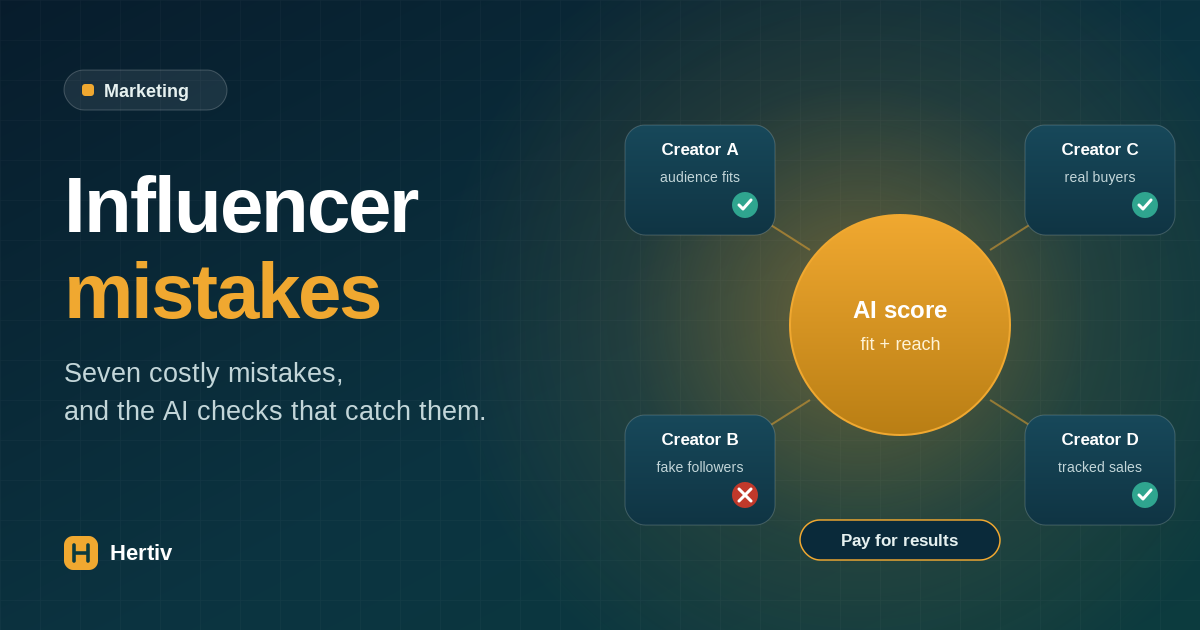
AI can fix the most expensive influencer marketing mistakes: paying for fake reach, choosing creators by gut feel, writing vague briefs and failing to track results. Used well, AI screens creators, checks audiences and links every post to a result, while people keep the final call on fit and tone.
Costly influencer marketing mistakes, and how AI fixes them
Influencer marketing fails quietly. A campaign can look busy, with posts going out and likes piling up, while the budget goes to creators whose audience never buys. The mistakes below are the ones that cost the most, and they share a pattern: a decision made on a feeling instead of a check.
AI tools help because they are good at the checks people skip. They can read a creator's audience, flag sudden follower jumps, compare engagement across posts, and link each post to a sale or a sign-up. AI tools for marketing teams do the same kind of checking in other channels, and none of it replaces judgement, but it turns a guess into a shortlist a person can review.
The table gives the short version. The sections that follow take each mistake in turn, explain what goes wrong, and show what an AI check looks like in practice.
| Mistake | What goes wrong | AI fix |
|---|---|---|
| Paying for follower count | Big audience, no buyers | Audience-fit scoring |
| Choosing by gut feel | Wrong tone, wrong crowd | Past-post and topic matching |
| Missing fake followers | Paying for bots and pods | Growth and engagement checks |
| Vague briefs | Off-message posts | Brief checklists and drafts |
| No tracking per creator | Cannot tell who sold what | Unique links and codes |
| Skipping claim checks | Wrong prices and promises | Claim scan before posting |
| Same fee, any result | No reason to perform | Pay tied to tracked results |
Mistakes 1-2: paying for reach, choosing by feel
1. Paying for follower count, not audience fit: best for brands that keep buying reach
A creator with 500,000 followers can still be a bad buy if the followers live in the wrong country, are the wrong age, or never buy the kind of product you sell. Follower count measures size, not fit, and size is the easiest number to inflate.
An AI audience check reads who actually follows the creator: where they live, what they talk about, and which posts they engage with. A brand selling running shoes in one country can see in minutes whether the audience matches, instead of finding out after the post goes live and nothing sells.
2. Choosing creators by gut feel: best for teams that pick whoever they already know
Teams often pick creators they have seen, liked or worked with before, which narrows the pool to a handful of familiar names. The result is the same faces, the same audience, and no test of whether a different kind of creator would work better.
AI matching tools scan past posts, topics and comments to find creators whose content already matches the product. A brand can start with a shortlist of twenty strangers who talk about the topic every week, instead of three familiar names who mention it once a year.
Mistakes 3-4: fake followers, vague briefs
3. Missing fake followers and engagement pods: best for brands that never check growth
Some creators buy followers or join groups that like and comment on each other's posts. The engagement looks healthy, but the likes come from other creators, not from buyers, and the sales never follow.
An AI check looks at the pattern, not the total. A sudden jump of 20,000 followers in a week, comments that repeat the same few words, or likes that arrive in a burst are all easy for software to spot and hard for a person to catch by scrolling. Run the check before you sign, not after you pay.
4. Sending vague briefs: best for teams that write one line and hope
A brief that says "make it fun and on brand" gives the creator nothing to work with. The post comes back off-message, the brand asks for a redo, and the creator loses a day. Both sides blame each other, and the real cause was a brief with no facts in it.
AI can turn a rough brief into a checklist: the one claim to make, the price to state, the link to use, the words to avoid, and the deadline. A person still writes the brief, but the tool flags what is missing before the brief goes out, so the creator gets a clear job instead of a guess.
Mistakes 5-6: no tracking, no claim checks
5. No tracking link or code per creator: best for brands that cannot tell who sold what
When every creator shares the same link, the brand sees total sales but cannot tell which creator drove them. The next campaign then pays the same fee to everyone, including the creator whose post brought no one.
The fix is simple and AI makes it cheap: give each creator a unique link or discount code, and let software tie each order or sign-up back to the creator who sent it. The brand can then pay more to the creators who sell and drop the ones who do not, with numbers instead of opinions.
6. Approving posts without checking claims: best for brands that trust the draft
Creators get prices, features and promises wrong. A post that states the wrong price, claims a result the product cannot deliver, or uses a word the brand must avoid can cost more than the campaign itself, especially in regulated products.
An AI scan can compare the draft against the approved facts: the current price, the allowed claims, and the banned words. It flags the sentence that needs fixing before the post goes live. A person still approves the final post, but the scan catches the errors a tired reviewer misses.
Mistake 7: paying the same fee whatever the result
7. Paying the same fee whatever the result: best for brands that pay flat fees for flat results
A flat fee pays the same whether the post brings ten sales or none. The creator has no reason to push harder, and the brand has no lever when a post underperforms. The fee rewards showing up, not selling.
AI tracking makes a mixed fee practical: a base fee for the work, plus a payment tied to tracked sales, sign-ups or clicks. The brand can set the mix per creator, using past results as the guide, and both sides know the rules before the campaign starts.
The mix only works if the tracking in mistake 5 is already in place. Without a unique link or code per creator, there is nothing to tie the bonus to, and the flat fee stays the only option. Fix the tracking first, then change the fee.
How to choose an AI tool for influencer marketing
Choosing a tool starts with the mistake you want to fix, not with the tool's feature list. A team that pays for fake reach needs audience and fraud checks; a team that cannot track sales needs attribution first. Pick the tool that fixes your worst mistake, then add the rest later.
- Write down the last campaign's numbers: spend, creators, sales and what you could not measure.
- Pick the one mistake from this article that cost the most, and test tools against that mistake only.
- Run a trial on five creators you already know, and check whether the tool's scores match what you saw in real life.
- Check how the tool gets its data, how fresh it is, and whether it covers the platforms you actually use.
- Agree on who reviews the scores and who makes the final call, so the tool advises and a person decides.
Price is the last question, not the first. A cheap tool that checks the wrong thing costs more than an expensive one that catches a bad creator before you pay them. Ask for the price on the vendor's own page, or see vendor site if it is not listed there. Testing an AI tool on creators you already know is the fastest way to see whether its scores match real life.
Also check what the tool does with creator data. Some tools store audience data in ways that need a privacy review, and a quick check with your legal or privacy contact before the trial saves a painful conversation later.
What to check before you trust an AI score
An AI score is a shortcut, not a verdict. Scores can be wrong when the data is thin, when a creator changed topic recently, or when the platform changed how it reports engagement. Treat every score as a reason to look closer, not as a reason to skip looking.
Example (hypothetical): a brand shortlists 12 creators. Checking each one by hand takes about 30 minutes, so the manual check costs 12 x 30 = 360 minutes, or 6 hours. An AI screen takes about 20 minutes for all 12, and the team then reviews the top 4 by hand, which takes 4 x 30 = 120 minutes, or 2 hours.
The total is 140 minutes, or 2 hours 20 minutes, saving about 3 hours 40 minutes. The saving only matters if the screen is honest. Check a sample of the tool's scores against creators you know well.
Finally, keep a human in the loop for tone. AI can score an audience, but it cannot tell you whether a creator's humour fits your brand, whether their values clash with yours, or whether their last three posts say something your customers would hate. Watch three posts yourself before you sign anyone, and see where AI agents help teams most before you hand them more of the process.
Key takeaways
- Follower count measures size, not fit: check the audience before you pay.
- Fake followers and engagement pods show up as patterns, and software spots patterns.
- A vague brief causes most redo work: use a checklist before the brief goes out.
- Give each creator a unique link or code, or you cannot tell who sold what.
- Scan drafts against approved facts before a post goes live.
- An AI score advises; a person decides.
Frequently asked questions
What is the biggest influencer marketing mistake?
Paying for reach instead of fit. A large follower count says nothing about whether the audience buys your kind of product, so check who follows the creator, where they live and what they engage with before you agree a fee.
Can AI really spot fake followers?
It can spot the patterns: sudden follower jumps, repeated comments, likes arriving in bursts, and engagement from accounts that never buy. No single signal proves fraud, but several together are a strong reason to look closer or walk away.
How do I track which creator drove a sale?
Give each creator a unique tracking link or discount code, and tie orders and sign-ups back to that link or code. Without a per-creator link, you only see total sales and cannot tell who earned their fee.
Should I pay creators a flat fee or per sale?
A mix works best for most brands: a base fee for the work, plus a payment tied to tracked results. The mix only works if tracking is in place first, so fix the per-creator links before you change the fee structure.
Can AI write the brief for a creator?
AI can turn a rough brief into a checklist of claims, prices, links and words to avoid, which catches missing facts before the brief goes out. A person still writes the brief and approves the final version.
What should I check before trusting an AI creator score?
Test the tool on creators you already know and see whether the scores match real life. Also check how fresh the data is, whether it covers your platforms, and watch three of the creator's own posts yourself before signing.


