How to Invest in AI Technology: A Practical Guide
Investing in AI means choosing how to put money into it: buying shares, backing startups or funding your own AI tools, while weighing risk and time horizon.
On this page
Short answer
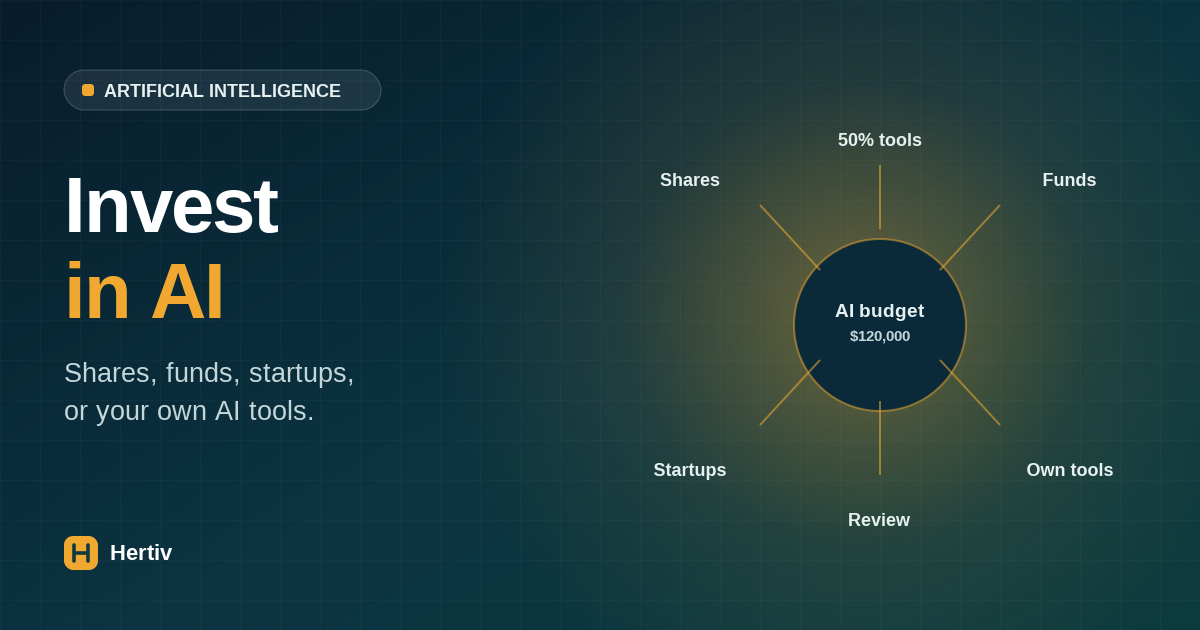
Investing in AI technology means putting money into artificial intelligence with the aim of a return, and there are several ways to do it. You can buy shares in public companies that build or use AI, invest in funds that hold many AI companies, back private startups, or spend on AI tools and skills inside your own business. Each route carries different risk, cost and time horizons.
How to invest in AI technology?
Investing in AI technology starts with a choice: invest in other companies, or invest in your own use of AI. Buying shares or funds is a bet on companies that sell AI products. Funding AI tools, training and pilot projects inside your own business is a bet on your own operations getting faster or cheaper.
Both routes are real investments, and many people do both. The first step is to decide how much money you can afford to put at risk, how long you can leave it invested, and how much you know about the companies or tools involved. Never invest money you need for rent, bills or an emergency fund.
Time horizon matters as much as the amount. Money you need within a year should not sit in a volatile AI stock, while money you can leave for five or ten years can ride out the swings. Write down your horizon before you buy anything, so a bad month does not change the plan.
What are the main ways to invest in AI?
Public shares are the most common route: large technology companies that build AI models, sell AI software or run cloud platforms. Funds that hold many AI companies spread the risk across dozens of names instead of one. Private startups can grow fast but are hard to value and hard to sell.
Investing inside your own business is the fourth route: AI tools, data work and staff training that cut costs or win customers. This route is easier to measure, because you can see the hours saved or the sales gained. Use this table to compare the routes before you choose.
| Route | What you buy | Main risk |
|---|---|---|
| Public shares | Shares in listed AI companies | Share prices move with the market |
| AI funds | A basket of many AI companies | Fees and broad market falls |
| Private startups | Equity in an early company | Hard to value and hard to sell |
| Own business | Tools, data work and training | Projects may not pay back |
How do you judge an AI company before investing?
Judge an AI company the way you would judge any business: does it earn real revenue, does it keep customers, and does it have a cost edge that rivals cannot copy quickly? A company that sells AI software to paying customers is a different bet from one that only shows demos.
Read the company's own reports and filings, not social media posts. Check whether its AI revenue is growing, whether it spends more on research than it earns, and who its main customers are. If you cannot explain in one sentence how the company makes money, you do not understand it well enough to invest. The guide on AI strategy for business shows how companies decide where AI actually pays.
How do you manage the risk?
Manage risk with four habits. First, spread money across several companies or a fund, so one failure does not wipe out the investment. Second, invest money you can leave alone for years, because AI shares can fall sharply in a bad quarter.
Third, keep the AI part of your portfolio at a size you can live with if it halves. Fourth, review once or twice a year instead of watching prices daily. A plan you can stick to through a fall is worth more than a clever pick you sell in a panic.
A fifth habit is to separate the hype from the business. A company can have impressive AI demos and still lose money, while a quiet supplier of chips or software can earn steady revenue. Follow the revenue and the customers, not the headlines, and be wary of any pitch that promises quick or certain returns.
What does investing in your own business look like?
Investing in your own business means spending on AI that saves time or wins work. A support team might use an AI drafting tool, a sales team might use AI to sort leads, and a small shop might use AI to write product descriptions. Each project needs a clear owner, a measurable goal and a review date.
Start with one small project and measure the result before spending more. The guide on how to scope an AI development project explains how to keep the first version small enough to finish and measure. A pilot that saves a few hours a week is a better investment than a large project that never ships.
- Pick one job where AI could save time or win work.
- Set a budget and a measurable goal for the pilot.
- Run the pilot with one team for a fixed period.
- Measure the result against the goal.
- Scale what worked and stop what did not.
Example (hypothetical): a $120,000 annual AI budget
A mid-size services firm sets aside $120,000 a year for AI. It splits the budget three ways: 50% on tools and licences, which is $60,000; 30% on staff training, which is $36,000; and 20% on pilot projects, which is $24,000. The three parts add up to $120,000.
After a year, the firm reviews each part. The tools saved the support team about 25 hours a week, the training helped staff use the tools well, and one pilot failed while another saved the sales team 10 hours a week. The firm keeps the tools and training, scales the winning pilot and drops the failed one, which is the point of splitting the budget instead of betting it all on one project.
Common mistakes
The first mistake is buying a company because its name sounds like AI, without checking how it earns money. The second is putting everything into one stock, so a single bad quarter hurts badly. The third is chasing a price rise after it happened.
The fourth is confusing using AI with investing in AI: buying a chatbot subscription is a cost, not an investment, unless it saves more than it costs. The fifth is skipping the review: money left in a failing project for years is money that could have worked elsewhere. Write the plan down, set review dates and stick to them.
The sixth mistake is borrowing to invest in a hot sector. Debt turns a normal fall into a forced sale, and forced sales lock in losses. If the investment only works when prices keep rising, it is a gamble, not a plan.
Key takeaways
- AI investing means buying shares or funds, backing startups, or funding AI in your own business.
- Judge an AI company on real revenue, customers and a cost edge, not on demos.
- Spread risk across several companies and invest only money you can leave for years.
- A small pilot with a measurable goal beats a large project that never ships.
- Review your AI investments once or twice a year and drop what does not work.
Frequently asked questions
How can a beginner invest in AI technology?
A beginner can start with a broad fund that holds many AI and technology companies, which spreads risk, or with shares in a large company they understand. Start small, learn how the investment works, and only add money you can afford to leave invested for years.
Is investing in AI risky?
Yes, AI investing carries real risk. Share prices can fall sharply, startups can fail, and a technology can take longer to pay off than expected. Spreading money across companies, keeping the amount modest and holding for years are the standard ways to manage that risk.
What is the difference between investing in AI and using AI?
Investing in AI means putting money into companies or funds in the hope of a return. Using AI means buying tools or building systems that save time or win work in your own business. Both can pay off, and many people do both.
How much money do you need to invest in AI?
There is no fixed minimum. Funds and shares can be bought in small amounts through a broker, while private startups usually need large sums. The right amount is money you can afford to lose without affecting rent, bills or an emergency fund.
Should you invest in AI startups or large companies?
Large companies are easier to value and easier to sell, while startups can grow faster but are harder to value and harder to sell. Most beginners are better served by large companies or funds, and should only back startups if they understand the risks.
How do you measure AI investment inside your own business?
Measure it by the time saved, the cost cut or the sales gained, against the money spent. Set the goal before the project starts, review it on a fixed date, and scale only the projects that beat their goal.


