How to Develop a White Label Crypto Wallet
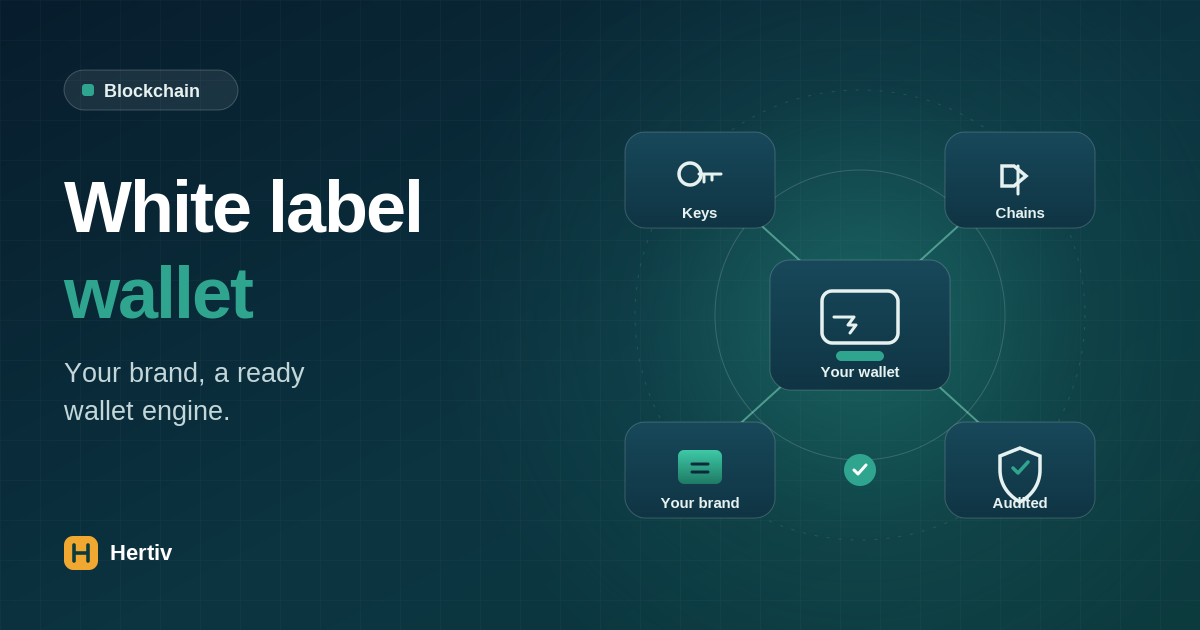
A white label crypto wallet is a ready-made wallet you brand as your own. You can build it from scratch or licence a base and customise it.
On this page
Short answer
A white label crypto wallet is a ready-made cryptocurrency wallet that a business licences and brands as its own, instead of building one from scratch. Developing one means choosing the wallet model, customising the design and features, connecting the chains and services it needs, and passing security and compliance checks before launch.
What is a white label crypto wallet?
A white label crypto wallet is a cryptocurrency wallet built by one company and sold to another company, which puts its own name, logo and colours on it. The buyer does not write the core wallet code. It licences the product, brands it, and offers it to its own users as if it had built it.
The wallet itself is the same kind of product as any other crypto wallet: it creates and stores keys, shows balances, sends and receives tokens, and connects to exchanges or decentralised apps. The difference is who built it. A white label wallet comes with the engine already written, and the buyer adds the brand, the feature choices and the integrations that fit its users.
Exchanges, fintech apps, gaming platforms and loyalty programmes are the usual buyers. They want a wallet inside their product, but building one from scratch takes months and needs security skills they may not have. A white label wallet gets them to market faster, with a cost they can predict. If you are new to the product itself, start with what a white label crypto wallet app is before planning the build.
Should you build, buy or white-label?
You can build a wallet from scratch, licence a white label wallet, or start from a white label base and customise it. The table below compares the three routes.
| Route | Best for | Trade-off |
|---|---|---|
| Build from scratch | A wallet with unusual features or chains | Slowest and most expensive, but full control |
| White label | A fast launch with standard features | Fast and predictable cost, but limited to the vendor's features |
| White label plus custom work | Standard wallet plus one or two special features | Middle cost, but custom work can be hard to maintain |
White label fits when your needs match the vendor's wallet: standard chains, standard tokens, send and receive, and a familiar user flow. Build from scratch fits when you need an unusual chain, a special key model, or a feature no vendor offers.
The middle route fits when you need one or two special features and the vendor supports custom work. Check how the vendor handles upgrades before you commit, because a heavily customised wallet can be hard to update.
What are the parts of a white label wallet?
A white label wallet is built from six parts, and each one has a job the others depend on. Knowing the parts helps you judge a vendor and plan the custom work.
- Key management. How keys are created, stored and recovered. Options include keys on the device, keys split across parties, or keys held by a custodian. This is the most important part to get right.
- Chain connections. The blockchains the wallet supports, and how it reads balances and sends transactions on each one.
- Token and price data. The lists of tokens the wallet shows, and the price feeds that value them in the user's currency.
- Transaction engine. The code that builds, signs and broadcasts transactions, and that estimates the network fee before the user confirms.
- User interface. The screens for balances, sending, receiving and settings, branded with your name, logo and colours.
- Admin and compliance tools. The dashboard for support staff, plus transaction monitoring, sanctions screening and the reports your compliance team needs.
Key management and the transaction engine are the parts where a shortcut costs the most later. A wallet that stores keys badly or signs transactions without clear confirmation will fail a security review, so check those two parts first when you compare vendors. For the security side, see how to secure a white label crypto wallet.
How do you develop it, step by step?
You develop a white label crypto wallet in stages, with security and compliance checked at each stage rather than added at the end. The sequence below is the usual order.
- Define the wallet and its users. Write down who the wallet is for, which chains and tokens it must support, and whether users hold their own keys or you hold them.
- Choose a vendor and a key model. Compare vendors on key management, chain support and upgrade policy, and pick the key model that fits your users and your rules. A partner for crypto wallet development can help compare the options.
- Brand and configure it. Apply your name, logo, colours and wording, switch on the features you need, and switch off the ones you do not.
- Connect the services. Wire in price feeds, token lists, the exchange or on-ramp your users need, and the monitoring tools your compliance team uses.
- Add your custom features. Build the one or two features that set your wallet apart, keeping them separate from the vendor's code so upgrades stay possible.
- Test security and compliance. Have the wallet reviewed by an independent auditor, test key recovery, and check the compliance tools against your rules. Read white label crypto wallet compliance before this stage so nothing is missed.
- Run a closed pilot. Let a small group of real users try the wallet with small amounts, fix what breaks, and only then open it to everyone.
Each stage should end with a review by the security and compliance teams. A wallet that passes a pilot with a hundred users is far more credible than one that launches to ten thousand at once and then finds a control missing.
What security and compliance does it need?
A white label crypto wallet needs security and compliance controls that a personal wallet can skip, because it holds other people's money and answers to regulators in each market it serves.
On security, the controls are key protection, transaction confirmation and recovery. Keys must be created on a secure device or split across parties so no single failure exposes them. Every transaction must show the user exactly what they are signing, including the amount, the recipient and the fee, before they confirm. And there must be a tested recovery path for a lost phone or a forgotten password, because users will lose both.
On compliance, the controls are identity checks, sanctions screening and record keeping. Depending on the market, the wallet may need to verify its users, screen transactions against sanctions lists, and keep records that an auditor can review. The rules differ by country and by whether the wallet holds user funds, so get legal advice for each market before launch rather than copying what another wallet does.
Example (hypothetical): a wallet for a 5,000-user exchange
Example (hypothetical): a small exchange with 5,000 users wants a white label wallet inside its app. It licences a vendor wallet, brands it, adds its own exchange as the on-ramp, and launches to its existing users.
The cost has three parts. Four developers work for 12 weeks at $2,000 a week, which is $96,000, to brand the wallet, connect the exchange and build one custom feature. The vendor licence costs $15,000 for the first year. An independent security audit costs $20,000. The total is $96,000 plus $15,000 plus $20,000, which is $131,000.
The pilot runs with 200 users for four weeks. During the pilot the team finds that the fee estimate is confusing on one chain, so it is reworded before launch. After launch, 3,000 of the 5,000 users open the wallet in the first month, and support handles 120 tickets, mostly about key recovery.
The pilot catches the fee wording early, when it is cheap to fix, rather than after launch, when it would have cost support time and user trust.
What are the common mistakes?
The most common mistakes in white label wallet builds are choosing the vendor on price alone, skipping the audit, and customising the wallet so heavily that upgrades become impossible.
- Choosing on price alone. The cheapest vendor often has the weakest key management or the slowest upgrades. Judge vendors on security and upgrade policy first, then on price.
- Skipping the security audit. A wallet that has never been reviewed by an independent auditor is a risk to your users and your business. Budget for the audit from the start.
- Over-customising. Changing the vendor's core code makes every upgrade a project of its own. Keep custom work separate so the vendor's updates still apply cleanly.
- Unclear transaction confirmation. If users cannot see exactly what they are signing, they will approve the wrong transaction. Show the amount, recipient and fee in plain words.
- No tested recovery path. Users lose phones and forget passwords. If recovery has never been tested with real users, the first real case will be a support crisis.
Key takeaways
- A white label wallet is a ready-made wallet you brand as your own
- Judge vendors on key management and upgrades first, then on price
- Build identity, security and compliance in from the start, not after launch
- Keep custom work separate from the vendor's code so upgrades stay possible
- Run a closed pilot with real users before opening the wallet to everyone
Frequently asked questions
What is a white label crypto wallet?
It is a ready-made cryptocurrency wallet that a business licences and brands as its own. The vendor builds the core wallet, and the buyer adds its name, logo, colours and the features that fit its users, instead of writing the wallet from scratch.
How much does it cost to develop one?
It depends on the route. A white label licence plus branding and integration often costs $100,000 to $200,000 for a small team, including a security audit. Building from scratch costs more and takes longer, while a plain white label launch is the cheapest route.
Who holds the keys in a white label wallet?
It depends on the key model you choose. Users can hold their own keys on their device, keys can be split across parties, or a custodian can hold them. The model should match your users and the rules in each market you serve.
Do I need a security audit before launch?
Yes. A wallet that has never been reviewed by an independent auditor is a risk to your users and your business. The audit should cover key management, transaction signing and recovery, and it should happen before the pilot, not after launch.
Can I add my own features to a white label wallet?
Usually, yes, if the vendor supports custom work. Keep the custom features separate from the vendor's core code, so the vendor's upgrades still apply cleanly and you are not stuck on an old version.
How long does it take to launch one?
A standard white label launch with branding, chain connections and a pilot usually takes a few months for a small team. Custom features, compliance review and the security audit take as long as the integration itself, so plan for both.


