How to Develop an Advanced Layer 2 Wallet
A layer 2 wallet lets users hold and move assets on a faster, cheaper network while the main chain settles. Here is the architecture and the security checks.
On this page
Short answer
To develop a layer 2 wallet, pick the layer 2 network first, then build key management, transaction signing, bridging and gas handling around it. The wallet must show balances from both layers, route deposits and withdrawals through the bridge, and keep private keys in secure storage. Test on a testnet, audit the contracts and the signing code, then ship in stages.
What is a layer 2 wallet?
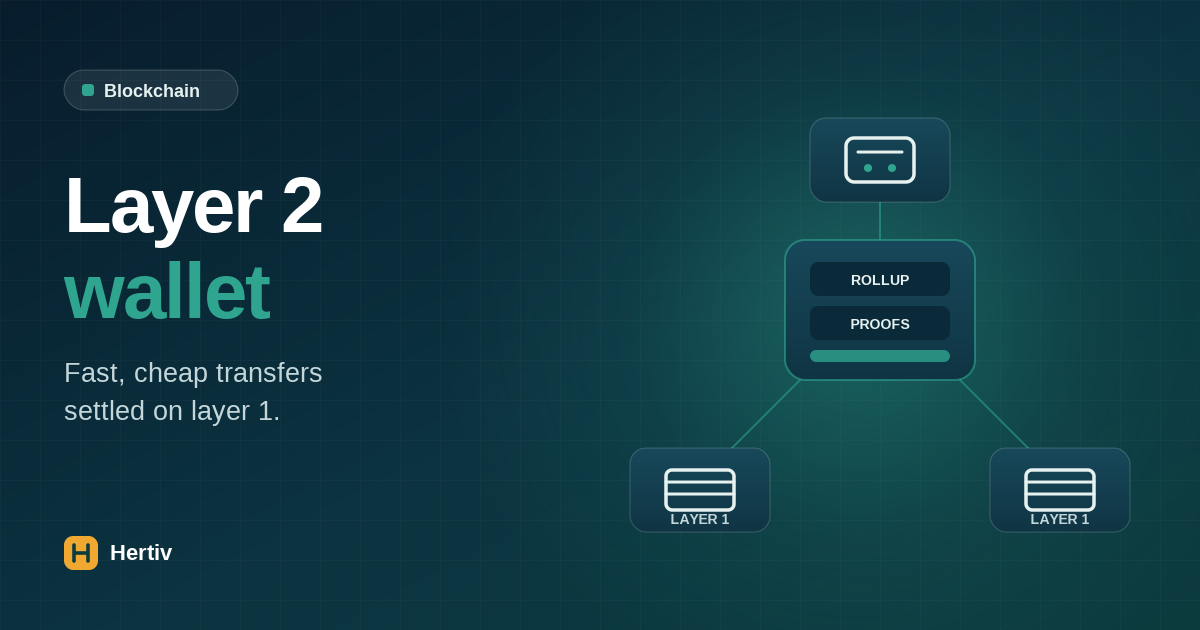
A layer 2 wallet is a crypto wallet that works on a layer 2 network, such as an optimistic rollup or a zero-knowledge rollup, instead of only on the main chain. It lets users send and receive assets with lower fees and faster confirmation, while the main chain still settles the final state.
Layer 2 networks process most transactions off the main chain and post a compressed record back to it. A wallet built for this model must understand two layers at once: the user's balance on layer 2, the balance still on layer 1, and the bridge that moves assets between them. A wallet that only shows one layer will confuse users and cause failed transfers.
The difference from a normal wallet is not the interface. It is the plumbing underneath: chain selection, gas estimation on the rollup, bridge status, withdrawal timing and fallback when the layer 2 sequencer is down. For background on the networks themselves, see what is layer 2.
Which layer 2 network should you choose?
Choose the network by matching its design to your users. Optimistic rollups are general purpose and support most existing contracts, zero-knowledge rollups settle faster but need more work to build on, and validiums keep data off chain for lower cost with different trust assumptions.
| Network type | How it settles | Withdrawal wait | Trade-off |
|---|---|---|---|
| Optimistic rollup | Fraud proofs on layer 1 | Days, unless fast exit used | Widest contract support |
| Zero-knowledge rollup | Validity proofs on layer 1 | Minutes to hours | Faster exits, harder to build |
| Validium | Proofs on layer 1, data off chain | Minutes to hours | Lower cost, data held elsewhere |
| Sidechain | Own consensus, own security | Minutes | Fast, but separate security model |
Most teams start with one network rather than supporting several at once. Adding a second network doubles the bridge, gas and testing work. The list of leading options is covered in top layer 2 blockchains.
How should key management work?
Key management decides the wallet's security model. The two common designs are MPC, where the private key is split into shares held in different places, and multisig, where several separate keys must approve a transaction. MPC feels like a normal wallet to the user, while multisig suits teams and treasuries that want shared control.
For a consumer wallet, MPC is usually the better fit: signing happens without the user handling a seed phrase, and a lost device can be recovered from the remaining shares. For a business wallet, multisig gives clear approval rules, such as two of three signers for a large transfer.
Whatever you choose, never store a raw private key on the device in plain form. Use the device's secure enclave or keystore, encrypt backups, and make recovery a designed flow rather than an afterthought. Key setup is covered in more depth in how to set up an MPC wallet.
How do deposits, withdrawals and gas work?
Deposits move assets from layer 1 to layer 2 through the bridge. The user locks assets in a contract on layer 1, and the same value appears on layer 2. The wallet must show the deposit as pending until the bridge confirms it, and it must handle the case where the user closes the app midway.
Withdrawals work in reverse, but the wait depends on the rollup. Zero-knowledge rollups usually settle in minutes to hours once a proof is posted, while optimistic rollups use a challenge period that can last days. Some wallets offer faster exits through liquidity providers, who pay the user now and collect the withdrawal later for a fee.
Gas on layer 2 is usually paid in the network's native token and is far lower than on layer 1. The wallet should estimate the fee before signing, show it in the token the user holds, and warn when the user lacks enough of that token to pay. A failed transaction that still costs gas is one of the most common support complaints.
How do you build it, step by step?
Build the wallet in stages, with the riskiest parts first. A workable sequence covers the chain, the keys, the transactions, the bridge and the safety nets.
- Pick the network and the stack. Choose one layer 2, one signing design and one account model, and freeze them before building.
- Build key generation and storage. Generate keys in the secure enclave, encrypt backups, and design recovery before anything else.
- Add balance and history. Read balances from both layers and show transaction history with clear pending states.
- Build sending and receiving. Sign, broadcast and track transactions, with fee estimation and clear error messages.
- Integrate the bridge. Cover deposits, withdrawals, waiting times and failed transfers, with status updates at each step.
- Add gas handling and token lists. Support the fee token, show prices in fiat, and keep the token list honest.
- Test, audit and ship in stages. Run the full flow on a testnet, audit the contracts and signing code, then release to a small group first.
Wallet development touches payments, so the engineering bar is high. Teams that need help usually start with crypto wallet development.
MPC support can be added through MPC wallet development once the basic wallet works.
Example (hypothetical): a wallet that cuts fees for 50,000 users
Example (hypothetical): a payments startup builds a layer 2 wallet for 50,000 monthly users who each make one transfer a month. On layer 1, the average fee is $4.50 per transfer. On the chosen rollup, the fee is $0.08.
The saving per transfer is $4.42. Across 50,000 transfers a month, that is $221,000 a month in fees the users no longer pay. Even after the startup pays the rollup's own costs and the bridge fees, the difference is large enough to change the product: transfers that were too expensive to offer become free or nearly free.
The catch is withdrawals. If users often move funds back to layer 1, the bridge fees and waiting times eat into the saving. The startup therefore shows the withdrawal cost and wait time before the user confirms, and it keeps most user activity on layer 2.
What are the common mistakes?
The most common mistakes in layer 2 wallet development are hiding the bridge, ignoring withdrawal waits, and shipping without an audit.
- Hiding the bridge. If users cannot see that a deposit is pending, they think the money is lost and contact support.
- Ignoring withdrawal times. An optimistic rollup exit can take days, and users who learn this after sending are angry.
- Storing keys badly. A raw key in plain storage turns one stolen phone into an empty wallet.
- Skipping the sequencer-down case. If the layer 2 sequencer stops, the wallet must still show balances and explain what is happening.
- No testnet run. Skipping the testnet means the first real deposit is also the first test, which is the worst place to find a bug.
- Shipping unaudited contracts. Any contract that holds user funds needs an independent audit before launch.
Key takeaways
- Pick the layer 2 network before designing the wallet
- Key management decides the security model: MPC for individuals, multisig for teams
- Bridging is the riskiest part — test deposits and withdrawals on a testnet
- Show fees and withdrawal waits before the user signs
- Audit contracts, signing code and the bridge before launch
Frequently asked questions
What is a layer 2 wallet?
A layer 2 wallet is a crypto wallet that works on a layer 2 network, such as an optimistic or zero-knowledge rollup, instead of only on the main chain. It lets users send and receive assets with lower fees and faster confirmation, while the main chain still settles the final state.
Do layer 2 wallets need a bridge?
Yes, for moving assets between layers. A deposit locks assets on layer 1 and mints the same value on layer 2; a withdrawal burns the layer 2 balance and releases the assets on layer 1. The wallet must show both steps clearly and warn about withdrawal waiting times.
How do gas fees work in a layer 2 wallet?
Layer 2 transactions usually pay fees in the network's native token, and the fee is far lower than on layer 1 because most work happens off chain. The wallet should estimate the fee before signing and show it in the token the user actually holds.
Is MPC or multisig better for a layer 2 wallet?
Both protect keys, but they fit different users. MPC splits one key into shares, so signing feels like a normal wallet. Multisig needs several separate keys to approve, which suits teams and treasuries. Many wallets offer one of the two, not both.
How long do layer 2 withdrawals take?
It depends on the design. Zero-knowledge rollups usually settle withdrawals in minutes to hours once a proof is posted. Optimistic rollups use a challenge period that can last days, though some wallets offer faster exits through liquidity providers. Show the expected wait before the user confirms.
What should I audit before launching a layer 2 wallet?
Audit the smart contracts, the signing and key handling code, and the bridge integration. Also test deposit and withdrawal flows on a testnet, check what happens when the sequencer is down, and confirm the wallet handles failed or stuck transactions without losing funds.


