How to Develop a Crypto Wallet Like BitGo
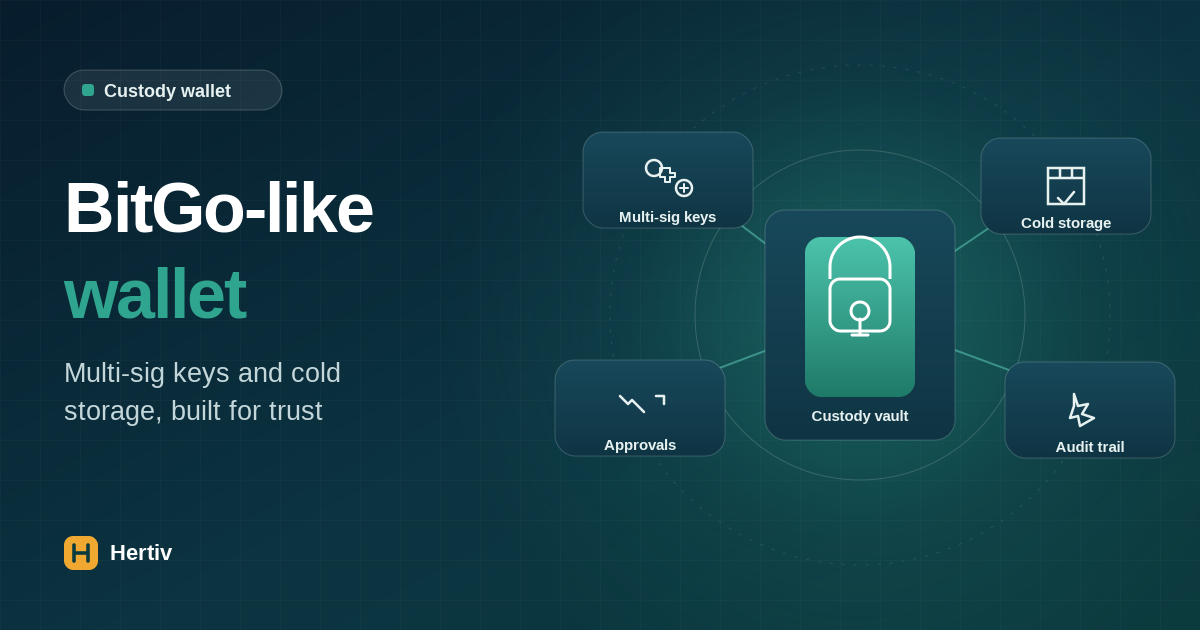
A BitGo-like wallet is an institutional custody wallet built on multi-signature keys and cold storage. This guide covers the design, build steps and compliance work.
On this page
Short answer
A BitGo-like crypto wallet is an institutional custody wallet, not a retail app. BitGo, founded in 2013, pioneered the multi-signature wallet and built its business on cold storage, regulated custody and insurance. To build one like it, you need multi-signature or MPC key management, offline cold storage, approval workflows, and the compliance and audit processes that let institutions trust you with their assets.
What is a crypto wallet like BitGo?
A crypto wallet like BitGo is a wallet built for institutions that hold digital assets for clients. BitGo is a digital asset infrastructure company founded in 2013 that pioneered the multi-signature wallet. Its custody wallets keep client assets in cold storage, with keys held offline, and its regulated entities provide qualified custody with insurance of up to $250 million.
That is a different product from a retail wallet. A retail wallet helps one person hold their own coins. A BitGo-like wallet helps a fund, an exchange or a bank hold other people's assets safely, with approvals, audit trails and rules about who can move what, when. The wallet is only part of the product: the custody process around it is the real work.
BitGo supports more than 700 tokens across many blockchains, and its stack covers multi-signature wallets, MPC threshold signatures, staking, trading and settlement. A team building a similar wallet does not need to match that range on day one, but it does need the same security model: no single person or server should ever hold enough key material to move funds alone.
What makes a BitGo-like wallet different?
Four things set a BitGo-like wallet apart from a normal crypto wallet. First, keys are split. A multi-signature wallet needs two or three keys to sign a transaction, so no single key can move funds. MPC, or multi-party computation, splits one key into shares held by different parties, so the full key never exists in one place.
Second, most assets sit in cold storage, which means the keys are kept offline in hardware security modules, away from the internet. Only a small working balance sits in a hot wallet for day-to-day payouts. BitGo keeps its custody assets in 100 percent cold storage, with keys never exposed online.
| Feature | Retail wallet | BitGo-like custody wallet |
|---|---|---|
| Key control | One person holds the keys | Keys split across people and systems |
| Storage | Hot wallet on a phone | Cold storage, offline hardware modules |
| Approvals | One tap to send | Multi-person approval with limits |
| Regulation | Usually none | Licensed custodian, audits, insurance |
| Audit trail | Transaction history only | Full logs of who approved what and when |
| Recovery | Seed phrase | Documented key recovery with controls |
Third, every movement needs approval. A withdrawal above a limit should need two or more people to sign, and the system should log who approved it, when, and from where. Fourth, the wallet sits inside a regulated operation, with audits, insurance and written procedures. That is what makes institutions willing to hand over their assets.
How do you plan a BitGo-like wallet?
Planning starts with the assets and the clients. List which blockchains and tokens you must support at launch, and which clients will use the wallet: funds, exchanges, banks or corporate treasuries. Each group has different rules about approvals, reporting and settlement, and those rules shape the wallet design.
Next, choose the key model. Multi-signature wallets are simpler to explain and audit, because each key is a real key held by a different person or system. MPC threshold signatures are more flexible, because a key can be split into many shares with a threshold, such as three of five, and the shares can be refreshed without changing the address.
Many custody wallets offer both, and the choice depends on which chains you support and what your auditors accept.
Then decide the hot and cold split. A common pattern is to keep most assets in cold storage and move a small working balance to a hot wallet each day for payouts. The hot wallet needs its own limits, alerts and automatic refills, so a breach can only reach a small amount. For key management basics, see how to set up an MPC wallet.
Finally, plan the compliance work early. A custody wallet needs know-your-customer checks, transaction monitoring, sanctions screening and a written incident plan. These are not features you add later: auditors and clients will ask for them before they deposit anything.
What are the build steps?
Building a BitGo-like wallet is a sequence of decisions, each one tested before the next starts. The steps below assume a small team building for institutional clients, not a retail app.
- Define the custody model. Write down who holds keys, how many approvals each action needs, and what happens if a key holder is unavailable. Get this reviewed by a security auditor before you write code.
- Pick the chains and tokens. Start with one or two chains, such as Bitcoin and Ethereum, and add more only after the first ones work in production. Each chain needs its own signing, fee and confirmation logic.
- Build key generation and storage. Generate keys inside hardware security modules, never on a developer laptop. Split keys with multi-signature or MPC, and store the shares in separate locations with separate access controls.
- Build the signing service. The service takes a transaction, checks the policy, collects the needed signatures, and broadcasts it. It must refuse any request that breaks a rule, even if the request comes from an admin.
- Build approvals and limits. Add multi-person approval, per-user limits, time locks and allowlists for destination addresses. Log every approval with who, when and from where.
- Add deposits, withdrawals and reporting. Clients need to see balances, deposit addresses, pending withdrawals and a full audit trail. Reporting is a core feature for institutional clients, not an extra.
- Test with an audit. Run a third-party security audit and a penetration test, fix what they find, and repeat the audit before launch. For custody basics, read custodial versus non-custodial wallets.
Expect the audit to find real problems. Budget time and money for at least two audit rounds, and do not launch with known key-management issues unresolved.
How do security and compliance work?
Security in a custody wallet is a set of layers, not a single feature. Keys live in hardware security modules, cold storage keeps most assets offline, and multi-signature or MPC means no one person can move funds. On top of that, the signing service checks policy on every request, and the whole system logs everything for later review.
Compliance starts with the legal structure. BitGo operates through regulated entities, including a trust company chartered by a banking regulator, and its custody carries insurance of up to $250 million. A team building a similar wallet needs to decide which licences it needs in each market, and that decision shapes the product: a licensed custodian and an unlicensed wallet company are different businesses with different rules.
Day-to-day compliance means screening clients and transactions, watching for suspicious activity, and keeping records that an auditor can follow. The wallet should make this easy: every transaction should carry the client, the approvers, the destination and the reason, so a compliance officer can answer questions without digging through logs. The MPC wallet development service covers this kind of build for teams that need it.
Insurance is the last layer. A custody wallet should carry insurance against theft and key loss, and the policy terms will shape your key handling: insurers ask hard questions about cold storage, key splits and access controls before they quote.
Example (hypothetical): a small custody launch
Example (hypothetical): a team launches a custody wallet for three small funds. The build costs $180,000, the security audit costs $40,000, and the first year of licences, insurance and hosting costs $60,000, so the first year totals $280,000.
The team starts with Bitcoin and Ethereum only. Ninety percent of client assets sit in cold storage, and ten percent sits in a hot wallet for daily payouts. A withdrawal above $50,000 needs two approvers, and a withdrawal above $250,000 needs three, including one person outside the operations team.
In the first six months the three funds deposit $12 million between them. The team charges 0.4 percent a year on assets under custody, which is $48,000 a year at that level. That does not cover the first-year cost, which is normal: a custody business needs more assets before the fees pay for the operation, and the first clients are buying trust, not price.
The numbers show why custody wallets are hard to start. The fixed costs are high, the trust bar is higher, and the revenue only works at scale. A team that launches without the audit, the insurance and the approval workflows will not get past the first client meeting.
What are the common mistakes?
The most common mistakes are treating a custody wallet like a retail wallet, skipping the audit, and letting one person hold too much power. Each of these can end the business.
- One person can move funds. If a single key or a single admin can sign a withdrawal, the whole security model is broken. Split keys and require multiple approvals.
- Keys generated on a laptop. Keys must be generated inside hardware security modules, never on a machine that touches the internet.
- Skipping the audit. Launching without a third-party audit means the first real test of your security is a real attack. Audit before launch, and again after big changes.
- No incident plan. Decide in advance what happens if a key is lost, a person leaves, or a hot wallet is drained. Write it down and test it.
- Adding chains too fast. Each chain is a new signing and fee system with its own risks. Add one at a time, with tests, or a bug in a new chain can put older assets at risk.
Keep keys safe by keeping the rules simple and the logs complete. A custody wallet earns trust one audited decision at a time, and loses it in a single incident. To keep your own keys safe, see how to secure a crypto wallet.
Key takeaways
- A BitGo-like wallet is an institutional custody wallet, not a retail app
- Multi-signature or MPC keys mean no single person can move funds alone
- Most assets sit in cold storage, with a small hot balance for payouts
- Approvals, audit trails, licences and insurance are part of the product
- Audit before launch and add chains one at a time
Frequently asked questions
What is BitGo?
BitGo is a digital asset infrastructure company founded in 2013 that pioneered the multi-signature wallet. It provides custody wallets, staking, trading and settlement for institutions, with cold storage, regulated entities and insurance of up to $250 million.
How is a BitGo-like wallet different from a normal crypto wallet?
A normal wallet helps one person hold their own coins. A BitGo-like wallet helps an institution hold other people's assets, with split keys, cold storage, multi-person approvals, audit trails, licences and insurance. The custody process around the wallet is the real product.
Should I use multi-signature or MPC keys?
Multi-signature wallets are simpler to explain and audit, because each key is held by a different person or system. MPC splits one key into shares, so the full key never exists in one place and shares can be refreshed. Many custody wallets offer both, and auditors accept either when it is done well.
How much does it cost to build a custody wallet like BitGo?
Costs vary widely, but a small custody launch needs budget for the build, at least two security audit rounds, licences, insurance and hosting. The fixed costs are high and the fees only cover them once assets under custody grow, so plan for a long runway.
Do I need a licence to run a custody wallet?
It depends on the market and the clients. Holding other people's assets usually needs a licence or a regulated partner, and institutional clients will ask for it before they deposit. Get legal advice before you build, because the licence shapes the product.
What happens if a key is lost?
A custody wallet needs a written recovery plan. With multi-signature or MPC, the remaining key holders can approve a recovery, and the plan should say who approves it, how it is tested, and how the new keys are stored. Test the plan before launch, not after a loss.


