How to Build a DeFi Token Like SafeMoon, Step by Step
A SafeMoon-style DeFi token is a token with built-in fees that reward holders and fund liquidity. Here is how the design, contract, audit and launch fit together.
On this page
Short answer
A DeFi token like SafeMoon is a token whose smart contract takes a fee on every transfer and splits it between existing holders, a liquidity pool and a marketing wallet. Building one means choosing the token rules, writing and testing the contract, getting an audit, then adding liquidity and listing it.
What is a SafeMoon-style DeFi token?
A SafeMoon-style DeFi token is a token that charges a fee on every transfer and shares that fee with holders instead of letting it sit with the project team. The idea became known through SafeMoon, a token launched in 2021 that taxed each trade and used part of the tax to reward holders and part to grow its liquidity pool.
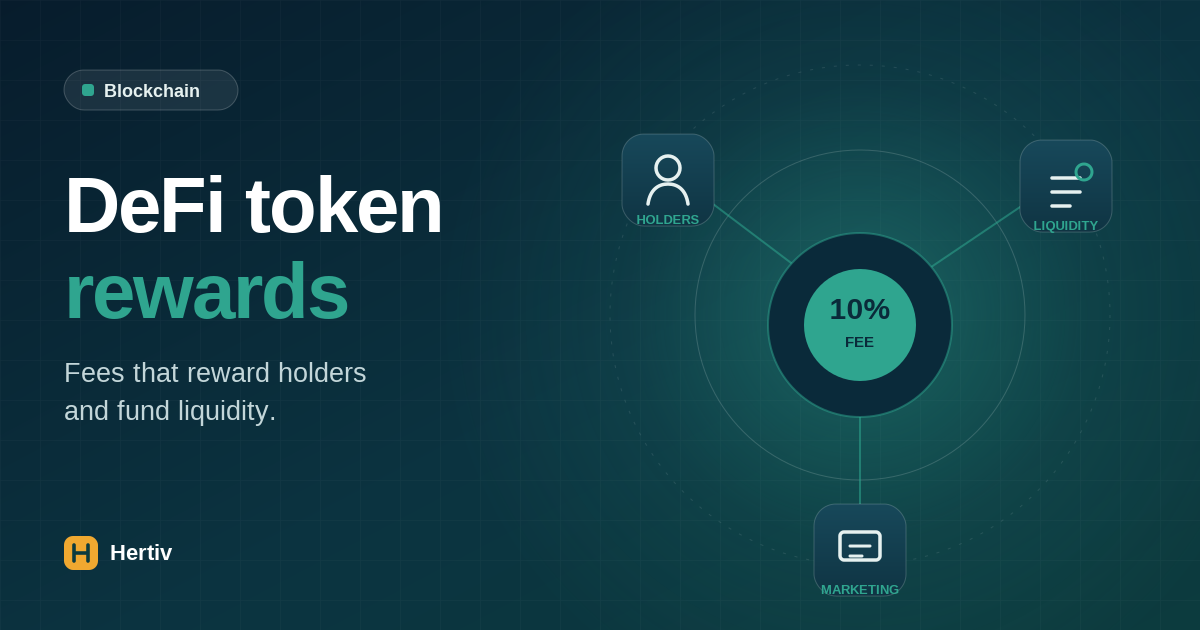
The design has three moving parts. A reflection fee sends a share of each trade back to every holder in proportion to what they hold. A liquidity fee adds tokens and paired currency to a trading pool so the token stays tradeable. A third share often goes to a marketing or development wallet to pay for listings and promotion.
The point of the model is to reward holding and discourage quick selling, because every sale pays a fee. That same fee is also the model's weakness: high taxes make a token expensive to trade, and traders may avoid it once the early excitement fades. You can read about the wider field in our guide to DeFi use cases for retail users.
What choices define the token design?
The token design is defined by a small set of choices you make before writing any code: the chain, the total supply, the fee split, and whether any part of the design can change later.
| Choice | Common option | What it changes |
|---|---|---|
| Chain | BNB Chain or Ethereum | Gas cost, wallet support and where traders already are |
| Total supply | Fixed at launch | How the price per token reads; supply alone sets no value |
| Transfer fee | 5-10% split three ways | Holder rewards, liquidity growth and trading cost |
| Fee control | Renounced or time-locked | Whether the team can change fees after launch |
| Max wallet | 1-2% of supply | How much one buyer can hold and dump at once |
Keep the fee split simple. A typical split is 5% to holders, 3% to liquidity and 2% to marketing, for a 10% total tax. Higher taxes look generous to holders on paper, but each trade then costs the buyer and the seller, which shrinks trading volume over time.
Decide early whether the contract can be changed. A contract with an owner who can change fees or pause trading gives you flexibility, but it also asks traders to trust that owner. Many teams hand ownership to a time-lock or give it up entirely once the token is live.
How do you write and test the token contract?
You write and test the token contract by starting from a reviewed token template, adding the fee logic, and running the whole set of transfers against a local test network before anyone can buy the token.
- Pick a base template. Use a reviewed ERC-20 or BEP-20 template and add only the fee logic you need. Avoid writing token maths from scratch.
- Add the fee split. On each transfer, take the fee and route each share to its wallet or to the liquidity pool. Keep the maths in one place so it is easy to review.
- Handle edge cases. Decide what happens on transfers to the liquidity pool itself, on buys and sells, and on wallets that are excluded from fees, such as the pool address.
- Test every path. Write tests for buys, sells, transfers between wallets, fee-free addresses, large trades and the maximum wallet limit.
- Deploy to a test network first. Run the token on a test network and trade it through a test exchange before touching real funds.
Testing matters more than features here. A single error in the fee maths can lock funds or send them to the wrong address, and a deployed contract cannot be fixed by editing it. If a test fails, fix the contract and test again rather than shipping around the failure.
Why does an audit matter before launch?
An audit matters before launch because a token contract handles other people's money, and the mistakes that lose it are usually small: a wrong address, a fee that never reaches the pool, or a function the owner can use to drain funds.
An audit is a review by an independent firm that reads the contract line by line and tries to break it. Auditors look for re-entrancy, integer errors, owner powers that are too broad, and fee logic that can be gamed. They publish a report listing what they found and whether each item was fixed.
An audit does not prove a token is safe or a good investment. It proves that a second pair of eyes checked the code at one point in time. Treat the report as a starting point: fix every high-severity finding, publish the report, and keep the audit in mind when you change anything later. Teams that skip this step are the ones that usually explain a lost pool afterwards.
If you are building a wider product around the token, a partner for DeFi development can help plan the contract, the audit and the launch as one sequence rather than three separate jobs.
How do you launch and add liquidity?
You launch and add liquidity by deploying the contract, pairing the token with a base currency in a decentralised exchange pool, and locking that liquidity so traders can buy and sell without the team removing the pool.
The usual launch sequence is: deploy the contract, send the starting supply to the deployer wallet, create the trading pair on a decentralised exchange, add the initial liquidity, then lock the liquidity tokens in a time-lock contract for a stated period. Locking matters because liquidity left open can be withdrawn by whoever holds the pool tokens.
Set the starting price by the ratio you add to the pool, not by the total supply. A token with a huge supply and a small pool starts at a tiny price per token, which is normal and says nothing about the project's value. What matters is the pool size relative to expected trading: a thin pool means large price swings on ordinary trades.
After launch, watch the pool, the holder count and the fee flows daily for the first weeks. If fees are not reaching the pool or holders as designed, pause new promotion and fix the cause before more people buy in.
Example (hypothetical): a small token launch
Example (hypothetical): a team launches a token with a total supply of 1,000,000,000 tokens and a 10% transfer fee split into 5% to holders, 3% to liquidity and 2% to marketing. They add 500,000,000 tokens and 50,000 units of the base currency to the pool, so the starting price is 0.0001 per token.
In the first week, traders move 20,000,000 tokens in total. The 10% fee takes 2,000,000 tokens: 1,000,000 go to holders in proportion to their balances, 600,000 go toward liquidity, and 400,000 go to the marketing wallet. A holder with 1% of the supply receives about 10,000 of those reflection tokens.
The team also locks the liquidity for 12 months and publishes the audit report. When a trader sells 1,000,000 tokens, the 10% fee means 100,000 tokens are taken before the sale completes, so the seller receives the value of 900,000 tokens. That friction is the trade-off the whole model is built on.
What are the common mistakes?
The most common mistakes are copying a contract without understanding the fee logic, launching with liquidity left open, and promising holders returns the fee model cannot deliver.
- Copying code blind. A copied contract may include a hidden owner function or a fee address you did not set. Read every line before deploying.
- Skipping the audit. An unaudited token asks strangers to trust code nobody else has read. Fix the findings instead of hiding the report.
- Liquidity left open. If the team can withdraw the pool, traders have no reason to trust the token will still be tradeable tomorrow.
- Fees that are too high. A 15% or 20% tax looks generous to holders but makes every trade expensive, which kills the volume that funds the rewards.
- Promising returns. Reflection rewards depend on trading volume. If volume stops, the rewards stop too, and no fee split changes that.
Key takeaways
- A SafeMoon-style token taxes each transfer and splits the fee between holders, liquidity and marketing
- The fee split is the design: keep it simple, and keep total tax low enough that trading stays affordable
- Start from a reviewed token template, test every transfer path, and deploy on a test network first
- An audit checks the code; it does not guarantee the token is safe or a good investment
- Lock the liquidity and publish the audit before promoting the launch
- Reflection rewards depend on trading volume, so they stop when volume stops
Frequently asked questions
What is the difference between a SafeMoon-style token and a normal token?
A normal token moves its full amount on each transfer, while a SafeMoon-style token takes a fee on every transfer and shares it with holders and the liquidity pool. The fee rewards holding and makes trading more expensive, which is the whole trade-off of the design.
Which chain should a SafeMoon-style token launch on?
Most teams pick BNB Chain or Ethereum because wallets, exchanges and traders are already there. BNB Chain usually means lower gas costs for traders, while Ethereum means a larger pool of existing tools and auditors. Pick the chain your traders already use.
How high should the transfer fee be?
A total fee of 5 to 10 percent is the common range, split between holders, liquidity and marketing. Higher fees look generous on paper but shrink trading volume, which is what funds the holder rewards in the first place.
Do I need an audit for a small token?
Yes, if other people will buy it. An audit is the only independent check that the fee maths and owner powers do what you claim. Fix the high-severity findings before launch and publish the report.
Can the team change the fee after launch?
Only if the contract allows it. Many teams keep an owner who can change fees, which is flexible but asks traders to trust that owner. Others hand control to a time-lock or give it up, which removes the risk but also the flexibility.
Why do some reflection tokens lose value quickly?
Reflection rewards come from trading volume, so when volume falls the rewards fall with it. High fees then make the token harder to trade, which can speed up the decline. The fee model cannot create demand on its own.


