What Does an App Like Tabby Cost to Build?
An app like Tabby costs what a shopping and payments app costs. The range depends on checkout, instalments, credit checks and merchant tools. Start with one market.
On this page
Short answer
An app like Tabby is a shopping app that lets people buy now and pay later in instalments, with the shop paid at checkout and the buyer paying over weeks. Its cost depends on how much of the payment flow you build yourself: a simple shopping app with a payment partner costs far less than a full credit, risk and merchant platform.
What is an app like Tabby?
An app like Tabby is a buy now, pay later app: a shopper picks a product, splits the price into instalments, and pays over a few weeks, while the merchant gets paid at the time of purchase. The app sits between the shop, the buyer and the payment flow, and it earns money from merchant fees.
Tabby itself operates in markets such as the UAE and Saudi Arabia, and the app combines a shopping catalogue, a wallet, instalment plans and merchant tools. Building one like it means building the shopping side, the payment side and the risk side, and the risk side is where the real work lives.
| Part | What it covers | First version |
|---|---|---|
| Shopping catalogue | Products, search, offers | Yes, with a small set of shops |
| Checkout | Cart, instalment choice, payment | Yes, one plan type |
| Credit checks | Identity, limits, fraud signals | Via a partner service |
| Wallet | Balance, instalments due, reminders | Yes, basic |
| Merchant tools | Onboarding, payouts, reports | Later, not in version one |
The first version should be a shopping app with one instalment plan and one payment partner. The credit engine, the merchant dashboard and the risk models come later, once real users show what breaks.
What drives the cost?
Three things drive the cost: the payment flow, the risk checks and the rules. The shopping screens are the easy part. The hard part is moving money safely, deciding who gets credit, and meeting the payment rules in each market you serve.
Credit checks need identity checks, fraud signals and a limit for each buyer. If you build those yourself, the cost and the time both grow, and you take on the risk of wrong decisions. Most first versions use a payment or credit partner and keep the app focused on shopping and checkout.
Rules add cost too. Payment apps need licences or a licensed partner, data protection, and clear terms for late payments. A lawyer should review the flow before launch, because a mistake here costs more than any feature.
What does a first version include?
A first version includes accounts, a catalogue, search, a cart, checkout with one instalment plan, a wallet that shows what is due, and reminders. It also needs basic fraud checks, such as device and velocity signals, even if the deeper credit scoring comes from a partner.
Leave out the merchant dashboard, the full risk engine, multi-currency support and the referral programme. Each of those is a project on its own, and none of them matters if shoppers do not finish checkout.
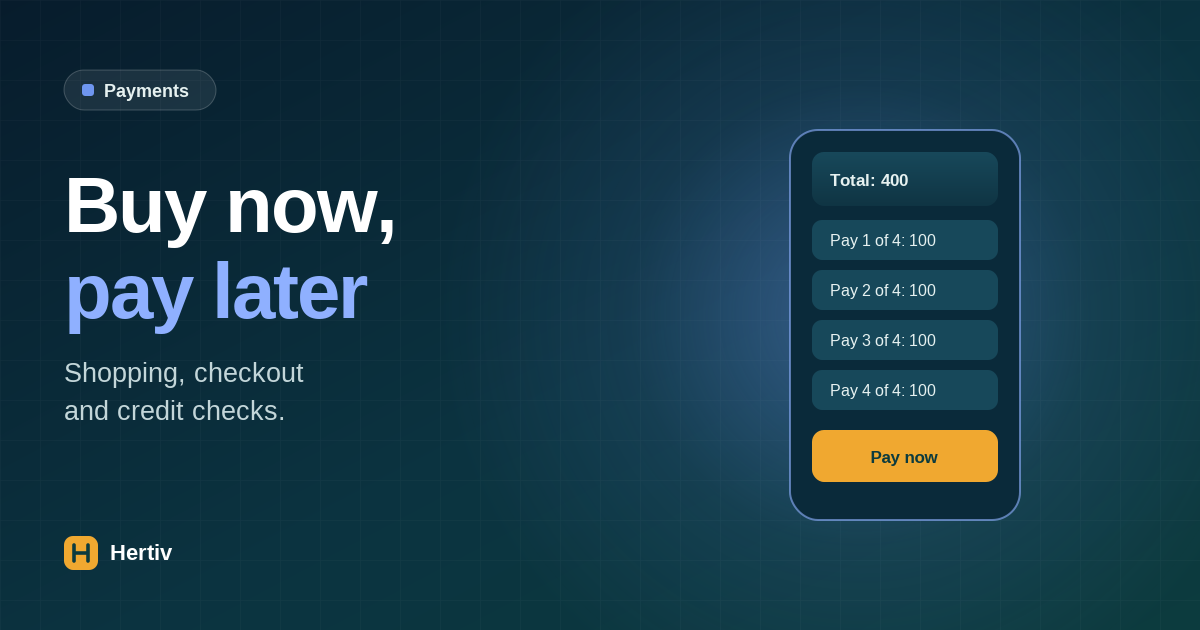
The design should make the instalment cost obvious. Shoppers need to see the total, the size of each payment and the dates before they confirm. Hidden fees and unclear totals are the fastest way to lose trust in a payments app.
How do you estimate the cost?
Estimate by listing the parts, then pricing each one in hours with the team that will build it. A catalogue and checkout is one block, the wallet is another, and the payment and credit integration is a third. The integration block is usually the largest, because it involves outside services and testing with real transactions.
Ask each vendor the same questions: what is included, what is a partner service, and what happens when a payment fails. The answers change the estimate more than the hourly rate does.
- List every part of the app, from signup to payout.
- Mark which parts use a partner and which you build yourself.
- Estimate each part in hours, then add time for testing payments.
- Add a reserve of about 10% for changes found in testing.
- Price the running costs separately: hosting, partners and support.
For the general shape of an app estimate, how to create a mobile app for business covers the parts and the steps in more detail.
What does it cost to run after launch?
Running costs include hosting, payment partner fees, fraud and credit services, support and compliance. Payment partner fees are usually a share of each transaction, so they grow with volume and should be modelled against real order numbers, not guesses.
Support is a bigger cost than most teams expect. Payment problems are urgent for shoppers, so the team needs clear rules for failed payments, refunds and late fees, and a way to fix them fast. A slow answer on a money question turns into a complaint quickly.
Compliance is ongoing too. Payment rules change, and each new market adds its own requirements. Budget for a regular review with a lawyer who knows payment rules in your market, rather than treating it as a one-off task.
Example (hypothetical): a first version for one city
Example (hypothetical): a team builds a first version for one city with a catalogue, checkout, one instalment plan and a wallet. The build is estimated at 600 hours at $55 an hour, which is $33,000, plus $4,500 for design and $3,000 for payment integration testing, which totals $40,500.
They add a reserve of 10%, which is $4,050, bringing the total to $44,550. The credit checks and fraud scoring come from a partner service, so those costs appear as monthly fees instead of build cost, and the merchant dashboard is left out of version one.
The point of the arithmetic is the shape, not the number. The integration and testing blocks are the ones that move the total, and the reserve is what keeps a late discovery from breaking the budget. See MVP app development cost for how a first version is usually scoped.
Common mistakes when building a Tabby-like app
Most failures come from treating the app as a shopping app and forgetting the money part. The catalogue can be perfect and the app can still fail if payments are unclear, credit decisions are wrong, or support is slow.
- Building the full credit engine before anyone has used the app
- Hiding the total cost or the payment dates from shoppers
- Skipping fraud checks in the first version to save time
- Launching in several markets at once, each with different rules
- No clear process for refunds, failed payments and late fees
- Underestimating support: payment questions need fast answers
- Treating compliance as a one-off review instead of ongoing work
Keep the first version small and the payment flow clear. See what is an MVP for how to decide what belongs in version one.
Key takeaways
- A Tabby-like app is a payments app first and a shopping app second.
- Use a payment partner for credit checks in the first version.
- Show the total, each payment and the dates before checkout.
- Budget for support and compliance, not just the build.
- Launch in one market with one instalment plan.
Frequently asked questions
Is Tabby a buy now, pay later app?
Yes. Tabby lets shoppers split a purchase into instalments while the merchant is paid at checkout. The buyer then pays the instalments over a few weeks, and the app earns money from merchant fees.
Do I need a licence to build an app like Tabby?
Payment apps usually need a licence or a licensed partner, and the rules differ by market. Talk to a lawyer who knows payment rules in your market before you build the payment flow.
Can I build a Tabby-like app without a credit engine?
Yes, for a first version. Use a payment or credit partner for identity checks, limits and fraud scoring, and keep your app focused on shopping, checkout and the wallet instead.
What is the hardest part of a Tabby-like app?
The payment and risk flow is the hardest part: moving money safely, deciding who gets credit, and handling failed payments and refunds. The shopping screens are the easy part by far.
How long does a first version take?
A small first version for one market usually takes a few months, including payment testing. The time grows fast if you add a merchant dashboard, a risk engine or extra markets.
What should the first version leave out?
Leave out the merchant dashboard, the full risk engine, multi-currency support and referral features. Ship the shopping, checkout and wallet first, then add the rest once shoppers are paying on time.


