Blockchain in Fashion: How It Traces Clothes and Stops Fakes
Blockchain gives each garment a checkable record from factory to resale, so brands can prove where clothes came from and buyers can spot fakes.
On this page
Short answer
Blockchain in fashion is a shared record that tracks a garment from raw material to resale, with each step written to a ledger that buyers and brands can check. It is used to prove authenticity, show where clothes were made, and support resale and recycling. It works best for high-value items where proof of origin matters.
What is blockchain in the fashion industry?
Blockchain in the fashion industry is a shared digital record that follows a garment from raw material to shop shelf and on to resale. Each step, from spinning and dyeing to sewing, shipping and sale, is written to a ledger that brands, suppliers and buyers can all check.
The ledger does not hold the garment itself. It holds a record: who handled the item, when, and where, plus links to certificates such as organic cotton or fair-wage audits. A QR code or NFC tag on the garment points to that record.
| Use | What the record shows | Who checks it |
|---|---|---|
| Authenticity | Batch, factory and sale | Buyer, shop staff |
| Origin | Material source and mills | Brand, auditor |
| Resale | Item history and ownership | Second-hand buyer |
| Recycling | Fabric mix and trims | Recycler, sorter |
| Royalties | Resale terms for the designer | Brand, designer |
Fashion suits this approach because the chain is long and hard to see. A single jacket can pass through five countries before it reaches a shop. A shared record gives every party the same view, instead of each keeping its own spreadsheet. The underlying idea is the same as in what a blockchain is.
How does blockchain track a garment from factory to shop?
Tracking starts where the material starts. A supplier records the batch of cotton or leather, and each later step adds its own entry: the mill, the dye house, the factory, the shipper and the warehouse.
Each entry is signed by the party that made it, so a later reader can see who claimed what. If a shipment changes hands, the new holder adds a transfer entry. The full chain of entries is the garment's history.
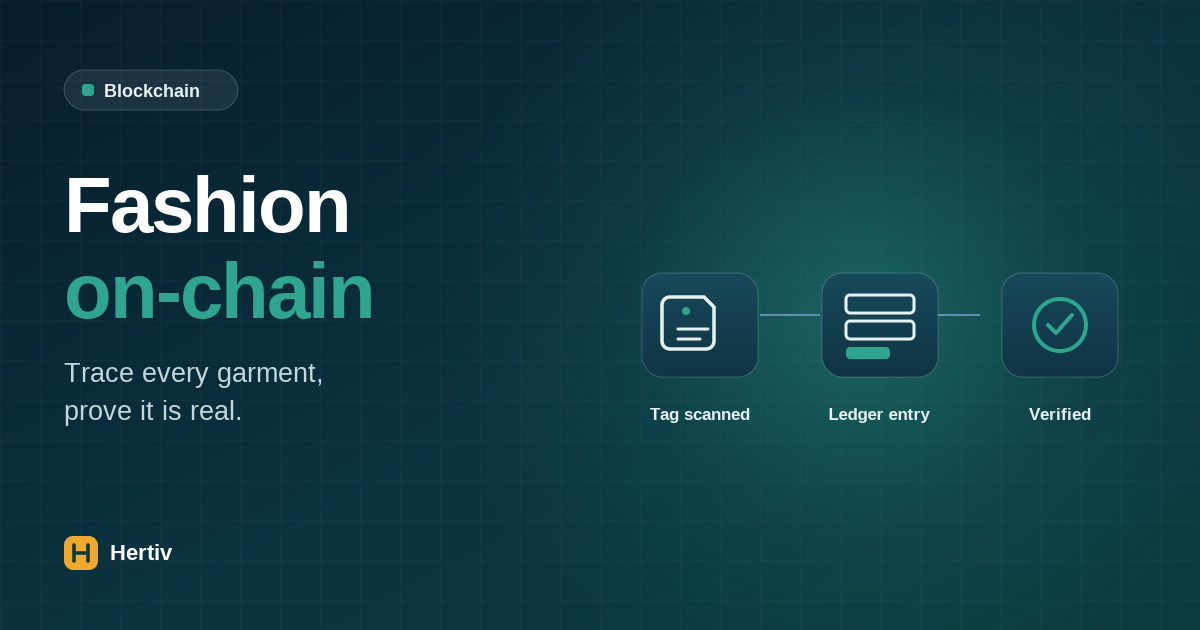
The tag on the garment is the link between the physical item and the record. Scanning it shows the entries in order. If an entry is missing, or the tag does not match the record, the item is flagged for a manual check before it is sold.
Not every step needs to be on the chain. Brands usually record the steps that prove origin or quality, and leave routine logistics in their normal systems. The record is for the facts a buyer or auditor would ask about, not for every scan of a barcode.
How does blockchain help buyers spot fakes?
Fakes are hard to spot because a copy can look identical to the real item. A blockchain record gives the buyer something a copy cannot fake on its own: a checkable history tied to the brand's own entries.
When a buyer scans the tag, the brand's record shows the item's batch, factory and sale. A fake tag either points to no record at all, or to a record that has already been scanned many times in different places, which is a sign the tag was copied.
This only works if the brand controls the first entry. If anyone can write the first record, fakes get real-looking records too. The value is in the brand signing the origin, not in the chain alone.
Brands also watch for the same record being checked from many places at once. A record scanned in three countries within an hour is a clear signal that the tag was copied. That pattern is hard to fake, because it needs the real record to be checked in places the real item never visited.
What can blockchain do for resale and recycling?
A garment with a record is easier to resell, because the buyer can check what it is and where it came from. Second-hand platforms can show the item's history instead of asking the seller to prove it.
The same record helps recycling. A recycler can see the fabric mix before taking the item apart, which matters because mixed fabrics are harder to recycle than pure ones. Sorting becomes faster when the label data is already on the record.
Some brands also use the record to pay royalties. When a garment resells, a smart contract can send a small share back to the original designer or brand. The amounts are small per item, but the rule is automatic once it is set, as explained in how tokenization works.
Resale platforms gain from this too. When a listing carries a checkable history, buyers trust it more and sellers spend less time answering questions. The platform can also refuse listings whose record does not match the item, which keeps fakes off the marketplace.
How do fashion brands start a blockchain pilot?
A pilot works when it is small and measured. Start with one product line, one problem and one way to tell whether it helped.
- Pick one product line with a clear problem, such as fakes in a high-value range.
- Map the chain for that line: who touches it, and what each party records today.
- Choose what goes on the record and who signs each entry.
- Add tags to a small batch and test scanning at the shop and at resale.
- Measure what changed: fake reports, resale prices, or time spent answering origin questions.
- Decide whether to widen the pilot or stop, based on the numbers from step five.
Keep the record simple at first. A pilot that tries to record everything usually records nothing well. Retail brands face the same scoping choice in blockchain in retail.
Example (hypothetical): a jacket line with a digital passport
Example (hypothetical): a mid-size label sells 4,000 leather jackets a year at $300 each. Fakes of its best-selling style appear online, and customer service spends time each week answering questions about whether an item is real.
The label adds a signed record to one jacket line. The tannery, the factory and the warehouse each add an entry, and each jacket gets a tag that points to its record. Shop staff can scan a jacket and show the buyer its history in under a minute.
After six months, fake reports for that line fall from 12 a month to 3. Nine fewer reports a month, each taking about an hour of staff time, saves roughly 9 hours a month. Resale listings for the line now carry the record link, so second-hand buyers pay closer to the new price. The label then extends the record to two more lines.
What are the common mistakes?
The most common mistakes come from treating the chain as the product, instead of treating the record as the product.
Another common error is launching the record without telling buyers it exists. A tag nobody scans is a cost, not a feature. Shops need to know how to show the record, and the record needs to work on a normal phone.
- Recording everything at once instead of the few facts buyers actually check.
- Letting anyone write the first entry, which lets fakes get real-looking records.
- Treating the tag as the proof, when the proof is the signed record behind it.
- Hiding the record behind an app download that buyers will not install.
- Expecting the chain to fix sourcing problems that start with bad data.
Key takeaways
- Blockchain gives a garment a checkable history from material to resale
- The value is in signed entries from known parties, not in the chain alone
- Buyers can check authenticity by scanning the tag and reading the record
- Records help resale and recycling by showing what an item is made of
- Start with one product line, one problem and one way to measure it
Frequently asked questions
Does blockchain stop counterfeiting?
No. It makes fakes easier to spot, because a fake tag points to no record or to a record that has been scanned far too often. It does not stop anyone from making a copy; it gives buyers a fast check before they pay.
Do buyers need a crypto wallet to check a garment?
No. Checking a record only needs a phone camera and a web page. Wallets are only needed when the buyer pays with crypto or claims a token, which most fashion pilots do not ask for.
What is a digital product passport?
It is a record tied to one item that lists where it was made, what it is made of, and how to repair or recycle it. Blockchain is one way to store that record so it cannot be changed after the fact.
Which fashion items benefit most?
High-value, limited and frequently copied items benefit most, because the cost of a tag and a record is small next to the price. Basic items with thin margins rarely justify the extra step.
How much does a fashion blockchain pilot cost?
It depends on the number of items, the parties involved and whether tags are added at the factory. Most pilots start with one line and a small batch, then scale only if the checks save time or cut fake reports.
Can blockchain prove a garment is sustainable?
Only if the claims on the record were measured and signed by someone who checked them. The chain preserves what was written; it cannot verify what was never measured in the first place.


