AI in Social Media Platforms: How Feeds, Ads and Moderation Work
AI in social media platforms ranks feeds, moderates content, targets ads and helps creators make posts. Here is how each part works and what it means for you.
On this page
Short answer
AI in social media platforms is the software that decides what appears in your feed, checks posts against community rules, matches ads to people likely to care, and helps creators write, edit and schedule content. It shapes what billions of people see every day, which is why how it works matters to users and businesses alike.
What is AI in social media platforms?
AI in social media platforms is software that learns from what people post, watch, like and share, then uses those patterns to rank content, enforce rules and match advertising. Every major platform runs it, because no human team could review the volume of posts that arrive each minute.
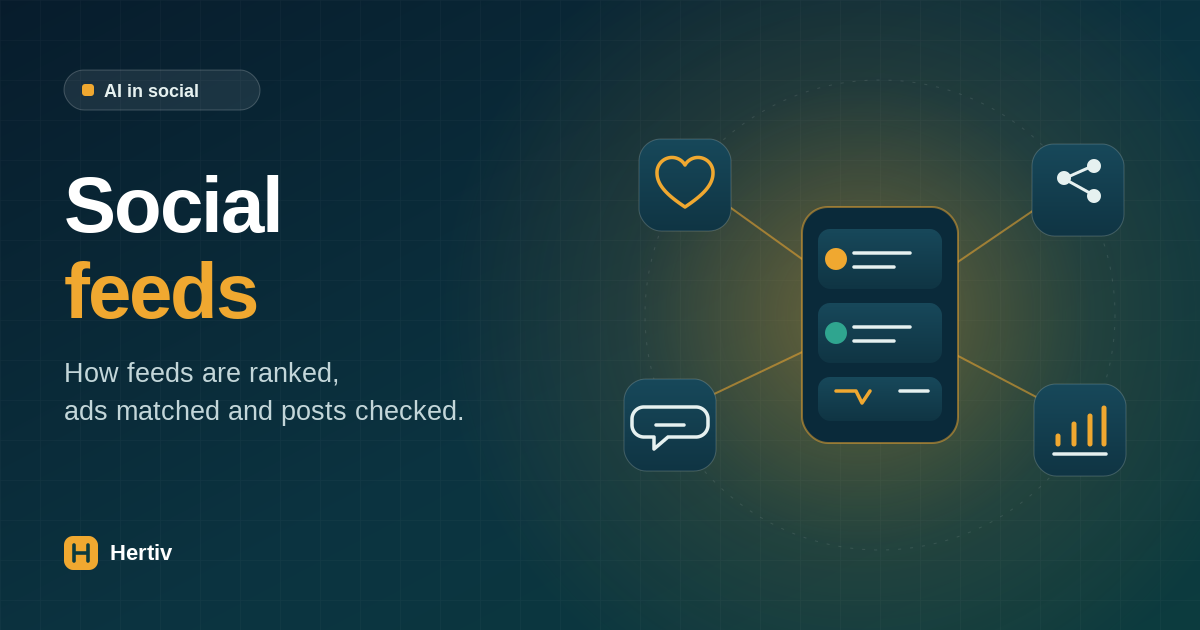
The AI does four main jobs. It ranks the feed, deciding the order of posts for each person. It moderates content, removing or limiting posts that break the rules. It targets advertising, matching ads to people based on interests and behaviour. And it powers creator tools, such as captions, editing, translation and scheduling.
None of these jobs is a single model. Each platform runs many systems together, and the result is personal: two people opening the same app see different feeds, different ads and different suggestions. That personalisation is the product, and it is also the source of most of the debate about these platforms.
How does AI decide what appears in your feed?
AI ranks your feed by scoring each available post against signals about you, the post and the person who made it, then showing the highest-scoring posts first. The exact signals differ by platform, but the pattern is the same everywhere.
| Signal | What it measures | Why it matters |
|---|---|---|
| Past engagement | What you liked, saved or watched | Predicts what you will engage with again |
| Relationships | Who you interact with most | Posts from close contacts rank higher |
| Recency | How fresh the post is | New posts outrank old ones |
| Post type | Video, image, text or link | Formats you watch more get shown more |
| Session behaviour | Time spent and scroll speed | Slowing down signals interest |
| Quality checks | Reports, spam signals, clickbait | Low-quality posts are pushed down |
The feed is not a neutral list of what your friends posted. It is a ranking, and the ranking is tuned to keep you on the platform. Creators who understand this focus on the signals they can influence: posting when their audience is active, making content people finish, and earning replies rather than passive views.
How does AI moderate content?
AI moderates content by checking posts, images and video against the platform rules as they are uploaded, and by acting on user reports afterwards. The first check is automated; the hard cases go to human reviewers.
For text, the software looks for banned words, threats, scams and spam patterns, and it can also read context, so a quoted insult in a news post is treated differently from a direct insult. For images and video, it compares uploads with known harmful material and scans for nudity, violence and graphic content.
The limits are real. Sarcasm, slang and new coded language are often missed, and the software can also flag innocent posts. That is why platforms keep humans in the loop for appeals and for the cases the software is unsure about. A business that has a post removed should appeal through the platform process rather than reposting it, which can look like evasion.
How does AI target and measure advertising?
AI targets advertising by matching an ad to people whose interests, behaviour and past actions suggest they may care, then learning from the results. An advertiser sets the audience and the budget; the platform decides which individual people see the ad and when.
The measurement side is where most of the value sits. The platform reports which ads were seen, clicked and followed by a purchase or sign-up, and it shifts budget towards the ads and audiences that perform best. This learning loop is automatic, which is why a small change in creative or audience can move results more than a change in budget.
Privacy rules have narrowed what advertisers can target. Broad interest and behaviour targeting still works, but the detailed personal data that was once available is now restricted on most platforms. Advertisers who build their own first-party lists, such as email subscribers and past buyers, get better targeting than those who rely on the platform alone.
How can a business or creator use these AI features?
A business or creator can use platform AI by working with the ranking, moderation and advertising systems rather than against them. The features are built into the apps, so no extra software is needed to start.
- Post for your audience, not the algorithm. Content that earns replies, saves and full views ranks better than content optimised for clicks.
- Use the built-in creation tools. Captions, auto-editing, translation and scheduling save time and keep posts consistent.
- Check the analytics. Look at which posts held attention and which were skipped, then make more of the first kind.
- Automate the routine replies. Saved replies and chat tools handle common questions, but a person should still answer complaints.
- Advertise with a small test budget. Run a few variants, watch which one performs, then move budget to the winner.
For teams that want these jobs automated across channels, AI agents for marketing covers how agents draft, schedule and report on social content.
A comparison of the tools that schedule and publish is in the social media automation tools shortlist.
Example (hypothetical): a small shop replies to 300 comments a week
Example (hypothetical): a small online shop gets 300 comments a week across its social accounts, mostly asking about delivery times, sizes and returns. Answering each one by hand takes about 2 minutes, which is 300 x 2 = 600 minutes, or 10 hours a week.
The shop sets up the platform auto-reply tools and drafts answers for the common questions, with a person reviewing each draft before it is sent. Reviewing a draft takes about 30 seconds, so the same 300 comments take 300 x 0.5 = 150 minutes, or 2.5 hours a week.
The saving is 10 minus 2.5, or 7.5 hours a week, and the shop still answers complaints personally, because those are the comments where a fast, human reply matters most. Response time falls from a day to under an hour, and the team spends the saved hours making products instead of typing the same answer.
What are the common mistakes?
The most common social media mistakes are chasing the algorithm instead of the audience, automating replies to complaints, and reading the wrong numbers.
- Chasing the algorithm. Tactics that game the ranking stop working when the ranking changes, while content people genuinely want keeps working.
- Auto-replying to complaints. A canned reply to an angry customer reads as indifference and often makes the complaint public.
- Reading vanity numbers. Follower counts and likes say little; saves, shares, replies and sales say much more.
- Posting the same content everywhere. Each platform ranks different formats, so a video that works in one feed can flop in another.
- Ignoring moderation rules. Posts that break the rules are pushed down or removed, and repeated breaches can limit the whole account.
Key takeaways
- AI ranks each feed from engagement, relationships, recency and quality signals
- Moderation is automated first, with humans handling appeals and hard cases
- Ads are matched to likely audiences and budget shifts to what performs
- Creators should optimise for replies, saves and full views, not raw clicks
- Automate routine replies, but answer complaints personally
Frequently asked questions
How does AI choose what I see on social media?
It scores each available post against signals such as your past engagement, your relationship with the poster, how fresh the post is and its quality, then shows the highest-scoring posts first. Two people opening the same app therefore see different feeds.
Can AI tell if a post breaks the rules?
It can catch many cases, such as known harmful images, spam patterns and banned words, and it can read some context. It still misses sarcasm, slang and new coded language, which is why platforms keep human reviewers for appeals and uncertain cases.
Why do my posts get fewer views than before?
Reach falls when the ranking signals weaken: fewer replies, shorter watch time, or posts at times when your audience is not active. It can also fall if posts are flagged for quality. Check the analytics for watch time and saves before changing strategy.
Is it safe to let AI write my social media posts?
It is safe for first drafts and routine replies, as long as a person reviews them before posting. Unchecked output can drift off brand, state wrong facts or sound canned. Keep a human in the loop for anything sensitive or public-facing.
How does AI advertising know who to show ads to?
It matches ads to people based on interests, behaviour and past actions, then learns from clicks and purchases which audiences respond best. Privacy rules have narrowed the personal data available, so advertisers now rely more on their own customer lists.
Do social media platforms use my data to train AI?
Most platforms say they use public posts and interactions to improve their systems, and the details differ by platform and region. Check the privacy settings in each app to see what you can limit, and read the platform policy before assuming.