Redeem-and-Retain NFTs: Keep the Token, Get the Item
A redeem-and-retain NFT lets you claim the physical item it stands for and keep the token. Here is how redemption works and what to check first.
On this page
Short answer
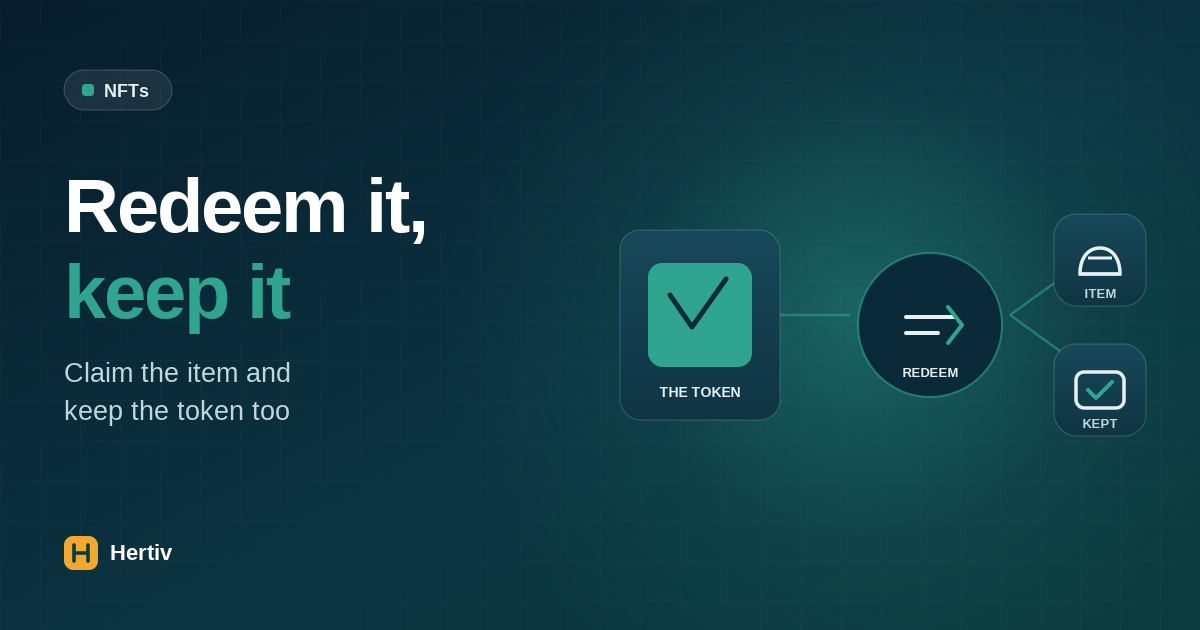
Redeem-and-retain NFTs are tokens that give the holder the right to claim a physical item, such as a pair of sneakers or a limited print, while keeping the token afterwards. The token stays in the wallet and is marked as redeemed, so the holder keeps the digital collectible, its resale value and any perks tied to it.
What are redeem-and-retain NFTs?
Redeem-and-retain NFTs are tokens that give the holder the right to claim a physical item, such as a pair of sneakers or a limited art print, and keep the NFT afterwards. The token works as both a proof of ownership and a digital twin of the item, and redeeming the physical version does not destroy it.
The idea answers a simple problem with the older burn-to-redeem model: when you burn a token to claim the item, you lose the digital collectible, its resale value and any perks tied to it. In a redeem-and-retain design, the token stays in your wallet and its record is updated to show that the item has been claimed, often by flipping a "redeemed" trait on the token itself.
This model is sometimes called the phygital model, because it links a physical product with a digital token. It suits limited editions and luxury goods, where the item is scarce and the token carries authenticity, event access or future rewards.
How is redeem-and-retain different from burn-to-redeem?
Redeem-and-retain and burn-to-redeem both let a token holder claim a physical item, but they treat the token differently after the claim. That difference changes what the holder owns, what they can sell later, and what perks survive the redemption.
| Feature | Redeem-and-retain | Burn-to-redeem |
|---|---|---|
| Token after redemption | Stays in your wallet, marked redeemed | Destroyed when you claim the item |
| Physical item | Shipped to you on redemption | Shipped to you on redemption |
| Resale after redemption | Token and item can be sold together or separately | Only the physical item can be sold |
| Perks and access | Token keeps event access and rewards | Perks end when the token is burned |
| Best for | Luxury goods, collectibles, memberships | Merchandise, prints, one-off drops |
Burn-to-redeem is simpler to build and easier to explain, which is why most early physical NFT drops used it. Redeem-and-retain needs a token standard that can change its state, such as a mutable trait, and a clear record of which items have already been claimed, so the same token cannot be redeemed twice.
How does redemption work, step by step?
Redemption in a redeem-and-retain design follows a fixed sequence, and each step is recorded so the item, the token and the claim stay linked. The exact flow depends on the project, but the pattern is the same.
- Buy or receive the token. You buy the NFT in a drop or on a marketplace, or receive it as part of a membership. The token is the claim on the physical item.
- Wait for the redemption window. The project opens a window, often weeks or months after the drop, and announces the deadline. Check the window before you buy, because an expired token may lose its claim.
- Submit your claim. You connect your wallet, prove you hold the token, and enter a shipping address. Some projects ask for identity checks, especially for high-value items.
- The token is marked redeemed. A smart contract updates the token's traits to show it has been claimed, without destroying it. The token stays in your wallet.
- The item ships. The project or its fulfilment partner ships the item, often with a chip or tag that links it back to the token, so a buyer can check authenticity later.
- Keep or resell. You keep both the item and the token, and you can sell either one. A buyer of the token can check its redeemed trait before paying.
Shipping, taxes and customs are the parts most projects underestimate. A token can be claimed in seconds, but a physical item still needs a warehouse, a courier and a returns process.
What links the token to the physical item?
A blockchain can prove which wallet holds a token, but it cannot see a sneaker, a watch or a trading card. Every working design adds an outside link between the token and the item, and the link is the weakest part of the system.
| Model | What links token and item | Main risk |
|---|---|---|
| Vaulted custody | A custodian stores the item and ships it on redemption | The custodian fails, loses items or closes |
| Chip-linked product | A secure NFC chip in the item proves it is genuine | Cheap chips can be copied or removed |
| Burn-to-redeem voucher | The token is a voucher destroyed on claim | Shipping costs, taxes and stock shortages |
| Redeem-and-retain | A mutable token trait records the claim | The item is sold without the token, or vice versa |
Chip-linked designs are the strongest for luxury goods, because a secure chip can sign a fresh challenge when a phone taps it, proving the original chip is present. Vaulted custody suits small, valuable items such as graded trading cards, where the holder may never want the item shipped at all. Before you buy, ask which model a project uses and who you trust if it fails.
Example: a limited sneaker drop with redeem-and-retain
Example (hypothetical): a footwear brand releases 500 pairs of limited sneakers as redeem-and-retain NFTs, priced at $180 each. The drop sells out, so the brand takes in $90,000. Each token is a digital twin of one pair, wearable in virtual spaces, and each pair carries an NFC chip in the tongue.
The redemption window opens 30 days after the drop and stays open for 60 days. In that window, 320 holders redeem their pairs, which is 64% of the supply, and the brand ships 320 pairs. The other 180 tokens stay unredeemed and keep trading on marketplaces, because buyers still want the digital twin and the right to claim a pair later.
Each redeemed token has its trait flipped to redeemed, so a buyer can see at a glance whether the pair has already been claimed. The chip in each shoe lets a later buyer scan the pair with a phone and check it against the token, which makes fakes easier to spot and resales safer for both sides.
The brand also gains something it never had with a normal drop: a record of who owns each pair, which it can use for future releases, event invitations and warranty claims, without holding a customer database itself.
What are the common mistakes?
The most common mistakes with redeem-and-retain NFTs are buying a token without checking the redemption window, trusting a project with no fulfilment plan, and assuming the token guarantees the item will arrive.
- Missing the redemption window. Some tokens lose their claim when the window closes. Check the deadline before you buy, and set a reminder.
- No fulfilment plan. A project that can mint tokens but cannot warehouse and ship 500 pairs will fail at the step that matters most. Ask who ships, from where, and who pays for returns.
- Assuming the token is the item. The token is a claim on the item, not the item itself. If the company fails, the token may be worthless even though it is still in your wallet.
- Ignoring the chip. A redeem-and-retain token without a chip or vault link cannot prove the physical item is genuine. Check how authenticity is verified.
- Forgetting taxes and customs. Redeeming a physical item can trigger import duty, sales tax and shipping fees that were never mentioned in the drop. Ask for the full cost before you redeem.
What should you check before buying or building one?
Before you buy a redeem-and-retain NFT, check the redemption window, the fulfilment partner, the chip or vault link, and the total cost of claiming the item. Before you build one, check the token standard, the trait update and the same fulfilment questions.
- Read the redemption terms. When does the window open and close, what does redemption cost, and what happens to unredeemed tokens?
- Check the link. Is there a secure chip, a vault custodian or a legal claim behind the token, and who audits it?
- Check the trait update. Does the contract reliably mark a token as redeemed, and can that record be checked on a marketplace?
- Price the whole claim. Add shipping, taxes and customs to the token price before you decide what the item really costs.
- Check the team. A project that has shipped physical goods before is a safer bet than one that has only minted tokens.
If you are building a redeem-and-retain collection, the smart contract is only half the work. The fulfilment, the chip integration and the customer support around redemption need the same care, and a partner for blockchain development can help design the token and the claim flow together.
Key takeaways
- A redeem-and-retain NFT is a claim on a physical item that survives redemption
- Burn-to-redeem destroys the token; redeem-and-retain marks it redeemed and keeps it in your wallet
- The token cannot see the item, so a chip, vault or legal claim must link the two
- Check the redemption window, the fulfilment plan and the full cost before you buy
- A redeemed token is worth less than an unredeemed one, so check the trait before buying
- Shipping, taxes and customs are the parts most projects underestimate
Frequently asked questions
What is a redeem-and-retain NFT?
It is an NFT that stands for a physical item and lets the holder claim that item while keeping the token. After redemption the token stays in the wallet with a trait flipped to redeemed, so the holder keeps the digital collectible, any event access and the right to resell the token.
What is the difference between redeem-and-retain and burn-to-redeem?
In burn-to-redeem, the token is destroyed when you claim the physical item, so you keep only the item. In redeem-and-retain, the token stays in your wallet and is marked redeemed, so you keep both the item and the token, including any perks and resale value tied to it.
Can I sell a redeemed NFT?
Yes, but a redeemed token is usually worth less than an unredeemed one, because the right to claim the item has already been used. A buyer can check the redeemed trait on the token before paying, and the physical item can be sold with or without the token.
How do I know the physical item is genuine?
Genuine items are linked to their token by a secure NFC chip, a vault custodian or a legal claim. A secure chip can sign a fresh challenge when a phone taps it, proving the original chip is present. Check which link a project uses before you buy.
What happens if I miss the redemption window?
It depends on the project. Some tokens lose their claim when the window closes, while others keep it for a later window. Read the redemption terms before you buy and set a reminder, because the deadline is usually fixed in the smart contract.
Are redeem-and-retain NFTs a good investment?
Treat them as a collectible purchase, not an investment. The value depends on the brand, the scarcity, the redemption terms and whether the project can actually ship the item. Never spend more than you can afford to lose on a token whose claim depends on a company staying in business.


