What Is Web3 Social Networking, and How Does It Work?
Web3 social networking puts your identity, posts and followers on open protocols instead of one company's servers. Learn how it works and where it falls short.
On this page
Short answer
Web3 social networking is social media built on open protocols and blockchains, where your identity, posts and follower list belong to you instead of to one company. You sign in with a wallet or a portable identity, your posts are stored on a network no single company controls, and you can move your followers between apps on the same protocol.
What is Web3 social networking?
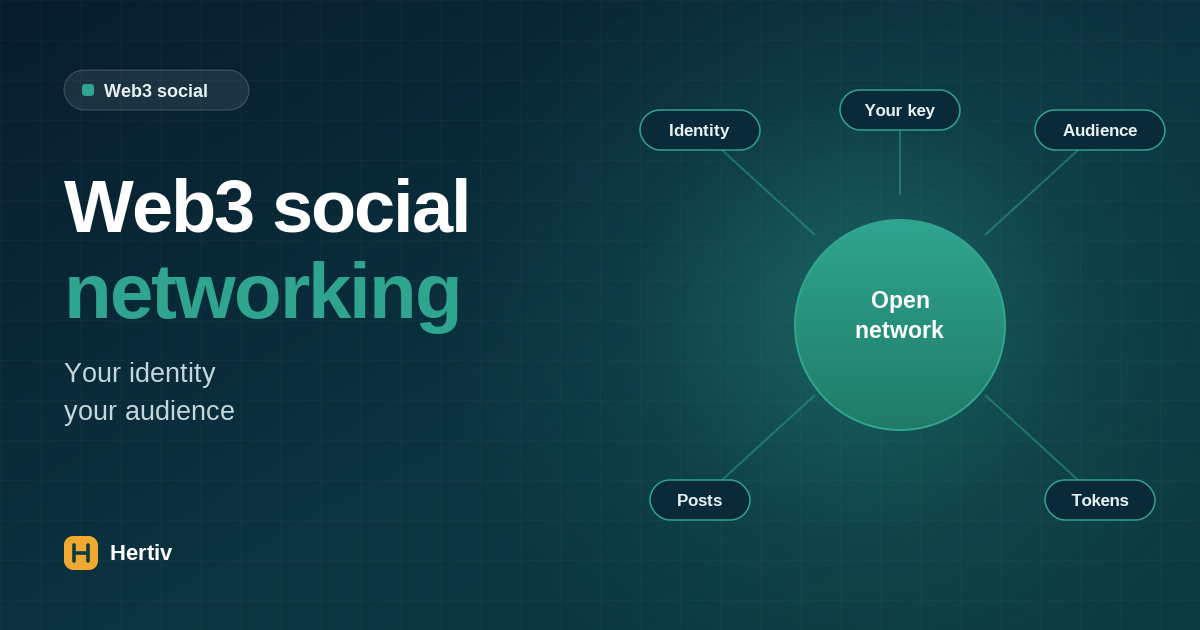
Web3 social networking is social media where the network is open. On a normal social network, one company owns the servers, the accounts and the follower list, and it can change the rules, remove your account or show your posts to fewer people. On a Web3 social network, your identity and your posts live on a shared protocol, and different apps can read the same data.
The practical difference is portability. If you leave one app, your followers and your posts can come with you to another app on the same protocol, because the data is not locked inside one company's database. The table below shows the main differences.
| Feature | Normal social network | Web3 social network |
|---|---|---|
| Account | Username and password | Wallet or portable identity |
| Posts | Stored by the company | Stored on an open network |
| Followers | Owned by the platform | Portable between apps |
| Rules | Set by the company | Set by the protocol and community |
| Payments | Ads and in-app purchases | Tokens and direct tips |
Well-known examples include Farcaster, a protocol with apps such as Warpcast, and Lens Protocol, which stores profiles and posts on-chain. Bluesky uses a different open protocol, AT Protocol, and is often grouped with them because it also lets users move between apps.
How does a Web3 social network work?
A Web3 social network works in three parts: identity, storage and feeds. Your identity is a wallet address or a profile token that you control with a private key, so no company can take it from you. Your posts are written to a shared ledger or a decentralised store, and any app on the protocol can read them.
Your feed is built by the app you use, which chooses what to show and in what order. Posting usually works like this: you write a post in an app, the app signs it with your key, and the post is recorded on the protocol where other apps can see it.
Liking, following and replying work the same way, as signed actions on the shared record. Because the record is open, a new app can show your old posts without asking the first app for permission.
For a related view, the guide to what blockchain is explains the shared ledger these networks are built on. The key point is that the network, not one company, holds the data.
What can you do on a Web3 social network?
You can do most of what you do on a normal social network: post text and images, follow people, reply, repost and join groups. The parts that are different are ownership and money. You can own your profile as a token, sell or give away a post as a collectible, and receive tips directly in crypto without a platform taking a large cut.
Communities often use tokens to control access. A group can require members to hold a certain token, which acts as a ticket and a way to fund the group. Creators can also sell a limited post or a membership token, so their most loyal followers pay them directly instead of the platform selling ads around their work.
The trade-off is reach. The large social networks have billions of users, while Web3 networks have far fewer, so a post there reaches a smaller audience. For a creator, that means Web3 is better for a loyal core audience than for finding new readers at scale.
Example (hypothetical): a creator moves her audience
Imagine a creator, Sara, who writes about food and has 2,000 followers on a Web3 social app. She decides to switch to a different app on the same protocol because she prefers its feed. Her followers, her posts and her profile move with her, because they live on the shared protocol rather than inside the first app.
She also sells a limited recipe collection as 50 tokens at $10 each. If 40 sell, she earns 40 x $10 = $400, and the buyers can resell their tokens later. The app takes no cut from the sale itself, though she pays a small network fee to record each sale, say $0.20 per sale, or 40 x $0.20 = $8 in total.
Example (hypothetical): the numbers above are invented to show how the pieces fit together, not a real sale. The point is that the creator keeps the audience and most of the income, and the cost is the network fee, not a platform's share of the sale.
What are the risks and limits?
The biggest limit is size. Web3 social networks have small audiences, so a post reaches fewer people than the same post on a large network. The apps are also rougher: sign-in with a wallet confuses new users, and losing a private key can mean losing the account for good.
Moderation is harder too. On a normal network, the company removes harmful posts. On an open protocol, the posts stay on the shared record even if one app hides them, so a harmful post can still be read in another app. Each app must build its own filters, and the quality varies.
There are also cost and legal questions. Writing to a blockchain costs a small fee, and some networks charge for actions such as posting or following. Tokens and tips can also raise tax and money rules that differ by country, so check the rules where you live before you earn from them.
How to start using a Web3 social network
Start small and treat it as an experiment, not a move of your whole audience. Pick one protocol, set up an identity, follow a few people and post for a few weeks before you decide whether it is worth your time.
- Pick a protocol. Try Farcaster or Lens Protocol first, since they have the most active apps and the clearest guides.
- Set up a wallet. Create a wallet, write down the recovery phrase on paper, and keep it somewhere safe. Never share it with anyone.
- Claim a profile. Register a profile name on the protocol and fill in your bio and links so people can find you.
- Follow and post. Follow people in your topic, reply to their posts, and publish a few posts of your own each week.
- Decide what to move. Only after a month of use should you decide whether to bring your audience over or keep the network as a second home.
Keep your main audience where it already is until the new network proves itself. A second home is a safer test than a full move.
What are the common mistakes?
The most common mistake is moving your whole audience before the network is ready. A creator who leaves a large network for a small one loses reach overnight, and the audience rarely follows in full. Keep your main account and test the new network on the side.
Another mistake is losing the recovery phrase. Your wallet key is your account: if you lose it, there is no password reset and no support team that can give it back. Write it on paper, store it safely, and never type it into a website.
A third mistake is treating tokens as free money. A token sale brings income, fees and tax duties, and a token that nobody wants is worth nothing. Sell something real, price it clearly, and check the tax rules where you live before you start.
Key takeaways
- Web3 social networking puts your identity, posts and followers on an open protocol, not one company's servers.
- Your followers and posts can move with you between apps on the same protocol.
- Farcaster and Lens Protocol are the best-known examples; Bluesky uses a similar open approach.
- The main limits are small audiences, rougher apps and harder moderation.
- Keep your recovery phrase safe: losing it can mean losing the account for good.
Frequently asked questions
Is Web3 social networking the same as crypto social media?
Not quite. Crypto social media usually means a normal app where you can tip in crypto. Web3 social networking means the identity, posts and follower list live on an open protocol, so you can move them between apps and no single company controls them.
Do I need crypto to use a Web3 social network?
You need a wallet to sign in, and some networks charge a small fee for actions such as posting. You do not need to buy or trade crypto to read posts, and most apps let you start with a small amount for fees.
Can I move my followers from a normal network to Web3?
No, not directly. Followers on a normal network belong to that platform and cannot be moved. You can invite them to follow you on a Web3 app, but most will not move, which is why creators usually keep both accounts.
Who removes harmful posts on a Web3 network?
Each app removes or hides posts in its own feed, but the posts stay on the shared record and can be read in another app. This makes moderation harder than on a normal network, where one company can remove a post everywhere.
Can creators earn money on Web3 social networks?
Yes, through direct tips, token sales and paid memberships, without a platform taking a large share. The income is usually small because the audiences are small, and token sales can bring tax duties that differ by country.
Is Web3 social networking ready for everyone?
Not yet. The apps are smaller and rougher than the large networks, wallet sign-in confuses new users, and moderation is weaker. It suits early users and creators with a loyal core audience more than people who want the largest reach.


