How Web3 NFT Game Development Companies Are Reshaping Gaming
Web3 NFT game development companies build games where players own their items as tokens and can trade them outside the game. Here is how they work.
On this page
Short answer
A Web3 NFT game development company builds games in which players own their in-game items as tokens on a blockchain, instead of renting them from the publisher. Those items can be traded, sold or carried into other games, and the rules that govern them are written in smart contracts. This changes who controls the items, how players earn from play, and how a game makes money.
What is a Web3 NFT game development company?
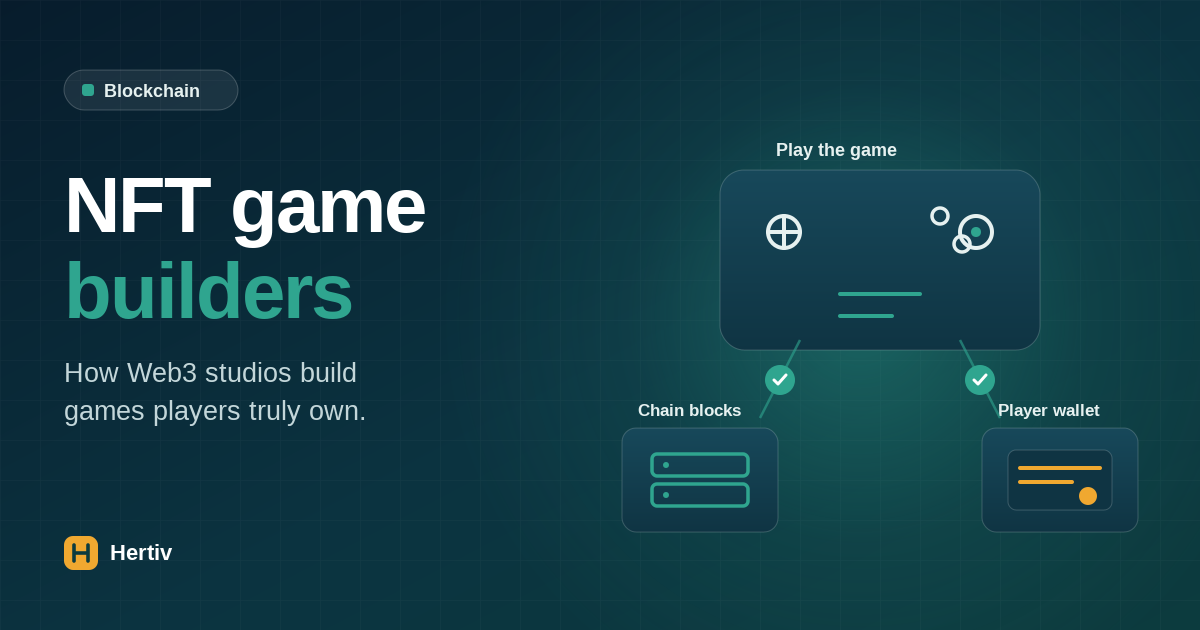
A Web3 NFT game development company is a studio that builds games where players own their in-game items as tokens on a blockchain. In a normal game, the publisher owns the items: a sword, a skin or a character lives in the publisher's database, and it cannot leave the game. In a Web3 game, each item is a token that belongs to the player's wallet, so it can be traded, sold or used elsewhere.
These companies do more than write game code. They design the token economy, write the smart contracts that mint and move items, build the wallet and marketplace connections, and run the servers that keep the game itself working. The game is the visible part; the ownership layer underneath is what makes it a Web3 game.
| Part | Who builds it | What it does |
|---|---|---|
| Game client | Game developers | World, art, controls, play |
| Smart contracts | Blockchain developers | Mint, trade and own items |
| Token economy | Designers and economists | Supply, rewards, prices |
| Wallet and marketplace | Front-end team | Buy, sell and hold items |
The company that can do all four well is rare, which is why most Web3 games are built by a partnership: a game studio for the play, and a blockchain team for the ownership layer. A team that hires one without the other usually ends up with a game that is fun but has broken ownership, or correct ownership wrapped around a dull game.
How is an NFT game different from a normal game?
An NFT game is different from a normal game in one way that changes everything else: the player owns the items. In a normal game, the items are entries in the publisher's database. The publisher can change them, remove them or shut the game down, and the player's collection disappears. In an NFT game, the items are tokens in the player's wallet, so they survive even if the game changes hands.
Ownership changes the player's relationship with the game. A rare item can be sold to another player, so play can earn real value. It also changes the game's economy: the studio cannot simply create more rare items, because the supply is written into the contract and players can check it. That transparency is the point, and it is also the hard part to design well.
Not every game needs this. A short story game gains nothing from token ownership, while a game built around collecting, trading or long-term progression gains a lot. The question to ask is whether players would care about owning the items, not whether the game can use the technology.
What do these companies actually build?
These companies build four things: the game itself, the contracts that define ownership, the economy that gives items value, and the marketplace where items change hands. Each one needs different skills, and a weak link in any of them breaks the whole game.
- The game client. The world, the art, the controls and the play loop. This is normal game development, and it decides whether anyone plays at all.
- Smart contracts. The code that mints items, records who owns them and enforces the rules for trading and crafting. The contracts must be audited, because a bug here cannot be quietly fixed.
- The token economy. How many items exist, how new ones appear, what they can be used for and how rewards are earned. A bad economy makes the game boring or unfair within weeks.
- Wallets and marketplaces. The screens where players connect a wallet, buy and sell items, and see what they own. If this is hard to use, most players will never get past the first step.
The company should also plan for the ongoing work: running game servers, watching the economy, fixing exploits and keeping the contracts safe. A Web3 game is a live service, not a product that ships once. Blockchain development teams usually take on that ongoing work alongside the launch.
How is a Web3 NFT game built, step by step?
A Web3 NFT game is built by first deciding what players own, then building the game around that ownership. The order matters: teams that build the game first and add tokens later usually end up with items that feel pasted on.
- Decide what is ownable. Choose which items become tokens and which stay ordinary game data. Not everything needs to be owned.
- Pick the chain. Choose a chain with low fees, fast transactions and wallets your players already use.
- Design the economy. Write down the supply, the ways items are earned, and what stops one player from owning everything.
- Build the game loop first. Make the game fun without any tokens, then add ownership to the parts where it helps.
- Write and audit the contracts. Use tested token standards, keep the code simple, and have it reviewed by an independent auditor.
- Test on a test network. Let real players try the game and the trading with no real money at stake.
- Launch small, then open the market. Start with a few items and a small player group, and open trading only when the economy behaves.
The test network step is the one teams skip most, and it is the one that saves the most trouble. A broken economy on a live game loses players in days, while the same problem on a test network costs nothing. For the technical build, dapp development work usually covers the contracts and the wallet screens.
Example (hypothetical): launching a small NFT card game
Example (hypothetical): a small studio launches a card game with 100 different cards. It mints 50 copies of each card at launch, which is 100 times 50, or 5,000 cards in total. Players earn cards by winning matches and can trade them on the game's marketplace.
In the first month, 2,000 players join, and each one buys an average of 2 card packs. That is 2,000 times 2, which is 4,000 packs sold. If each pack costs 5 units of the game's currency, the game takes in 4,000 times 5, which is 20,000 units. The studio keeps 10% of every marketplace trade as a fee, so trading adds income as well.
The numbers are invented to show the arithmetic, not a real launch. The point is that the economy has to be written down before launch: how many cards exist, how new ones appear, and what the studio earns. A game that launches without those numbers written down will find its economy broken by its own players within weeks.
What are the common mistakes?
The most common mistakes in Web3 NFT games are adding tokens to a game that does not need them, designing an economy that rewards early players too much, and skipping the audit. Each one can end a game that was otherwise well built.
- Tokens with no purpose. If the token does not change how the game is played, players will ignore it.
- An economy that pays too much early. Early players earn so much that new players cannot catch up, and the game empties out.
- Unaudited contracts. A bug in the contract that mints items can create unlimited rare items overnight.
- A wallet that scares players off. If the first step needs a wallet, a seed phrase and a token purchase, most players leave.
- Promising earnings. A game that promises income becomes a financial product, with the rules and risks that brings.
- No plan for when the game ends. Players who own items need to know what happens to them if the servers stop.
The earnings promise is the mistake with the widest consequences, because it changes what the game is in the eyes of regulators and players. A game should sell fun first and treat any earnings as a side effect, never as the reason to play.
How do you choose a Web3 NFT game development company?
You choose a Web3 NFT game development company by checking its games, its contracts and its economy design, in that order. A company that has shipped a game players enjoy is worth more than one with a long list of token projects and no playable game.
- Play their games. If you cannot play anything they built, do not hire them to build yours.
- Ask who audited their contracts. A company that cannot name its auditor has not had its contracts checked.
- Read the economy design. Ask how supply, rewards and fees work, and what stops the economy from breaking.
- Check the wallet flow. Try the first five minutes as a new player, and count how many steps stand between you and the game.
- Ask about the plan after launch. A Web3 game needs servers, monitoring and economy fixes for as long as it runs.
The how to create Web3 dapps guide covers the technical side of building on a chain, which is the same groundwork a game needs.
A build on Solana guide shows what the chain choice looks like in practice for a team picking where to launch.
Key takeaways
- In a Web3 NFT game, players own their items as tokens instead of renting them from the publisher
- A good game needs four parts: the game, the contracts, the economy and the marketplace
- Design the economy before launch, and write the supply and reward rules down
- Audit the contracts and test on a test network before real money is involved
- Choose a company by playing its games and checking its audits, not by its claims
Frequently asked questions
What is an NFT game?
An NFT game is a game where some in-game items are tokens on a blockchain, owned by the player in a wallet. Those items can be traded or sold outside the game, unlike items in a normal game, which live in the publisher's database and cannot leave it.
Do players need crypto to play an NFT game?
It depends on the game. Some games ask players to buy tokens first, which limits the audience. Others let players start for free and only use tokens later, for trading or rare items. A game that needs a wallet and a purchase before the first minute of play will lose most new players.
How do NFT games make money?
Most earn from the first sale of items and from a small fee on trades between players in the marketplace. Some also sell cosmetic items or season passes, as normal games do. The fee on trades is the part that is new: it gives the studio income as long as players keep trading.
Are NFT games legal?
It depends on the game and the country. A game that promises earnings or sells items as investments can fall under financial rules, which brings disclosure and registration duties. Take advice from a lawyer in your jurisdiction before launch, and do not promise players they will earn money.
Why do some NFT games fail quickly?
Most fail because the economy is badly designed: early players earn too much, new players cannot catch up, and the game empties out. Others fail because the game itself is not fun, and tokens cannot fix a dull game. A fun game with a careful economy lasts far longer than a dull game with clever tokens.
What chain should an NFT game use?
Choose a chain with low fees, fast transactions and wallets your players already use. High fees make small trades pointless, and a chain your players have never heard of adds a barrier before they even start. The chain is a practical choice about cost and audience, not a statement about the technology.


