Web3 and the Creator Economy: How It Works
Web3 lets creators sell directly, take payments and share ownership with fans. Here is how tokens, memberships and communities work, and what to check first.
On this page
Short answer
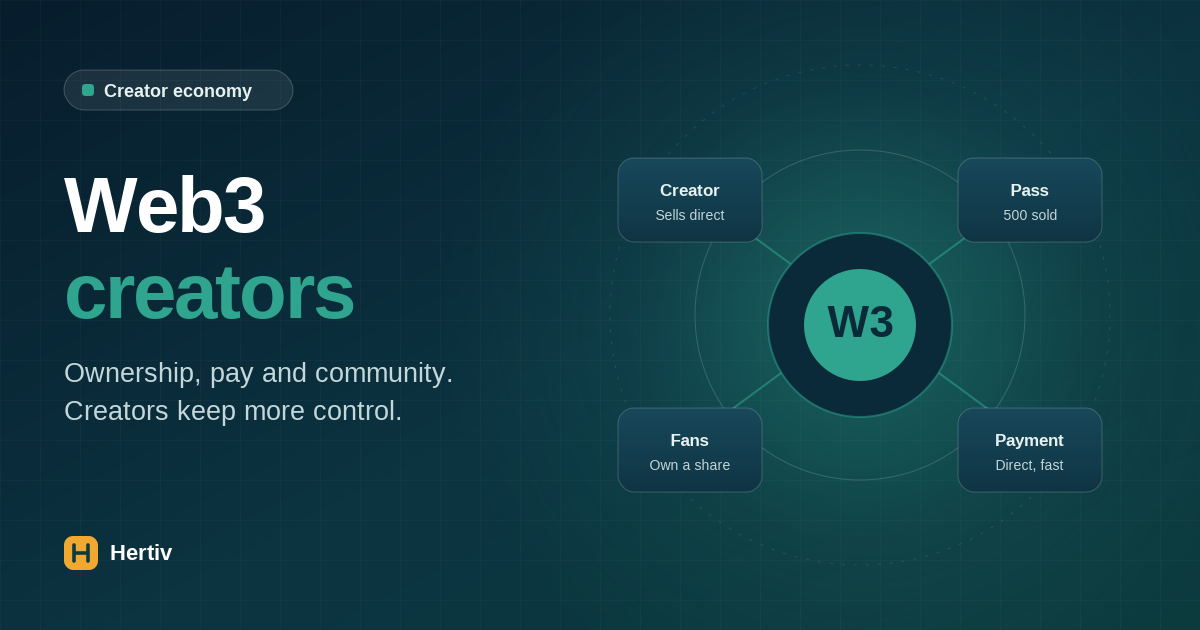
Web3 and the creator economy means creators earn and connect with fans using blockchain tools instead of relying only on one platform. Creators can sell digital items, offer memberships and take direct payments, while keeping more control over their audience and income.
What is Web3 and the creator economy?
Web3 and the creator economy is the idea that creators earn and connect with their audience using blockchain tools instead of relying only on a single platform. A creator can sell digital items, offer memberships, take payments and let fans own a share of the work.
In the older model, a platform hosts the content, sets the rules and takes a cut of the income. In the Web3 model, the creator keeps more control: the content, the audience list and the payment history can live outside any one platform. The platform is still useful, but it is no longer the only gatekeeper.
| Area | Platform model | Web3 model |
|---|---|---|
| Income | Ads and platform payouts | Direct sales, tokens and tips |
| Audience | Owned by the platform | Portable list of supporters |
| Content | Hosted by the platform | Linked to the creator's wallet |
| Fees | Set by the platform | Set by the creator or contract |
| Resale | No share for the creator | Creator can earn on resale |
The table shows the shift in control, not a promise of income. Web3 tools change who sets the terms, but a creator still needs an audience that wants the work. For the basics, see what Web3 is.
How do tokens and digital collectibles work for creators?
Tokens and digital collectibles give a creator a way to sell something scarce. A musician can sell a limited set of passes, an artist can sell a numbered print, and a writer can sell early access to a series. Each item is recorded on a blockchain, so the buyer can prove they own it and the creator can set the terms of resale.
The key choice is what the token actually gives the buyer. A token can be a simple collectible, a ticket to an event, or access to a private group. The clearer the benefit, the easier it is to sell. A token that promises nothing concrete will not hold its value, and the creator's name will suffer.
Creators should also think about the chain and the costs. Some chains charge high fees when the network is busy, and some wallets are hard for new fans to use. Pick a chain and a wallet flow that a first-time buyer can finish in a few minutes, and test it yourself before launch.
How do payments and memberships work?
Payments in the Web3 creator economy often use stablecoins or the chain's own token. A fan can pay directly to the creator's wallet, without waiting for a platform payout cycle. The payment settles in minutes, and the creator can see it on the chain.
Memberships work in a similar way. A creator can sell a membership token that opens a private feed, a chat group or a monthly call. When the membership ends, the token can stop working, or the creator can offer a renewal. The membership list is visible to the creator, so they can reach fans even if a platform changes its rules.
Tax and accounting still apply. A creator should keep a record of every payment, including the date, the amount and the currency, and check the local tax rules for crypto income. A simple spreadsheet kept up to date is better than a pile of wallet records at year end.
What do communities and shared ownership mean?
Communities in the Web3 creator economy are groups of fans who hold a token and take part in decisions. A creator can ask token holders to vote on the next project, the cover art or the tour city. The vote is a way to listen, not a way to hand over the work.
Shared ownership can also mean shared income. A creator can set a smart contract so that a share of each sale goes to the collaborators who helped make the work. This needs a clear written agreement first, because a contract on a chain cannot fix a deal that was never agreed.
Not every audience wants to vote or own a token. Many fans just want to watch, listen or read. Keep a free or simple path for those fans, and treat the token group as an extra layer for the most engaged supporters, not a wall around the work.
What should creators check before they start?
Creators should check three things before they start: the costs, the audience and the rules. The costs include the chain fees, the platform cut and the time to support buyers. The audience question is simple: do enough fans want to pay directly, or do they prefer the free platform?
The rules matter too. Some regions treat tokens as securities, and some treat them as goods. A creator should check the local rules before selling a token that promises income or a share of profits. When in doubt, keep the token simple: a collectible, a ticket or access, not a promise of returns.
Security is the third check. The creator's wallet is the business account, so it needs a hardware wallet or a multi-signature setup, and the keys must be stored safely. A lost key or a stolen wallet can end the project. See the top Web3 trends for how the tools around creators are changing.
Example (hypothetical): a musician sells 500 passes
Example (hypothetical): a musician sells 500 digital passes at 20 dollars each. The total sales are 500 times 20, or 10,000 dollars. The platform takes a 5 percent fee, which is 500 dollars, so the musician keeps 9,500 dollars.
On the old platform, the same 10,000 dollars in sales would carry a 30 percent fee, or 3,000 dollars, leaving 7,000 dollars. The Web3 sale leaves the musician 2,500 dollars more, before chain fees. The chain fees for the sale are 120 dollars, so the final gain is 2,380 dollars.
The musician also sets a 5 percent resale share. If 50 passes later resell at 30 dollars each, the resale total is 1,500 dollars, and the musician earns 75 dollars from those sales. The numbers are small, but they show how the model works: the creator keeps more of the first sale and a share of later ones.
Common mistakes in the Web3 creator economy
The most common mistake is selling a token before there is an audience. A token is not a marketing plan. Build the audience first, then offer something worth buying to the fans who already show up.
Another mistake is promising returns. A token that promises income or a price rise can break local rules and disappoint buyers. Promise only what you control: the content, the access and the experience.
A third mistake is ignoring support. Buyers will have wallet problems, lost passwords and failed payments. Plan who answers those questions, and write a short guide for first-time buyers. A creator who answers support well keeps fans; one who goes quiet after the sale does not. For the underlying tech, read what blockchain is.
Key takeaways
- Web3 moves control from the platform to the creator.
- Tokens can be collectibles, tickets or membership access.
- Direct payments settle fast, but tax and records still apply.
- Keep a free path for casual fans and a token layer for supporters.
- Never promise returns; promise only what you control.
Frequently asked questions
What is the Web3 creator economy?
It is the use of blockchain tools by creators to sell, take payments and build communities without relying only on one platform. Creators keep more control over their audience, their content and their income.
Do creators earn more with Web3?
They can keep a larger share of each sale, but income still depends on the audience. Web3 changes the terms, not the need for work that people want to buy.
What is a creator token?
A creator token is a digital item recorded on a blockchain that can act as a collectible, a ticket or a membership pass. It proves ownership and can carry a resale share for the creator.
Is Web3 safe for creators?
It is safe when the wallet is protected and the offer is simple. Use a hardware wallet or multi-signature setup, avoid tokens that promise income or price rises, and keep the offer simple.
Can fans pay with normal money?
Many Web3 tools still need a crypto wallet, which is a barrier for new fans. Some tools accept cards and convert the payment, so check the buyer flow before launch.
Do I need an audience before selling tokens?
Yes. A token is not a marketing plan. Build an audience that already shows up for the work, then offer something worth buying to the most engaged fans, and keep the free path open for everyone else.


