Web3 Games Worth Playing: 6 That Define the Space
Web3 games let players own their items as tokens and trade them outside the game. Compare six games that show what the model does well, and what to check first.
On this page
Short answer
The web3 games that define the space today are Axie Infinity, Gods Unchained, The Sandbox, Illuvium, Big Time and Splinterlands. They differ in genre, in how much of the economy depends on trading, and in how much skill matters versus spending, so the right game depends on what you want from it, and this list compares all six on gameplay, ownership and what to watch before you spend.
Which web3 games define the space?
The web3 games that define the space are the ones with real players, working economies and items that players actually own and trade. Use this comparison to shortlist two or three and try one before you spend anything.
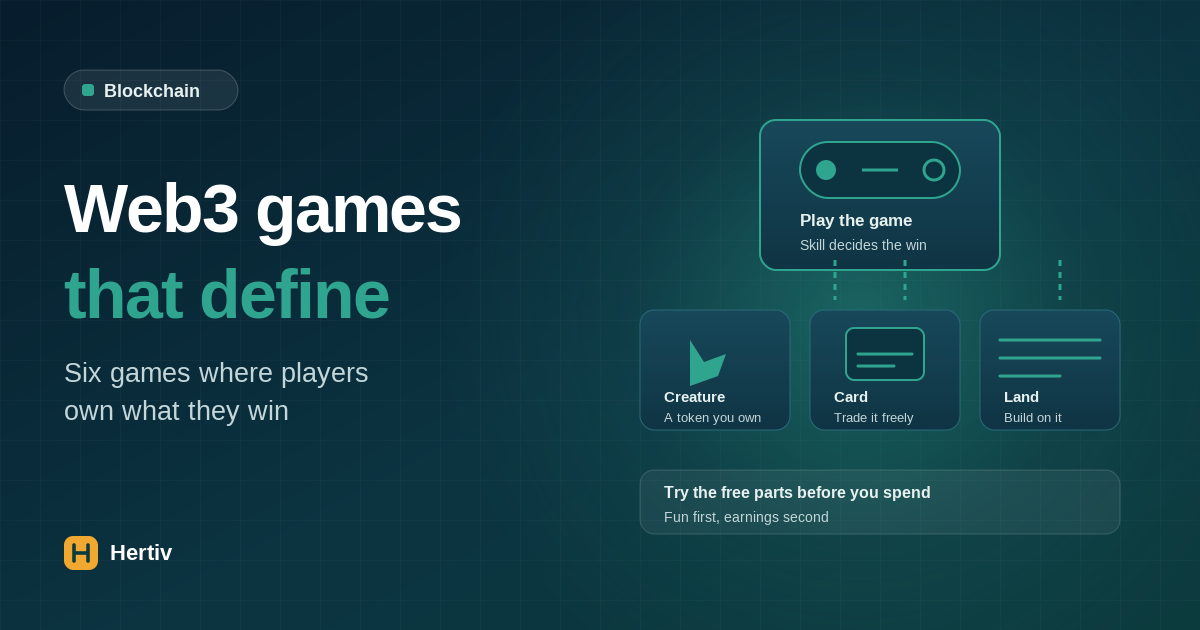
Ownership is the idea that ties them together. In a normal game, items live on the company's servers and cannot leave. In a web3 game, items are tokens on a blockchain, so a player can sell, lend or move them without the game's permission. That changes the economy, but it does not change what makes a game fun, which is still the gameplay.
| Game | Genre | What you own | Best for |
|---|---|---|---|
| Axie Infinity | Creature battler | Axie creatures, land | Team battles and breeding |
| Gods Unchained | Trading card game | Cards as tokens | Card players, no entry cost |
| The Sandbox | Voxel world | Land, wearables, assets | Building and creating |
| Illuvium | Open-world RPG | Creatures, land, gear | Exploration and collecting |
| Big Time | Action RPG | Gear, hourglasses, space | Co-op dungeon runs |
| Splinterlands | Card battler | Cards, land, spells | Quick matches, low cost |
No game is best in general. A game with a deep economy can be expensive to start, while a free-to-play game may have less to trade. Pick by the genre you enjoy and the time you can give, then check the economy before you spend. Teams building games like these usually start with blockchain development help for the token and wallet parts.
Axie Infinity: best for team battles and breeding
1. Axie Infinity: best for team battles and breeding
Axie Infinity is a creature battler in which players collect, breed and battle teams of creatures called Axies. Each Axie is a token with its own stats and abilities, so a strong team is an asset a player can sell or lend.
The game runs on Ronin, a sidechain built for it, which keeps transaction costs low for players. Its economy has changed several times since launch, and the team has moved towards a model where skill and gameplay matter more than simply holding assets. That history is useful: it shows how a web3 economy can be rebalanced when it stops working.
Pros:
- Deep team building: hundreds of creature combinations to try
- Established economy: a large, active trading market
- Own sidechain: low fees for in-game actions
Cons:
- Costly to start well: a strong team needs investment
- Economy has changed: earning rules have been reworked more than once
- Needs time: breeding and ranking take regular play
Gods Unchained: best for card players with no entry cost
2. Gods Unchained: best for card players with no entry cost
Gods Unchained is a competitive trading card game in which the cards are tokens a player owns. It plays like a traditional card battler, with mana, creatures and spells, and new players start with a free set of cards.
The free start is what sets it apart. A player can learn the game and win cards without spending anything, and only the cards earned through play become tradeable tokens. That makes it the easiest game on this list to try, and the closest to a normal card game in how it feels to play.
Pros:
- Free to start: a full starter set costs nothing
- Real card game depth: drafting and deck building matter
- True ownership: earned cards are tokens you can trade
Cons:
- Competitive learning curve: ranked play rewards experience
- Smaller card pool: fewer cards than the biggest card games
- Economy depends on demand: card values move with player numbers
The Sandbox: best for building and creating
3. The Sandbox: best for building and creating
The Sandbox is a voxel world where players buy land, build experiences on it and trade the assets they create. It is closer to a creation platform than a single game, and its economy runs on land, wearables and user-made items.
The creative tools are the point. A player can build a game, a gallery or a shop on a plot of land, charge others to visit, and sell the items they made. That makes it the most open-ended game on this list, but also the one that asks the most of a player: without a project in mind, there is little to do.
The building blocks are the same ones any decentralised app needs, which is why how to create a web3 dapp is a useful read before you start building.
Pros:
- Real creation tools: build games and worlds, not just play them
- Land ownership: a plot is a token you can sell or rent
- Creator economy: makers can earn from what they build
Cons:
- Land costs money: a good plot is a real purchase
- Needs a project: directionless players may drift
- Quality varies: user-made experiences differ widely
Illuvium: best for exploration and collecting
4. Illuvium: best for exploration and collecting
Illuvium is an open-world role-playing game in which players explore a planet, capture creatures called Illuvials and battle with them. It aims for the production quality of a traditional big-budget game, with web3 ownership added on top.
The appeal is the world itself. Exploration, creature collecting and team battles carry the game, and the tokens are the creatures, land and gear a player finds or buys along the way. It is the most ambitious game on this list, and also the one where the gameplay has to carry the most weight, because a pretty world is not enough on its own.
Its economy is a good example of why how token economics work matters before a game launches.
Pros:
- High production values: the closest to a traditional AAA game
- Varied play: exploration, collecting and battling in one world
- Own your creatures: captured Illuvials are tradeable tokens
Cons:
- Demanding hardware: needs a capable machine to run well
- Still growing: features have arrived in stages
- Complex economy: several token types to understand
Big Time: best for co-op dungeon runs
5. Big Time: best for co-op dungeon runs
Big Time is a multiplayer action role-playing game in which teams fight through dungeons across time periods, from ancient worlds to far-future cities. Players collect gear and cosmetic items, and the rarer items are tokens that can be traded.
The game is free to play, and the web3 layer sits on top of a normal action RPG: fight, loot, upgrade, repeat. Items called hourglasses let players earn tokens while playing, which is the part that needs a careful look, because the value of what you earn depends on the market, not on the game.
Pros:
- Free to play: no purchase needed to start
- Co-op focus: built for playing with friends
- Action combat: fast fights, not slow strategy
Cons:
- Earning is uncertain: token value moves with the market
- Grind-heavy: better gear takes many runs
- Needs a team: solo play is less rewarding
Splinterlands: best for quick matches at low cost
6. Splinterlands: best for quick matches at low cost
Splinterlands is a card battler in which players build decks from the cards they own and fight short, automated battles. A match takes a few minutes, and the cards, land and spells are tokens on the Hive blockchain.
Its strength is how cheap and fast it is to play. Matches are short, the entry cost is low, and the rules change each battle, so deck building matters more than owning the most expensive cards. That makes it the most accessible competitive game on this list for players with little time or money.
Pros:
- Cheap to start: a basic set costs very little
- Fast matches: a battle takes only a few minutes
- Deck building matters: strategy beats spending
Cons:
- Automated battles: less hands-on control than other card games
- Smaller audience: fewer players than the biggest titles
- Card values vary: the market decides what a card is worth
How to choose a web3 game
You choose a web3 game by matching it to how you like to play and how much you are willing to spend, not by how much others claim to earn from it.
- Pick the genre first. A card game, a battler and a building world are different kinds of fun, and the genre decides whether you will still play in a month.
- Try before you spend. Play the free parts for a week and see whether the gameplay holds up without any purchases.
- Read the economy. Find out what you must buy to play well, what you can earn, and who sets the prices.
- Check the chain and fees. A game on a cheap chain costs little to play, while one on an expensive chain taxes every action.
- Look at the player base. A game with few players has thin markets, long waits and less reason to keep playing.
That last step matters most. A game's economy only works if other people want to play and trade, so a shrinking player base is a warning sign whatever the token price says. For teams building in this space, dApp development work usually starts with the same question: who plays, and why do they stay?
What are the common mistakes?
The common mistakes with web3 games are buying in before playing, trusting earnings claims, and ignoring the chain the game runs on.
- Buying before playing. An expensive team or plot means little if the game itself is not fun for you.
- Trusting earnings claims. What one player earned in a good month says nothing about what you will earn, and markets change fast.
- Ignoring fees. A game that charges for every action can cost more in fees than the items are worth.
- Forgetting the exit. An item is only worth what someone else will pay for it, so check that the market is active before you buy.
- Skipping security. Connect a wallet with only what you need in it, and never share a recovery phrase with anyone.
Most of these mistakes come from treating a game as an investment rather than a game. Play it because it is fun, spend only what you can afford to lose, and treat anything you earn as a bonus.
Key takeaways
- Ownership is the core idea: items are tokens you can sell, lend or move
- A deep economy can be expensive to start, while free games may have less to trade
- Try the free parts for a week before spending anything
- Check the player base: a thin market makes items hard to sell
- Treat earnings as a bonus, not a promise, and keep your wallet secure
Frequently asked questions
Are web3 games really free to play?
Some are, and some are not. Gods Unchained, Big Time and Splinterlands can be played without spending, while Axie Infinity and The Sandbox need a purchase to play well. Even in free games, the strongest items usually cost money or take a lot of play to earn.
Do you actually own the items in a web3 game?
Yes, in the sense that the item is a token in your wallet, not a record on the company's server. You can sell it, lend it or move it to another wallet. The game can still change its rules, so ownership does not mean the item will always be useful.
Can you make money playing web3 games?
Some players do, usually by selling rare items or winning tournaments, but most players earn little or nothing. The value of items depends on how many people want them, which changes with the player base. Treat earnings as a bonus, not an income.
What is the difference between web3 games and normal games?
The difference is ownership and trade. In a normal game, items stay inside the game and cannot be sold. In a web3 game, items are tokens that can be traded outside the game, which creates a real economy around them. The gameplay itself can be similar.
Are web3 games safe?
They carry the same risks as any crypto product: scams, fake marketplaces and wallet theft. Use a wallet that holds only what you need for the game, check every link before you connect, and never share your recovery phrase. See vendor site for each game's official links.
Which web3 game should I start with?
Start with a free one in a genre you already enjoy, such as Gods Unchained for card games or Splinterlands for quick battles. Play for a week without spending, and only then decide whether the game is worth your time and money.


