7 ICO Development Services Every Web3 Project Needs
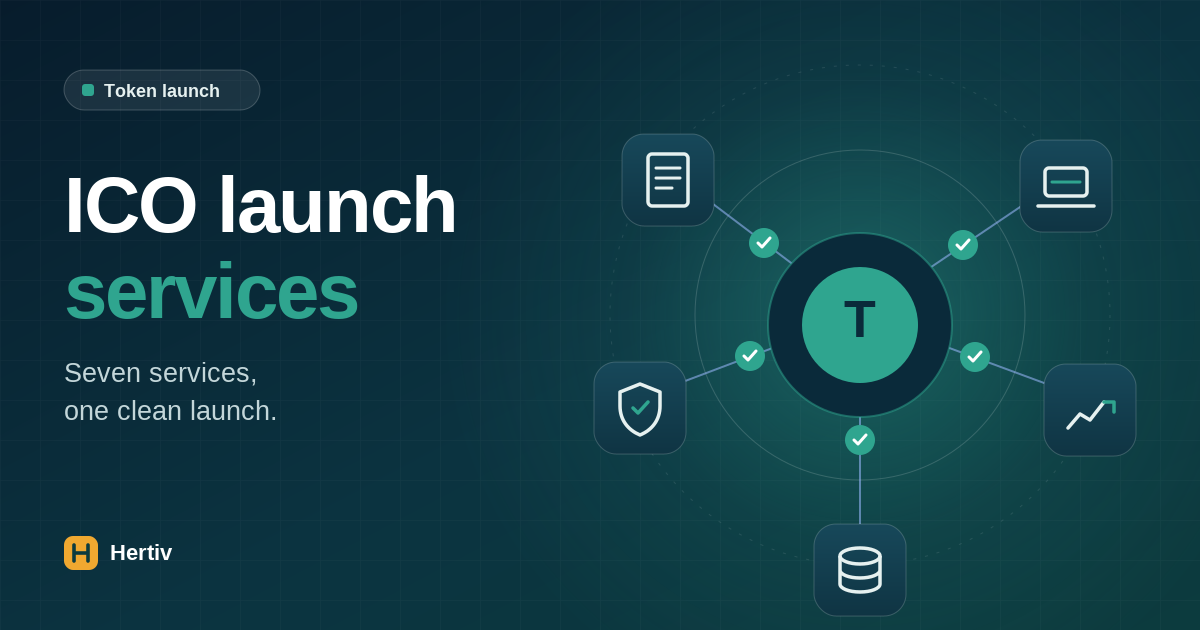
An ICO needs more than a token contract: design, audit, a sale platform, KYC, legal review and marketing. These seven services cover the full launch.
On this page
Short answer
The ICO development services a Web3 project needs are token design, smart contract development, an independent security audit, a token sale platform with KYC, legal and compliance review, community and marketing support, and post-launch token management. Hiring them as a package from one team is simpler, but each service should still be judged on its own track record.
Which ICO development services does a Web3 project need?
An ICO is a product launch, not a single contract. The services worth hiring are the ones that cover the whole path from token design to post-launch support, with a named owner for each step. Use this comparison to shortlist, and treat any service you skip as a risk you are accepting.
Effort assumes the team has a clear token purpose and a launch date. A project that cannot explain what the token does should fix that before hiring anyone.
| Service | What it covers | When you need it | Effort |
|---|---|---|---|
| Token design | Supply, allocation, vesting | Before any code | Medium |
| Smart contracts | Token, sale and vesting code | After design is agreed | High |
| Security audit | Code review and fixes | Before the sale opens | Medium |
| Sale platform | Sale page, KYC, payments | Before the sale opens | Medium |
| Legal review | Structure, terms, disclosures | Before public marketing | Medium |
| Marketing | Community, content, listing | Weeks before launch | High |
| Post-launch support | Claims, vesting, listings | From day one after sale | Low to medium |
Start with token design and legal review, not with code. A token whose purpose and rules are unclear will cost more to fix later than any amount of early design work.
Token design and smart contracts
1. Token design: best for setting the rules before any code
Token design sets the supply, the allocation between team, investors and community, the vesting schedule and what the token does. A clear design document is the input every other service needs: developers build to it and lawyers review it.
Check the design for three things: a reason the token must exist, a vesting schedule that keeps the team committed, and a supply plan that does not flood the market early. If any is missing, pause the build and fix the design first.
Pros
- Aligns every later service
- Surfaces bad incentives early
- Gives investors something to judge
Cons
- Takes weeks of honest debate
- Needs real market research
- Easy to copy from other projects
2. Smart contract development: best for the token and sale code
Smart contract development covers the token, sale and vesting contracts, written to a standard such as ERC-20 and tested on a test network first. The code must handle refunds, caps, whitelists and emergency stops, because a sale that cannot pause cannot be fixed mid-flight.
Ask for the test coverage and deployment plan before you pay the final invoice. Contracts only tested by their own author are the ones that fail in production. Smart contract development covers the build and testing pattern in more depth.
Pros
- Standard code, well tested
- Handles caps and refunds
- Emergency stop built in
Cons
- Needs independent testing
- Changes after audit cost time
- Gas costs add up fast
Security audit and sale platform
3. Security audit: best for finding bugs before buyers do
A security audit is an independent review of the token and sale contracts by another team. Auditors read the code, test attack scenarios and rate every issue by severity. The sale should not open until high-severity issues are fixed and re-checked.
Example (hypothetical): a project budgets four weeks for audit and fixes and the audit finds 2 high, 6 medium and 14 low issues. Fixing the high issues takes 5 days and the re-check 3 days, so the sale opens one week late with no high-severity bugs left.
Pros
- Finds bugs before launch
- Builds buyer trust
- Forces a fix-and-recheck cycle
Cons
- Good auditors book early
- Fixes can delay the sale
- Not a guarantee
4. Token sale platform: best for running the sale itself
The sale platform is the page where buyers join, pass KYC, pay and receive tokens. It must handle payment in the currencies you accept, show sale progress honestly, and keep a record of every buyer for compliance checks. A sale page that fails under load costs buyers and trust in the same hour.
Check that KYC, payments and token delivery are tested end to end before the public sale. If any step needs a manual fix during the sale, the platform is not ready.
Pros
- One place for KYC and payment
- Honest sale progress shown live
- Buyer records kept for compliance
Cons
- Load testing often skipped
- KYC adds buyer friction
- Manual fixes break trust
Legal review and marketing
5. Legal and compliance review: best for staying on the right side of the law
Legal review covers the token structure, the sale terms, the disclosures and the jurisdictions you sell in. A lawyer who knows token sales will tell you what you cannot promise, which buyers to refuse and what records to keep. This review belongs before marketing, not after it.
The most common failure is marketing that promises returns. A whitepaper that promises profits will draw regulator attention, and fixing the wording after launch is far harder than writing it well the first time.
Pros
- Clear rules before marketing
- Terms buyers can rely on
- Records kept for regulators
Cons
- Good advice costs money
- Rules differ by jurisdiction
- Slows the launch timeline
6. Community and marketing: best for reaching real buyers
Community and marketing covers the announcement plan, the community channels, the content and the listing work. Real buyers come from people who understand the product, not from paid hype. A community that asks hard questions is a better sign than one that only cheers.
Measure marketing by engaged readers and genuine questions, not follower counts. If the budget goes mostly to paid posts and influencer deals, the project buys attention it cannot keep. The same warning applies to top ICO development companies that sell marketing without past work to show.
Pros
- Reaches buyers who understand it
- Builds a lasting community
- Explains the project clearly
Cons
- Paid hype fades fast
- Needs months, not days
- Hard to measure
Post-launch support
7. Post-launch support: best for claims, vesting and listings
Post-launch support covers token claims, vesting releases, exchange listings and buyer questions after the sale closes. Most projects plan the launch in detail and forget the month after it, which is when buyers first try to claim tokens and find the process broken. A claims page that works on day one is worth more than a polished launch page.
Agree the support scope before the sale: who answers buyer questions, how vesting releases are published, and what happens if a listing is delayed. Publish the vesting schedule publicly so buyers can check releases themselves instead of asking support.
Pros
- Claims work on day one
- Vesting schedule is public
- Buyers get real answers
Cons
- Often left out of the budget
- Listings can slip without notice
- Support load peaks after launch
How to choose an ICO development service
Choose by track record and scope, not by how polished the sales deck looks. A service that cannot show past launches, past audits or past listings is asking you to trust a promise.
- List the services you need. Token design, contracts, audit, sale platform, legal, marketing and support: tick each one off or name the risk you accept.
- Check past work, not claims. Ask for the contract addresses, audit reports and sale pages of past launches, and verify them yourself.
- Confirm the audit is independent. The team that wrote the code must not be the team that audits it.
- Compare scope, not just price. A cheap package that skips legal review or post-launch support will cost more later.
- Agree the timeline in writing. Audit, fixes, re-check and listing work each need named dates, with a pause rule if a high-severity issue appears.
If the project also touches DeFi, ICO development meets DeFi explains how the two sides connect.
For the token contract itself, what is an ICO covers the basics buyers will ask about.
What are the common mistakes?
Most ICO failures come from skipping steps, not from bad luck. Teams rush the sale, skip the audit or promise returns, and then pay for it in lost trust or regulator attention.
- Writing code before the token design is agreed. Design changes after code is written cost weeks and introduce bugs.
- Skipping the independent audit. A self-review is not an audit, and buyers know the difference.
- Promising returns in marketing. Return promises draw regulator attention and set expectations the project cannot meet.
- Launching the sale platform without load testing. A page that fails under load loses buyers in the first hour.
- Forgetting post-launch support. Claims, vesting and listings need owners from day one, not after the sale closes.
- Choosing on price alone. The cheapest package usually skips legal review, audit fixes or support.
If you are planning a launch and want the full picture, crypto exchange development covers the listing and trading side that follows the sale.
Key takeaways
- Start with token design and legal review; code comes after the rules are agreed.
- An independent audit is not optional: fix high-severity issues and re-check before the sale opens.
- The sale platform needs end-to-end testing, KYC, payments and a load test before launch.
- Marketing should reach buyers who understand the product, not buy attention with hype.
- Plan post-launch support from day one: claims, vesting releases and listings need owners.
Frequently asked questions
What does an ICO development service include?
A full ICO development service covers token design, smart contract development, an independent security audit, a sale platform with KYC, legal review, marketing and post-launch support. You can hire services separately, but each one needs a named owner and a clear handover to the next.
How much does ICO development cost?
Costs vary widely with scope, jurisdiction and audit quality, so get itemised quotes per service rather than one package price. Compare what each quote includes, especially legal review, audit fixes and post-launch support, and see the vendor site for current pricing.
Do I need a security audit before an ICO?
Yes. An independent audit reviews the token and sale contracts for bugs before buyers commit funds. The sale should not open until high-severity issues are fixed and re-checked, because a bug found live is far harder and more expensive to fix.
How long does it take to launch an ICO?
A realistic timeline is several months: weeks for token design and legal review, weeks for contract development, then audit, fixes and a re-check before the sale. Marketing should start weeks before launch, and post-launch support should be agreed before the sale opens.
What is the difference between an ICO and an IDO?
An ICO sells tokens directly to buyers through the project's own sale platform, while an IDO sells them through a decentralised exchange launchpad. The token design and audit work is similar, but the sale mechanics, KYC and listing steps differ.
Can one company handle the whole ICO?
One company can handle the full launch, and that is often simpler, but each service should still be judged on its own track record. Ask for past contract addresses, audit reports and sale pages, and confirm the audit team is independent from the team that wrote the code.


