Tokenizing the Real World: How Real Assets Become Tokens
Tokenizing the real world puts ownership of property, funds and invoices on a blockchain. This guide explains how it works, which assets fit, and what issuers need.
On this page
Short answer
Tokenizing the real world means recording ownership of a real asset, such as a building, a fund share or an invoice, as a digital token on a blockchain. The token represents a legal claim on the asset, and it can be split, transferred and settled faster than paper ownership. Issuers still need legal structure, custody and compliance before the token has value.
What does tokenizing the real world mean?
Tokenizing the real world means turning ownership of a real asset, such as a building, a fund share, a bond or an invoice, into a digital token recorded on a blockchain. The token is not the asset itself; it is a record of a legal claim on that asset, backed by contracts, custody arrangements and the law of the place where the asset sits.
The idea matters because traditional ownership is slow and hard to split. Selling a share of a building usually needs lawyers, paper documents and weeks of settlement, and small investors are often shut out by high minimums. A token can represent a small slice of the same asset, and it can be transferred between wallets in minutes rather than weeks.
Tokenization does not change what the asset is worth. A building that earns a certain rent is worth the same whether its ownership is on paper or on a chain. What changes is how ownership is recorded, split and moved.
How does real-world asset tokenization work?
Real-world asset tokenization works by linking a legal claim on an asset to a token, then building the systems that let that token be issued, held and traded safely. The blockchain is only one part of the system; the legal and operational parts matter just as much.
- Choose the asset and the structure. Decide what is being tokenized and which legal entity holds the asset and issues the tokens.
- Value the asset and set the terms. Agree how the asset is valued, how many tokens represent it, and what rights each token gives its holder.
- Put custody in place. Arrange who holds the asset and the keys, and how holders prove ownership if something goes wrong.
- Write and audit the contracts. Build the token contracts, including transfer rules, and have them reviewed before launch.
- Handle compliance. Check who can buy the token, which disclosures are needed, and how identity checks are done.
- Issue and distribute the tokens. Mint the tokens and send them to investors, with records that match the legal register.
- Run the secondary market. Decide where tokens can be traded, who can buy them, and how settlement works.
Each step needs a named owner. Teams that treat tokenization as a software project alone usually discover the legal and custody work too late. For a full walkthrough of the issuer side, see the RWA tokenization guide for issuers.
Which real-world assets get tokenized?
The assets that get tokenized most often are the ones with clear ownership records and steady income, because those are easiest to value and to explain to investors. Assets with unclear titles or no income stream are harder to tokenize well.
| Asset type | Why it fits | Main challenge |
|---|---|---|
| Commercial property | Clear title, rental income | Valuation and local law |
| Funds and treasuries | Standard structures, daily pricing | Fund rules and investor limits |
| Bonds and debt | Fixed income, known maturity | Regulatory classification |
| Invoices and receivables | Short term, clear payer | Credit risk of the payer |
| Commodities and gold | Standard units, storage exists | Proving reserves and custody |
| Art and collectibles | High value, fractional interest | Valuation and storage |
Start with an asset your team already understands. A fund or a building with clean records is a better first project than an unusual asset with no standard way to value it. Issuers planning a first project can start with RWA tokenization support for the legal and technical setup.
What changes for issuers and investors?
Tokenization changes how issuers raise money and how investors hold assets, but it does not remove the duties either side already has. Issuers still owe investors accurate information and proper handling of their money, and investors still need to understand what they own.
For issuers, the main changes are smaller minimum investments, faster settlement and a wider pool of potential buyers. A fund that once needed a large minimum can now accept smaller tickets, and transfers that took days can settle in minutes. The trade-off is more work on compliance, reporting and investor communication, because a larger and more spread-out investor base needs more support.
For investors, the main changes are access and flexibility. Smaller slices make assets affordable, and a token can be sold without finding a buyer for the whole asset. The trade-off is that a token market can be thin: if few buyers want the token, selling quickly may mean accepting a lower price. Liquidity is a promise that needs a real market behind it.
Example: tokenizing a commercial building
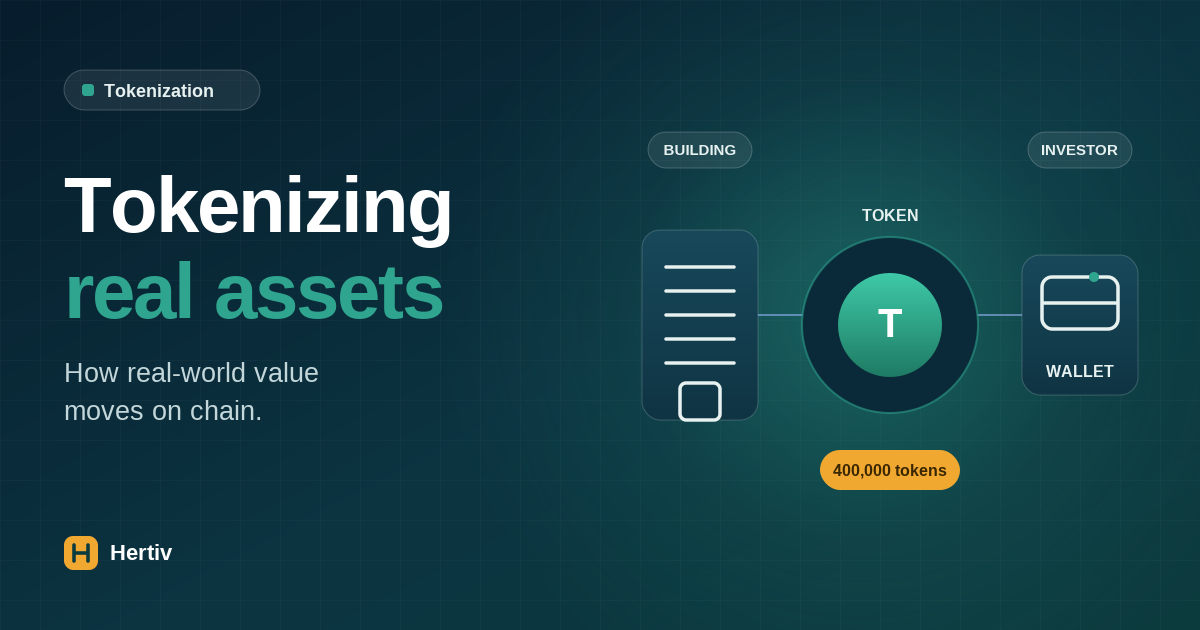
Example (hypothetical): a property company owns an office building valued at $10,000,000 that earns $600,000 a year in net rent. It decides to tokenize 40% of the building to raise money for a second property, keeping 60% for itself.
The company creates 400,000 tokens at $10 each, representing the 40% share, so 400,000 x $10 = $4,000,000 raised. Each token entitles its holder to a share of the rent: $600,000 x 40% = $240,000 a year for token holders, which is $240,000 / 400,000 = $0.60 per token per year. If the building is sold later for $11,000,000, the token holders' share is 40% of that, or $4,400,000.
The numbers only work if the legal structure is sound. The tokens must represent a real claim on the building, the rent must actually be paid to token holders, and the company must handle tax, reporting and investor checks. A token without those foundations is a receipt for nothing.
What are the risks and limits of tokenization?
Tokenization carries legal, market and technical risks, and none of them disappear just because the record sits on a blockchain. The token is only as strong as the legal claim behind it and the systems that enforce it.
- Legal risk. If the token's claim on the asset is unclear or unenforceable in court, the token may be worth little.
- Thin markets. A token with few buyers can be hard to sell, so the promised liquidity may not exist when holders need it.
- Custody risk. If the custodian fails or the keys are lost, holders may struggle to prove or recover their claim.
- Smart contract risk. A bug in the token contract can freeze transfers or allow unauthorised minting, so audits matter.
- Regulatory change. Rules for tokenized assets are still developing, and a change can affect who can hold or trade a token.
None of these risks means tokenization is a bad idea. They mean the project needs legal, custody and technical work done properly before launch, not after. For more on where tokenization is already used, see real-world asset tokenization use cases.
What are the common mistakes in tokenizing real-world assets?
The most common mistakes are treating the token as the asset, promising liquidity that does not exist, and starting with the technology instead of the legal structure. Each of these turns a workable project into a risky one.
- Confusing the token with the asset. The token is a record of a claim; the asset, its title and its income are what give it value.
- Promising easy liquidity. A token is only liquid if buyers exist, and thin markets can trap holders.
- Starting with the tech. Choosing a chain before the legal structure is settled leads to rework.
- Skipping custody planning. If no one can say who holds the asset and the keys, investors will not trust the token.
- Underestimating compliance. Identity checks, disclosures and investor limits take time and must be built in from the start.
Key takeaways
- A token is a record of a legal claim on a real asset, not the asset itself
- Tokenization splits ownership and speeds settlement; it does not change the asset's value
- Property, funds, bonds, invoices and commodities tokenize most cleanly
- Legal structure, custody and compliance come before the technology
- Liquidity needs a real market; a token alone does not create buyers
- The biggest risks are legal, custody and thin markets, not the blockchain
Frequently asked questions
What is real-world asset tokenization?
It is the process of recording ownership of a real asset, such as a building or a fund share, as a digital token on a blockchain. The token represents a legal claim on the asset, backed by contracts and custody arrangements.
Which assets are best for tokenization?
Assets with clear ownership records and steady income, such as commercial property, funds, bonds and invoices, tokenize most cleanly. Assets that are hard to value or have unclear titles are harder to tokenize well.
Does tokenization make an asset more liquid?
It can, by splitting the asset into smaller pieces that more people can buy. But liquidity still needs buyers, so a token with a thin market can still be hard to sell quickly.
Is a tokenized asset the same as a cryptocurrency?
No. A cryptocurrency is usually a native digital asset, while a tokenized real-world asset represents a claim on something that exists off-chain, such as property or a fund share. The distinction matters for regulation and for what holders can expect.
What does it cost to tokenize a real asset?
Costs vary by asset type, legal structure and jurisdiction, so get quotes from legal and technical advisers. Budget for legal work, custody, audits and compliance, not just the token contracts.
Who can buy tokenized real-world assets?
It depends on the asset and the rules where it is issued. Many tokenized assets are limited to certain investor types, and identity checks are usually required before purchase. Rules vary by jurisdiction, so check before you invest.


