Why Tokenized US Treasuries Are Drawing Platform Investment
Tokenized US Treasuries turn government debt into blockchain tokens that settle around the clock. Learn why investors want them, what a platform needs and the risks.
On this page
Short answer
Tokenized US Treasuries are digital tokens backed by US Treasury bills, and they attract investment because they combine Treasury yield with blockchain settlement. Platforms are being built now to serve funds holding idle stablecoins, but investors must weigh issuer, smart contract and liquidity risks against the yield.
What is a tokenized US Treasury?
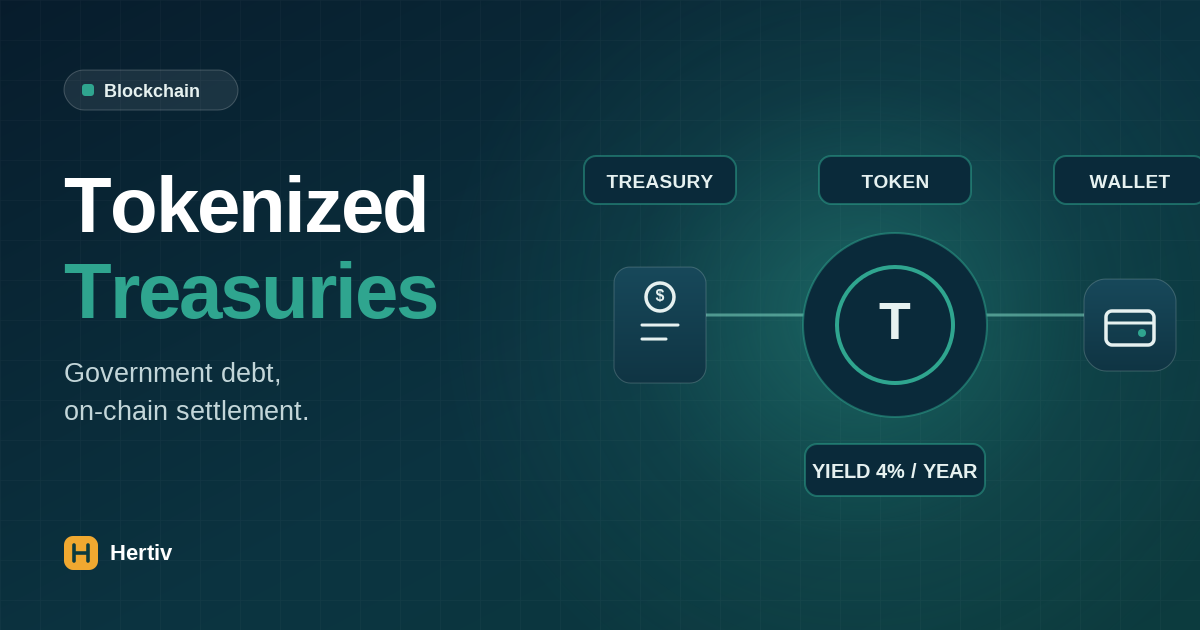
A tokenized US Treasury is a digital token on a blockchain that represents ownership of US Treasury securities, such as Treasury bills, and can be held, transferred and settled like other blockchain assets. The token is backed by the underlying government debt, and the issuer holds the Treasuries in custody.
The idea is simple: take one of the safest and most liquid assets in the world and give it the settlement properties of a token. An investor buys tokens, the issuer uses the money to buy Treasury bills, and the investor earns the yield those bills pay, minus the platform's fee.
| Part | What it is | Who handles it |
|---|---|---|
| Token | Digital claim on Treasury bills | Tokenization platform |
| Underlying asset | US Treasury bills | Custodian or bank |
| Yield | Interest paid by the Treasury | Passed to token holders |
| Settlement | Transfer on a blockchain | Smart contract |
| Compliance | Investor checks and reporting | Issuer and legal counsel |
Tokenized Treasuries sit inside the wider market for tokenized real-world assets. For the broader picture, see RWA tokenization: a practical guide for issuers.
Why are investors interested in tokenized Treasuries?
Investors are interested in tokenized Treasuries because they combine the safety of US government debt with the speed and availability of blockchain settlement. The Treasury part provides the yield and the credit quality; the token part provides 24-hour transfer and programmable use.
Three features drive the interest. First, settlement is fast: tokens can move between wallets at any hour, while traditional Treasury trades settle on business days. Second, tokens can be used as collateral in decentralised finance, so the same asset earns yield and backs a loan. Third, minimum investment sizes can be smaller than buying Treasuries directly through a broker, which opens the asset to more investors.
That said, tokenized Treasuries are not the same as holding Treasuries directly. The investor takes on the issuer's operational risk, the custodian's risk and the smart contract's risk, on top of the Treasury's own risk. The yield is also lower than the Treasury rate once the platform fee is taken out. Investors who want the simplest exposure still buy Treasuries through a broker.
Why build a tokenized Treasury platform now?
Platforms are being built now because the pieces have come together: clear demand from funds and treasuries that want yield on idle stablecoins, maturing tokenization infrastructure, and regulators in several jurisdictions publishing rules for tokenized securities. The timing is driven by demand, not by a single event.
Stablecoin holders are the clearest early customers. A fund or a crypto treasury holding stablecoins earns nothing on that balance; moving part of it into tokenized Treasuries earns the Treasury yield while keeping the funds on-chain and available. That use case alone supports the first wave of platforms.
Developers also benefit from better tooling than a few years ago. Custody, compliance checks and token standards are available as services rather than things each team must build from scratch. The remaining work is mostly legal structure, investor onboarding and distribution, which is where most platforms spend their time and budget. The cost side is covered in how much a tokenization platform costs.
What does a tokenized Treasury platform need?
A tokenized Treasury platform needs a legal structure, a custodian, a token standard, compliance checks and a way for investors to buy and redeem. Each part is straightforward on its own; the difficulty is making them work together under securities rules.
- Legal structure. A fund or special-purpose vehicle that holds the Treasuries and issues the tokens, with clear terms for holders.
- Custody. A regulated custodian or bank that holds the underlying Treasury bills, separate from the platform's own funds.
- Token standard. A token design that supports transfer restrictions, so tokens only move between verified investors.
- Compliance. Investor verification, transfer limits and reporting that match the rules in each jurisdiction served.
- Redemption. A process for converting tokens back to cash or stablecoins, with a defined timeline and fee.
- Transparency. Regular proof that the Treasuries backing the tokens exist, such as attestations or on-chain reporting.
Investors should check all six before putting money in. A platform that cannot show its custody arrangement or its redemption process is not ready, however good its website looks. Building this on compliant rails is the same problem as building a compliant RWA exchange.
What are the risks of tokenized Treasuries?
The risks of tokenized Treasuries are issuer risk, smart contract risk, regulatory risk and liquidity risk, and they sit on top of the low credit risk of the Treasuries themselves. Understanding them matters more than the yield figure, because the yield is the smallest part of the return.
Issuer risk is the largest. If the platform fails or its custodian has a problem, token holders depend on the legal structure to recover their claim. Smart contract risk is next: a bug in the token contract can freeze transfers or misstate balances.
Regulatory risk follows, since rules for tokenized securities are still changing and differ by country. Liquidity risk is the last: selling tokens quickly depends on there being buyers, and secondary markets for tokenized Treasuries are still thin.
None of these risks is a reason to dismiss the idea, but they are reasons to treat tokenized Treasuries as a different product from Treasuries themselves. The yield is similar; the risk profile is not. A platform that explains these risks plainly is more trustworthy than one that only talks about yield.
Example (hypothetical): a fund moves idle stablecoins into tokenized Treasuries
Example (hypothetical): a crypto fund holds $10,000,000 in stablecoins as dry powder, earning nothing while it waits for investment opportunities. The fund moves $4,000,000 into tokenized Treasury bills paying 4% a year, keeping $6,000,000 in stablecoins for quick use.
At 4% a year, the $4,000,000 earns $160,000 a year, or about $13,333 a month. The platform charges a 0.5% annual fee on the tokenized balance, which is $20,000 a year. Net yield is $140,000 a year, or 3.5% on the tokenized amount.
The fund keeps the tokens in its own wallet and can redeem them in two business days, so the money is not locked away. The trade-off is clear: the fund earns $140,000 a year it would not otherwise earn, and in return it accepts the platform's operational risk and the two-day redemption wait. That arithmetic is what makes the case worth evaluating, not the headline rate.
What are the common mistakes?
The most common mistakes in tokenized Treasury investing and platform building are treating the token as identical to the Treasury, ignoring redemption terms, and underestimating compliance. Each one looks small until it matters.
- Confusing token and Treasury. The token is a claim on Treasuries held by someone else, not the Treasury itself, and that difference is where the risk lives.
- Ignoring redemption. A platform that takes a week to redeem is a poor place for money that might be needed quickly.
- Skipping the custody check. If the custodian is not named and regulated, the backing claim is hard to verify.
- Chasing the highest yield. A higher advertised yield usually means a higher fee structure or a riskier structure, not a better deal.
- Building before the legal structure is settled. Platforms that write code before the fund structure and licences are clear usually rebuild both.
The wider market context helps here too: why 2026 is a defining year for RWA tokenization explains where tokenized Treasuries fit in the larger trend.
Key takeaways
- A tokenized Treasury is a blockchain token backed by US Treasury bills held in custody
- Investors want fast settlement, 24-hour transfer and use as collateral, not just yield
- Platforms are being built now because stablecoin holders want yield on idle balances
- A platform needs a legal structure, custody, transfer restrictions and a redemption process
- The token is not the Treasury itself: issuer, smart contract and liquidity risks apply
Frequently asked questions
What is a tokenized US Treasury?
A tokenized US Treasury is a digital token on a blockchain that represents ownership of US Treasury bills. The issuer holds the Treasuries in custody, and the token holder earns the yield the bills pay, minus the platform fee. The token can be transferred on-chain at any hour.
How do tokenized Treasuries pay yield?
The issuer buys Treasury bills with the money investors pay for tokens, and the interest those bills pay is passed to token holders, usually as new tokens or as a rising token value. The platform takes a fee first, so the net yield is lower than the Treasury rate.
Are tokenized Treasuries as safe as Treasuries?
No. The underlying Treasury bills carry the credit quality of the US government, but the token adds issuer risk, custodian risk and smart contract risk. The yield is similar to Treasuries, but the overall risk profile is different, so the two should not be treated as the same product.
Who can buy tokenized Treasuries?
Most tokenized Treasury platforms serve verified investors, often institutions and accredited investors, because the tokens are securities. Access rules differ by jurisdiction, and retail availability is limited. Check the platform's investor requirements before assuming you can buy.
Can I sell tokenized Treasuries quickly?
Redemption usually takes one to a few business days, depending on the platform, and secondary markets are still thin. Tokenized Treasuries are best treated as a yield-bearing holding rather than cash, since selling quickly depends on buyers or the redemption process.
Why build a tokenized Treasury platform now?
Demand from funds holding idle stablecoins, maturing custody and compliance tooling, and clearer rules in several jurisdictions have aligned. Platforms that can offer a clean legal structure, transparent custody and fast redemption have a real opening, though compliance remains the hardest part.


