Smart Contracts in Customer Service: What They Automate
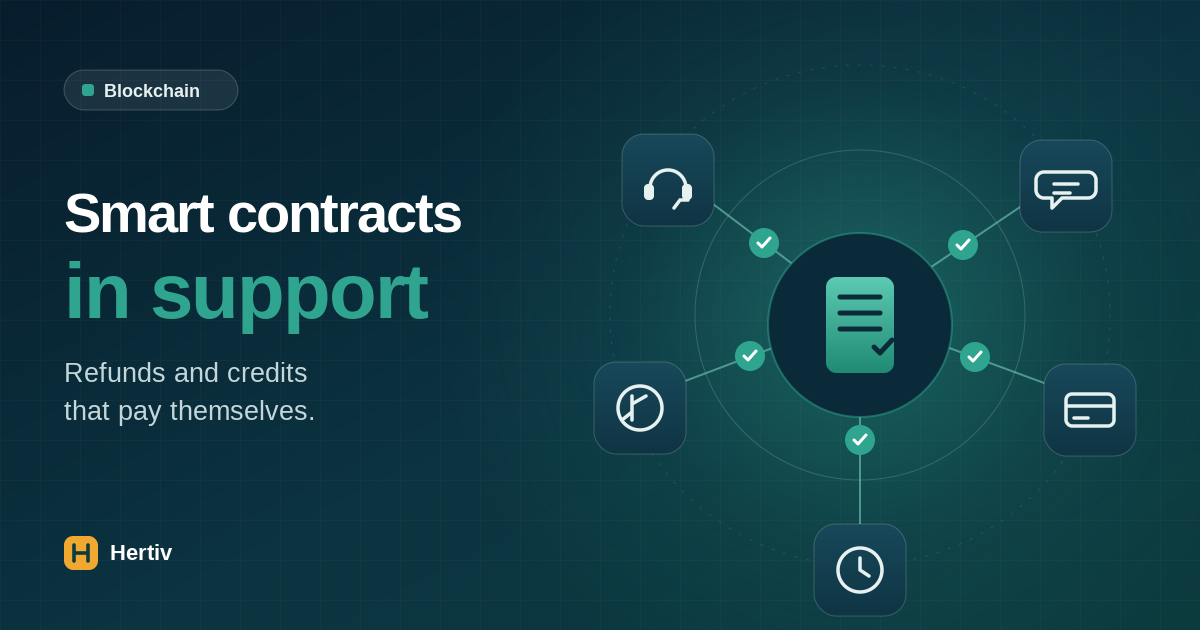
Smart contracts can release refunds, pay service credits and enforce support promises without staff chasing each step. Here is where they help and where they do not.
On this page
Short answer
A smart contract in customer service is code on a blockchain that runs a service promise when agreed conditions are met, such as releasing a refund when a delivery is late or paying a service credit when uptime falls below a set level. It replaces manual checks with rules both sides can see, but it cannot judge tone, intent or anything that happens off-chain without a trusted data feed.
What is a smart contract in customer service?
Smart contracts in customer service are programs stored on a blockchain that carry out a service promise once agreed conditions are met. When a delivery arrives late, a refund is released; when uptime falls below a set level, a service credit is paid. No staff member approves each step, because the rules were agreed when the contract was written.
The contract holds the money or the credit until the condition is checked. A delivery tracker, an uptime monitor or a support system feeds it the facts, and the contract compares them with the promise. If the facts match the trigger, the contract acts at once; if they do not, nothing moves. Both sides can read the rules before they agree to them, which is the difference from a promise buried in a terms page.
| Service job | Trigger | What the contract does |
|---|---|---|
| Late delivery refund | Tracker shows the parcel late | Refund released to the buyer |
| Downtime credit | Uptime falls below the agreed level | Credit added to the account |
| Escrow release | Customer confirms the delivery | Payment released to the seller |
| Loyalty reward | Points balance reaches a threshold | Reward issued to the customer |
The pattern fits jobs where the trigger is a clear fact, not a judgement call. A late parcel, a missed response time or a downtime figure can be checked by a system; a rude tone or a confusing answer cannot. That limit decides where smart contracts help and where people still do the work.
How does a smart contract know a promise was broken?
A smart contract cannot see the real world on its own, so it relies on a data feed, often called an oracle, that reports facts to the blockchain. A delivery tracker reports that a parcel arrived two days late; an uptime monitor reports that a service was down for 40 minutes. The contract reads that report and compares it with the promise written into its code.
The feed is the weakest point of the whole setup, so it needs care. If the tracker is wrong, the contract still pays, because it cannot check the facts itself. Good setups use feeds from more than one source, or require a support agent to confirm the report before the contract acts. The extra check slows the payout a little, but it stops a faulty feed from paying refunds that were never owed.
Some promises need no outside feed at all. A subscription paid in tokens can end on its own when the paid period runs out, and a deposit held in escrow can be released when the buyer clicks a confirm button inside the app. These cases are the simplest to trust, because the facts already live on the chain. For a closer look at the building blocks, see how smart contracts work.
Where do smart contracts help support teams most?
Smart contracts help support teams most where the same promise is checked again and again. Refunds for late deliveries, credits for downtime and penalties for missed response times are all routine decisions with clear rules. Turning them into code takes the queue off the support desk and gives the customer an answer in minutes instead of days.
Escrow is the second strong case. In a marketplace, the buyer pays into a contract and the seller is paid only when the buyer confirms the delivery. Neither side has to trust the other, and the support team is no longer the referee in every dispute. The contract holds the money, the rules are visible, and the release happens when the condition is met.
Loyalty and warranty claims are a third case. Points can turn into rewards on their own when a balance is reached, and a warranty claim with a valid proof of purchase can move to the next step without a form. The work that remains for people is the judgement: whether a damaged item counts as a fault, or whether a customer deserves a gesture beyond the written promise.
What changes for the customer?
For the customer, the main change is speed and certainty. A refund that once needed a ticket, a reply and a manual approval can arrive while the customer is still reading the delivery notice. The rules are also visible before the purchase: the customer can see that a delivery two days late earns a refund, instead of finding out only after complaining.
Trust changes too, because the promise is no longer just words on a help page. The money sits in the contract, and the customer can check that it is there. That matters most for new sellers and small shops, where a buyer has no history to rely on. A visible, funded promise does some of the work that a brand name usually does.
There is a trade-off. A contract cannot bend its rules for a good reason, so a customer with an unusual case still needs a person. Teams that use smart contracts well keep a human route open for exceptions and say so clearly, so the fast automatic path does not become a wall for everyone else.
How to set one up in five steps
Setting up a smart contract for customer service starts with the promise, not the code. Pick one routine promise with a clear trigger, such as a refund when a delivery is more than two days late, and write the rule in plain words before anyone touches a blockchain.
- Define the trigger and the payout. State the exact condition, the amount and the currency, so there is nothing to argue about later.
- Choose the data feed. Decide which tracker or monitor reports the facts, and add a second source or a manual check for anything that moves money.
- Write and audit the contract. Keep the code short and have it reviewed, since a mistake in a contract is hard to undo once it holds funds.
- Test with small amounts. Run real orders through the contract with small sums until the triggers fire correctly and the payouts match the plan.
- Keep a human route open. Publish how a customer reaches a person when the contract's answer is wrong or the case does not fit the rule.
Start with one promise and one product line. Teams that try to automate every promise at once usually find that the triggers are messier than they looked, and the audit bill grows with each new rule. A single working contract teaches more than five half-finished ones.
Example (hypothetical): a late-delivery refund that pays itself
Example (hypothetical): an online shop promises a 5-unit refund for every order that arrives more than two days late. In a busy month, 40 orders arrive late, so the contract owes 40 x 5 = 200 units in refunds. The delivery tracker reports each late arrival, and the contract releases the refund to each buyer on its own.
Before the contract, a support agent handled each refund by hand. Each case took about 20 minutes of reading, checking and approving, so 40 cases took 40 x 20 = 800 minutes, or about 13 hours of agent time in the month. With the contract, the refunds go out in minutes and the agent only sees the cases where the tracker and the buyer disagree.
The shop still pays the same 200 units, so the saving is time, not money. The agent's 13 hours go to the disputed cases and to customers who need a person, which is the work that a contract cannot do. The shop also tells buyers the rule up front, so fewer of them open a ticket just to ask whether a refund is coming.
What are the common mistakes?
The most common smart contract mistakes in customer service are writing vague triggers, trusting a single data feed, and removing the human route. Each one turns a useful tool into a source of new complaints.
- Vague triggers. A promise such as "fast delivery" cannot be checked by code. State the exact time, amount and condition, or the contract will pay on the wrong facts.
- One feed, no check. A single tracker that goes wrong can pay refunds that were never owed. Use a second source or a manual confirmation for payouts.
- No way to fix an error. Contracts are hard to change once they hold funds, so plan how a wrong payout is corrected before the first real order runs through one.
- Automating judgement calls. A damaged item, a changed address or a loyal customer with a fair complaint needs a person. Automate the routine cases and keep people for the rest.
- Hiding the rules. If customers cannot read the promise before they buy, the contract builds no trust. Publish the trigger and the payout in plain words.
For teams weighing the wider picture, smart contract development explains how these contracts are built and reviewed before they hold real funds.
Key takeaways
- Smart contracts automate service promises with clear, checkable triggers such as late delivery or missed uptime
- A data feed reports the facts, and the feed is the weakest point, so use a second source or a manual check
- Escrow, refunds, credits, loyalty and SLA penalties are the strongest cases for automation
- Customers get faster payouts and visible rules, but unusual cases still need a person
- Start with one promise, test with small amounts, and keep a human route open for exceptions
Frequently asked questions
Can a smart contract replace a support team?
No. It can handle routine promises with clear triggers, such as refunds for late deliveries or credits for downtime. Judgement calls, damaged items and loyal customers with unusual cases still need a person, and teams should keep a human route open for them.
What data does a smart contract need to act?
It needs a feed that reports facts from the real world, such as a delivery tracker or an uptime monitor. The contract compares that report with the promise written into its code and acts only when the facts match the trigger.
Are smart contract refunds safe for the customer?
The money sits in the contract, so the customer can check that the funds are there before buying. The risk is a faulty data feed, which is why good setups use a second source or a manual confirmation before money moves.
What happens if the contract pays the wrong amount?
Contracts are hard to change once they hold funds, so the fix must be planned in advance. Teams usually build in a correction step, such as a manual review of disputed payouts, and test with small amounts before going live.
Do customers need a crypto wallet to use this?
It depends on how the shop builds it. Some setups pay in tokens to a wallet, while others settle in ordinary currency through a payment partner and keep the contract behind the scenes. The customer often never sees the blockchain at all.
Which service promise should a team automate first?
Pick the promise that is checked most often and has the clearest trigger, such as a refund for deliveries more than two days late. One working contract teaches more than five half-finished ones, and the audit cost stays small.


