The Rise of Silver Tokenization, Explained
Silver tokenization turns vaulted silver into blockchain tokens you can trade in small amounts. Here is how the tokens work, who issues them and the risks to check.
On this page
Short answer
Silver tokenization is growing because gold tokens proved the model works, and silver is cheaper per unit, so small buyers gain the most from fractional ownership. The main tokens are Kinesis Silver (KAG), Aurus tSILVER, Matrixdock XAGm, Ondo SLVon and Meld SILVER$. Before buying any of them, check what backs the token, whether you can redeem it for metal, and how the issuer is audited.
What is silver tokenization?
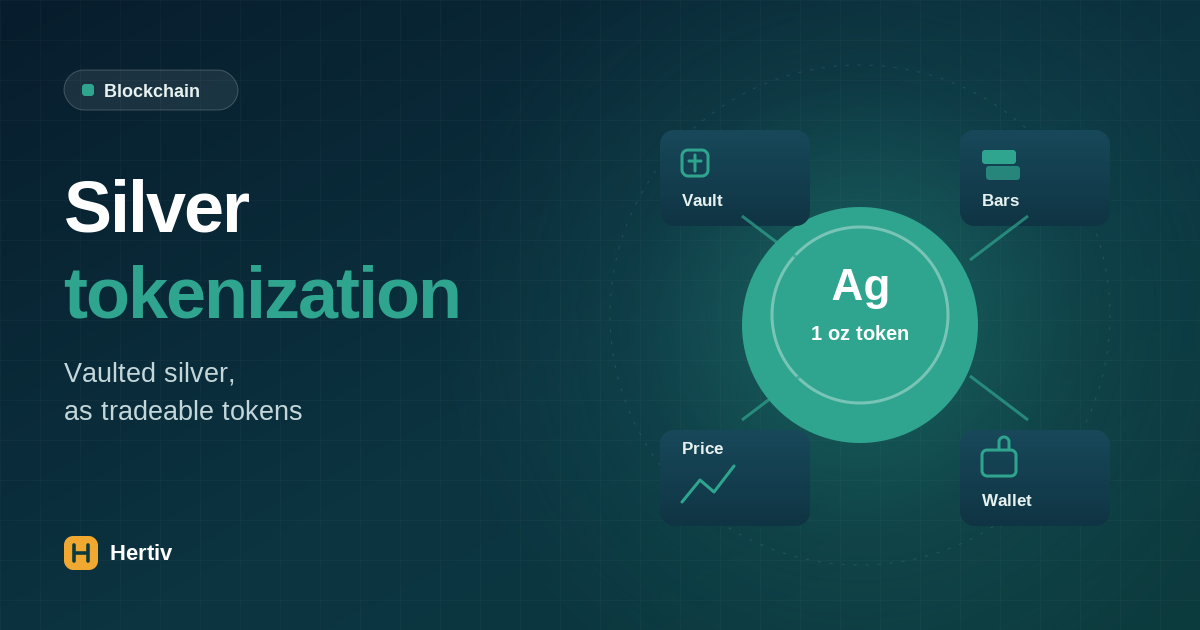
Silver tokenization is the process of recording ownership of physical silver on a blockchain as digital tokens. Each token stands for a fixed amount of silver, usually one troy ounce or one gram, held in a vault by the issuer or a custodian. Buying the token gives you a claim on that silver without moving any metal.
Not every silver token works the same way. Some stand for specific bars set aside for holders, some track shares in a silver fund, and some only follow the silver price with no metal behind them. The label is the same, but what you own is different, so the first job is to read what the token actually stands for.
| Design | What it stands for | Examples | Can you redeem metal? |
|---|---|---|---|
| Allocated metal-backed | Specific bars in a named vault | Kinesis KAG, Matrixdock XAGm | Yes, with minimums and fees |
| Gram-denominated | One gram of silver per token | Aurus tSILVER, Meld SILVER$ | Yes, with minimums and fees |
| ETF-linked | Shares in a silver fund | Ondo SLVon | No, you sell the token |
| Synthetic or index | Price exposure only | Synthetix sXAG | No metal to claim |
Tokenized silver sits inside the wider tokenization of real-world assets, where gold, funds and treasuries are already on chain. For the broader picture, see RWA tokenization: a practical guide for issuers.
Why is silver tokenization rising now?
Silver tokenization is rising because gold tokenization proved the model first. Tokenized gold showed that buyers will hold metal as a token, that vaults and audits can support it, and that tokens can trade around the clock. Silver follows the same path, with one extra pull: silver costs far less per unit than gold, so fractional ownership matters more to small buyers.
Silver also has a second use that gold does not. It is an industrial metal used in solar panels, electronics and medical products, as well as a store of value. That dual role gives silver a different demand story from gold, and token issuers use it to pitch silver to buyers who want exposure to both industry and hard assets.
CoinGecko reported that the market value of commodity tokens rose 289% over nine months to $5.55 billion in the first quarter of 2026, with gold and silver tokens driving much of that growth.
The practical pull is access. A token worth one gram of silver costs a fraction of a bar, trades on crypto exchanges at any hour, and can move between wallets in minutes. A buyer who could not justify a vault account or a large bar order can now hold a small silver position and add to it over time. For how gold tokens set the pattern, see how to create a gold-backed cryptocurrency.
Which silver tokens are on the market?
Five products lead the market, and they split into the designs above. Kinesis Silver (KAG) is the largest by market value: each token stands for one troy ounce of allocated 999-fineness silver in insured vaults, audited twice a year by Bureau Veritas. Kinesis also pays holders a monthly yield in silver funded from a share of its transaction fee revenue.
Aurus tSILVER (TXAG) takes the gram route: each token stands for one gram of silver held in insured vaults in the UK, Switzerland and Singapore, and it runs on Ethereum with versions on Polygon and BNB Chain.
Matrixdock XAGm stands for one troy ounce of LBMA-accredited bullion with institutional custody. Ondo SLVon is different: it is a tokenized share of the iShares Silver Trust, the largest silver ETF, so it tracks fund shares rather than giving a claim on metal, and United States residents cannot buy it. Meld SILVER$ stands for one gram of silver held in the Meld vault network.
The differences that matter are the backing unit, the audit record, the redemption minimum and the chain the token runs on. A token with a 200-ounce redemption minimum suits a large holder, while a gram token suits a buyer saving small amounts. Check each of these four points on the issuer's own site before you buy, and treat any token with no published audit as unproven.
How does a silver token work, step by step?
A silver token follows the same mint-and-burn loop as other asset-backed tokens. The issuer or its custodian buys physical silver, stores it in an insured vault, and has the stock checked by an independent auditor. The issuer then creates tokens equal to the metal held, so the token count matches the vault stock.
- Buyers pay in. A buyer pays in cash or crypto, and the issuer mints new tokens for them.
- Tokens trade. Holders can send, sell or swap the tokens on exchanges or in decentralised apps.
- Audits check the match. The auditor counts the metal and compares it with the tokens in circulation.
- Redemption burns tokens. A holder who redeems sends tokens back, the issuer destroys them, and the metal is shipped or collected.
- Fees apply at the edges. Expect a small trading fee, a redemption fee and a transport charge for physical delivery.
The loop only works if the audit is real and recent. A token whose metal is never counted is a promise, not a backed asset, and the gap shows up the moment many holders try to redeem at once. For how tokenized funds and treasuries use the same loop, see tokenizing treasuries and funds.
Example (hypothetical): buying 100 ounces of tokenized silver
Example (hypothetical): a buyer holds 100 KAG tokens, each standing for one troy ounce of silver. At an example price of $50 an ounce, the holding is worth 100 x $50, or $5,000. The buyer wants physical metal, but the redemption minimum is 200 ounces, so the holding is not yet enough to redeem.
The buyer adds 100 more tokens over six months, bringing the holding to 200 ounces. At the same example price the holding is worth 200 x $50, or $10,000. The buyer redeems the full 200 ounces and pays a 1% redemption fee, which is $10,000 x 1%, or $100, plus the transport charge for shipping the bars.
The lesson is to check the redemption minimum before you buy. A token that is easy to buy and hard to redeem suits a trader, while a holder who wants metal in hand needs a token whose minimum fits the amount they plan to hold.
What are the risks of tokenized silver?
The largest risk is trust in the issuer. A metal-backed token is only as good as the vault, the audit and the legal claim behind it. If the issuer keeps poor records, stores metal in one place, or blocks redemptions in a crisis, the token can trade below the metal price or stop trading at all. Read the audit letters and the terms before you buy, not after.
Other risks are easier to miss. Redemption minimums can be hundreds of ounces, which locks out small holders. Regulation differs by country, and some tokens cannot be sold to residents of certain places. The silver price itself can fall, and a token does not protect you from that. Smart-contract risk applies too: a bug in the token contract can freeze or drain funds, so check whether the contract has been audited by a known firm.
Liquidity is the final check. Large tokens trade daily with tight spreads, while small ones may have thin order books and wide gaps between buy and sell prices. A token that looks cheap on paper can cost far more to exit than the quoted price suggests.
What are the common mistakes?
The most common mistakes with tokenized silver are buying without reading what backs the token, and assuming every silver token can be redeemed for metal.
- Skipping the backing check. Read what the token stands for: allocated bars, fund shares or price exposure only.
- Ignoring the redemption minimum. A 200-ounce minimum means a small holding can never become metal in hand.
- Trusting an unaudited issuer. No published audit means no independent check that the metal exists.
- Treating a token like a vault account. Tokens trade on exchanges and carry smart-contract and custody risk a vault does not.
- Buying for yield alone. A monthly yield is a bonus, not a promise, and it does not cover a falling silver price.
- Forgetting the tax rules. Selling a token can be a taxable event in your country, even if you never touch metal.
Key takeaways
- Silver tokenization follows the path gold tokens proved first
- Check what backs the token: bars, fund shares or price only
- Redemption minimums decide whether you can ever hold metal
- Audits and custody matter more than the token's features
- Silver's industrial use gives it a different story from gold
Frequently asked questions
What is a silver token?
A silver token is a blockchain token that stands for a fixed amount of silver, usually one ounce or one gram. Some tokens are claims on specific bars in a vault, some track shares in a silver fund, and some only follow the silver price. Check the issuer's terms before you buy.
Which silver token is the largest?
Kinesis Silver (KAG) is the largest silver-backed token by market value. Each KAG stands for one troy ounce of allocated 999-fineness silver in insured vaults, audited twice a year by Bureau Veritas. It also pays holders a monthly yield in silver funded from Kinesis transaction fees.
Can I redeem a silver token for physical silver?
It depends on the token. Allocated tokens such as KAG and XAGm can be redeemed for metal, but minimums apply, often 200 ounces or more, plus a redemption fee and transport. ETF-linked tokens such as SLVon cannot be redeemed for metal at all; you sell the token instead.
Is tokenized silver safer than holding bars?
It is different, not safer. Tokens add smart-contract risk, issuer risk and exchange risk to the silver price risk you already carry. Bars in your own safe carry storage and theft risk instead. The token suits buyers who want small amounts and easy trading; bars suit buyers who want metal in hand.
Why is silver tokenization growing now?
Gold tokens proved the model, and silver is cheaper per unit, so fractional ownership helps small buyers most. Silver also has industrial uses in solar panels and electronics alongside its role as a store of value. CoinGecko reported commodity-token market value rising sharply in early 2026, with gold and silver tokens driving much of it.
Do silver tokens pay interest or yield?
Some do and some do not. Kinesis pays holders a monthly yield in silver from a share of its transaction fee revenue. Most other silver tokens pay nothing, and none of them guarantees a return. A yield is a bonus on top of the silver price, not a promise, and it does not cover a fall in that price.


