How Much Does a Multisig Wallet Cost?
A multisig wallet costs little to set up but more to run safely. Here is what you pay for the wallet, the keys, the audit and the gas, and how to keep costs down.
On this page
Short answer
A multisig wallet is a wallet that needs approval from several keys before it can move funds, for example two of three signers. The cost depends on how you set it up: a self-managed smart contract wallet, a managed custody service, or a hardware-based setup each has a different price and a different level of responsibility.
What is a multisig wallet?
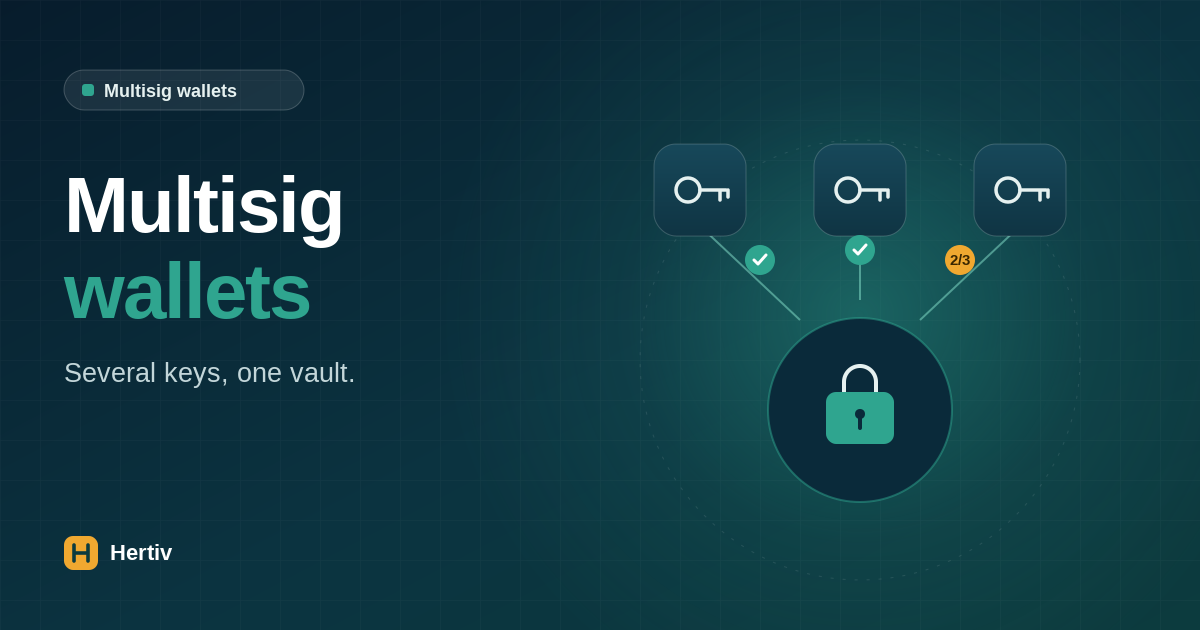
A multisig wallet is a cryptocurrency wallet that requires more than one key to approve a transaction. A common setup is two of three keys, so no single person can move the funds alone and one lost key does not lock the money.
The wallet is usually a smart contract on a blockchain. When someone proposes a transaction, the contract waits until enough signers approve it, then it executes. The rules, such as how many approvals are needed, are set when the wallet is created.
Teams use multisig wallets for treasuries, project funds and shared accounts, because they spread control and reduce the risk of one compromised key. Individuals use them to protect savings, with keys held in different places.
The cost is not just the wallet itself. Keys, hardware, audits and transaction fees all add up, and the cheapest setup is not always the safest one.
What are the main cost components?
The cost of a multisig wallet comes from five parts: creating the wallet, the keys that sign, the audit of the code, the fees for each transaction, and the ongoing care of the setup.
| Component | What it costs | Typical range |
|---|---|---|
| Wallet creation | Deployment gas fee | $5 to $100 per wallet |
| Hardware keys | Devices for each signer | $80 to $200 per device |
| Smart contract audit | Independent code review | $5,000 to $30,000 |
| Transaction fees | Gas per approval and execution | $1 to $20 per transaction |
| Custody service | Managed signing and support | $500 to $5,000 a month |
| Key storage | Backups, safes, procedures | $100 to $1,000 a year |
The audit is the largest one-off cost and the one people most often skip. For a wallet holding real funds, an audit of the contract code is the main protection against a bug that could drain it.
Gas fees vary by chain and by how busy the network is. A transaction on a low-fee chain can cost cents, while the same transaction on a busy chain can cost several dollars. Test with your real volumes before choosing a chain.
How much does each setup option cost?
There are three common ways to run a multisig wallet, and the cost and the responsibility differ for each one.
Self-managed smart contract wallet. You deploy a contract such as a Gnosis Safe and hold the keys yourself. Creation costs a small gas fee, and each signer needs a hardware device. The total first-year cost for a small team is usually a few hundred dollars plus the audit if you use a custom contract. Standard, audited contracts keep the audit cost low because the code has already been reviewed.
Managed custody service. A company holds or co-signs keys for you and provides support, reporting and recovery. Fees usually start around $500 a month and rise with the assets held and the services used. This suits teams that want help and a clear support line.
Hardware-only setup. Each signer holds a hardware device and the wallet is created with a standard multisig script, with no smart contract. The cost is the devices plus small transaction fees. This is the cheapest option, but recovery depends entirely on your own key backups.
For most teams, a standard audited contract wallet with hardware keys is the best balance of cost and safety. For a custom wallet build, crypto wallet development covers what a typical engagement includes.
What does it cost to run each month?
Running a multisig wallet costs gas for transactions, time for signers, and care for the keys. The monthly total is usually small, but it grows with the number of transactions and signers.
Each transaction needs one proposal plus one approval per signer, and each step can carry a gas fee. A wallet that moves funds ten times a month on a low-fee chain might spend $10 to $50 a month on gas. The same wallet on a busy chain can spend several hundred dollars.
Signer time is a real cost too. If three people must approve each payment, the process takes longer than a single-signature wallet, and urgent payments need a clear procedure. Teams often set a smaller approval threshold for small amounts and a larger one for large amounts.
Key care is the quiet cost: backups in separate places, a written recovery procedure, and a test of that procedure at least once a year. A wallet whose recovery was never tested is a wallet that will fail when it matters.
Example (hypothetical): a three-person team treasury
Example (hypothetical): a three-person startup team holds its project funds in a multisig wallet that needs two of three approvals. They use a standard audited contract wallet and each signer holds a hardware device.
The setup costs are simple. Deployment costs $40 in gas. The audit is not needed for the standard contract, because it has already been audited, but the team pays $500 for a review of their setup and procedures. Three hardware devices at $150 each cost $450. The total setup cost is $990.
Running costs are gas and key care. The team makes about 12 transactions a month at roughly $15 each in gas, which is $180 a month, or $2,160 a year. Key storage and backups cost about $200 a year.
The first-year total is $990 plus $2,160 plus $200, which is $3,350. The team also spends about two hours a month on approvals and record-keeping, which is the real ongoing cost and the one most teams forget to budget.
How do you keep the cost down?
You keep a multisig wallet cheap by using a standard audited contract, choosing a low-fee chain, and keeping the number of signers and transactions as small as the risk allows.
- Use a standard contract. A widely used, audited wallet contract avoids the cost of a custom audit.
- Pick a low-fee chain. If your funds and counterparties are on a low-fee chain, the gas bill stays small.
- Batch transactions. Grouping payments into fewer transactions cuts the gas cost per payment.
- Set thresholds by amount. Small payments can need fewer approvals, so routine work does not wait on three people.
- Test recovery once a year. A tested recovery procedure is cheaper than a lost wallet.
- Keep key backups simple. Two secure locations with written procedures beat a complex system nobody follows.
Do not save money by skipping the hardware devices or the recovery test. Those are the two things that protect the funds when a laptop is lost or a signer leaves the team.
If you are comparing multisig with other wallet designs, MPC wallet development covers an alternative that splits a key instead of requiring several signatures.
What are the common mistakes?
The most common mistakes with multisig wallets are losing a key, setting the threshold wrong, and never testing recovery.
- Threshold too high. A three-of-three wallet locks the funds if one signer is away; two of three is usually safer.
- Keys stored together. If all keys sit in the same office or the same laptop, the multisig adds little protection.
- No recovery test. A backup that was never tested may not work when you need it.
- Custom contract without audit. A new contract holding real funds needs an independent review before it goes live.
- Forgetting gas costs. Frequent small transactions on a busy chain can cost more than the wallet itself.
- No written procedures. Who signs, how fast, and what happens if a signer leaves should be written down, not assumed.
Key takeaways
- A multisig wallet needs several keys to approve a transaction, such as two of three
- A standard audited contract with hardware keys is the cheapest safe setup for most teams
- Gas fees depend on the chain and the number of transactions, so test with real volumes
- Set thresholds by amount and test the recovery procedure at least once a year
- Never skip the audit on a custom contract that holds real funds
Frequently asked questions
Is a multisig wallet free?
The wallet software itself is usually free to use, and creating a standard contract wallet costs only a small gas fee. The real costs are hardware devices for each signer, transaction gas fees, and an audit if you use a custom contract. A small team can run a multisig wallet for a few hundred dollars a year plus gas.
How many signers should a multisig wallet have?
Three signers with a two-of-three threshold suits most small teams: one key can be lost without locking the funds, and no single key can move money alone. Larger treasuries often use five signers with a three-of-five threshold. Avoid three-of-three, because one unavailable signer blocks every payment.
Are multisig wallets safer than normal wallets?
Yes, for shared funds. A single-key wallet is drained if one key is stolen; a multisig wallet needs several keys, so one theft is not enough. The protection only works if the keys are stored separately and the recovery procedure has been tested.
What is the difference between multisig and MPC wallets?
A multisig wallet needs several separate keys to approve a transaction, and the rules live in a smart contract or script. An MPC wallet splits one key into shares held by several parties, so no full key exists in one place. Both spread control; multisig is simpler to understand and audit, while MPC can be faster to sign with.
Can I change the signers on a multisig wallet?
It depends on the wallet. Most smart contract wallets let the current signers vote to add or remove a signer, which is how teams handle staff changes. Script-based wallets usually need a new wallet and a transfer of funds. Check the change process before you choose a wallet type.
What happens if I lose a multisig key?
With a two-of-three setup, the remaining two keys can still move the funds and add a replacement key, so a single loss is not a disaster. With a three-of-three setup, one lost key locks the funds. This is why the threshold matters more than the number of keys.


