Integrating Crypto Wallets into POS Systems: A Practical Guide
A point-of-sale crypto wallet lets a shop take payment in bitcoin or stablecoins and settle in local currency. Here is how it works and how to set one up safely.
On this page
Short answer
Integrating a crypto wallet with a point-of-sale system means connecting a payment app or terminal to a wallet so a customer can pay with cryptocurrency at the till. The till shows a price in local currency, the customer scans a code or taps a card, and the business receives crypto or an instant conversion to local currency, depending on the setup.
What does a POS crypto wallet do?
A point-of-sale crypto wallet is software that lets a shop accept cryptocurrency at the till, usually by showing a QR code or a payment link for the customer to scan with their own wallet. The till price stays in local currency, and the payment is made in crypto at the current rate.
The wallet part belongs to the customer: they hold bitcoin, ether or a stablecoin in a wallet app on their phone. The shop's part is the point-of-sale side: a terminal, an app or a payment gateway that creates the payment request, watches for the payment and records the sale.
Once the payment is confirmed, the shop either keeps the crypto or converts it to local currency straight away. Most small shops choose instant conversion, because it removes the risk of the price moving between the sale and the end of the day.
How does a crypto payment at the till work?
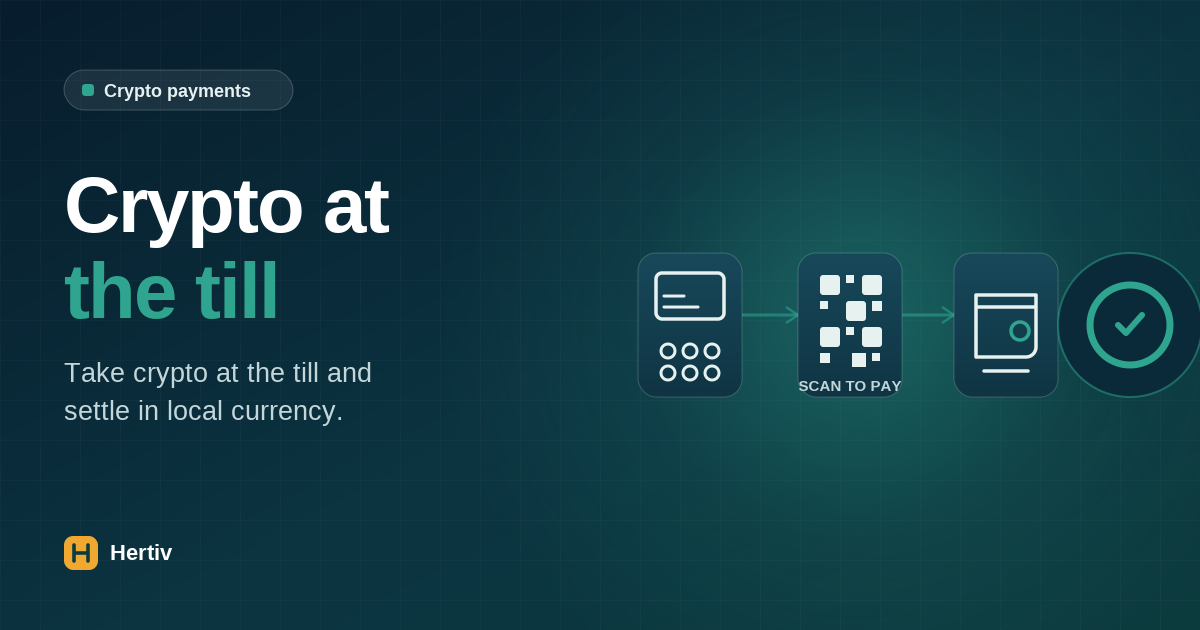
A crypto payment at the till follows the same rhythm as a card payment, with a few extra steps for the blockchain. The customer picks crypto at checkout, the till shows the amount in local currency and the matching crypto amount, and the customer scans a code to pay.
| Step | What happens | Who acts |
|---|---|---|
| 1. Customer chooses crypto | Till shows the amount in local currency | Customer |
| 2. Till creates the request | QR code with amount and address appears | Till or gateway |
| 3. Customer scans and sends | Wallet signs and broadcasts the payment | Customer |
| 4. Payment confirms | Network confirms it; till marks the sale paid | Network |
| 5. Settlement | Crypto is kept or converted to local currency | Shop or gateway |
Confirmation time depends on the coin. A stablecoin on a fast network can settle in seconds, while bitcoin can take minutes for a full confirmation. Most tills accept the payment as soon as it is seen on the network and only release goods after a set number of confirmations.
Refunds work differently from cards. There is no chargeback: the shop sends the crypto back to the customer's address, usually at the current rate, so the refund policy should be written down before the first sale.
Which setup fits a small shop?
A small shop has four common setups, and the right one depends on volume and how much crypto the shop wants to hold. The simplest is a QR code on the counter linked to the shop's wallet, which costs almost nothing but needs manual checking.
| Setup | Cost to start | Best for |
|---|---|---|
| QR code and wallet app | Almost nothing | Occasional sales |
| Crypto-enabled terminal | Terminal fee | Busy counters |
| Payment gateway | Monthly fee plus per-sale fee | Shops that want local currency |
| Crypto card | Card fee | Online and phone orders |
Terminals suit busy counters because they print a receipt and mark the sale as paid without extra steps. Gateways suit shops that want local currency, because the gateway converts each payment and pays the shop in dollars. QR codes suit market stalls and pop-ups where sales are rare.
The choice also depends on the coins the shop will accept. Stablecoins are the easiest to price because they track the dollar, while bitcoin and ether move in price all day. Most shops start with one stablecoin and add others only if customers ask.
How do you set it up?
Setting up a POS crypto wallet takes a few days of testing before it should go live at a real till. The steps below keep the launch small and reversible.
- Choose which coins to accept, starting with one stablecoin.
- Open a business wallet or gateway account, with two people holding the recovery details. See how to create a crypto wallet for the basics of setting one up safely.
- Connect the wallet to the till or install the payment app on the terminal.
- Set the till to price in local currency and convert the crypto amount at checkout.
- Test with small payments from a staff wallet, including a refund.
- Train staff on the payment flow and put up a small sign for customers.
Run the first week with a cap, such as crypto payments only under a set amount, and check every payment against the till records each night. That catches pricing and confirmation problems while they are still small.
Example (hypothetical): a café adds crypto payments
Example (hypothetical): a café with 200 customers a day decides to accept crypto. About 20 customers a week choose to pay in a stablecoin, with an average sale of $18.
That is 20 × $18 = $360 of crypto sales a week, or about $1,440 a month. The gateway charges 1% per sale, which is $14.40 a month, and the café converts every payment to dollars the same day, so it holds no crypto overnight.
Two customers a month ask for a refund, and the café sends the stablecoin back at the same dollar amount, which takes about five minutes each. The owner keeps the option because it brings in a few new regulars, not because the volume is large. After three months the café checks the numbers: the extra sales cover the fees, and no payment has gone missing.
What are the risks and costs?
The main risk is price movement. If the shop keeps bitcoin or ether and the price falls before conversion, the sale is worth less than the till price. Instant conversion removes this risk, but the gateway charges a fee for it.
Tax and record-keeping matter too. Crypto sales are still sales for tax purposes, and the shop needs a record of the dollar value at the time of each sale. A gateway that exports a daily report in local currency makes this far easier than a wallet with no records.
Other risks are smaller but real: a customer sending the wrong coin, a payment stuck because the network fee was too low, and staff who do not know the refund steps. A short written procedure and a test payment each morning cover most of these.
What are the common mistakes?
The most common mistakes with POS crypto wallets are going live without testing refunds, holding volatile coins overnight, and keeping no record of the dollar value of each sale.
- Skipping the refund test. The first refund should not be a live customer.
- Holding crypto without a plan. Decide before launch whether to keep it or convert it.
- No tax records. Every sale needs a dollar value and a date for the books.
- Accepting too many coins at once. Each extra coin adds pricing, testing and staff training.
- One person holding the keys. If that person is away, the shop cannot move its funds.
Key takeaways
- A POS crypto wallet lets customers pay in crypto while the till prices in local currency
- Most small shops convert each payment to local currency straight away
- Stablecoins are the easiest first coin because they track the dollar
- Refunds are manual: the shop sends crypto back, there is no chargeback
- Test payments and refunds before the first live sale
Frequently asked questions
Do customers need a special wallet to pay at the till?
They need any wallet app that holds the coin the shop accepts, plus enough balance for the sale. The shop shows a QR code, the customer scans it, and the wallet sends the payment. No account with the shop is needed.
Is it legal for a shop to accept crypto?
In most places, yes, but the rules differ by country and the shop must still record sales and pay tax on them. Check local rules on crypto payments and consumer refunds before launch, and keep records of every sale in local currency.
How long does a crypto payment take at the till?
It depends on the coin and the network. A stablecoin on a fast network can confirm in seconds, while bitcoin can take several minutes for full confirmation. Most tills show the payment as seen quickly and wait for confirmations before releasing goods.
What happens if the crypto price falls after a sale?
If the shop keeps the crypto, the sale is worth less when converted later. If the shop converts instantly through a gateway, the price at the till is the price received. Most small shops choose instant conversion to avoid holding price risk.
Can a shop refund a crypto payment?
Yes, but it is manual. The shop sends the same crypto back to the customer's address, usually at the current dollar value. There is no chargeback system, so the refund policy should be written down and shown to customers before they pay.
What does a crypto payment gateway cost?
Gateways usually charge a monthly fee plus a percentage of each sale; exact prices vary by provider, so see vendor site. Compare the fee with card fees and the cost of holding crypto, and test the reporting tools before signing up.


