6 Advantages of Building an IDO Launchpad
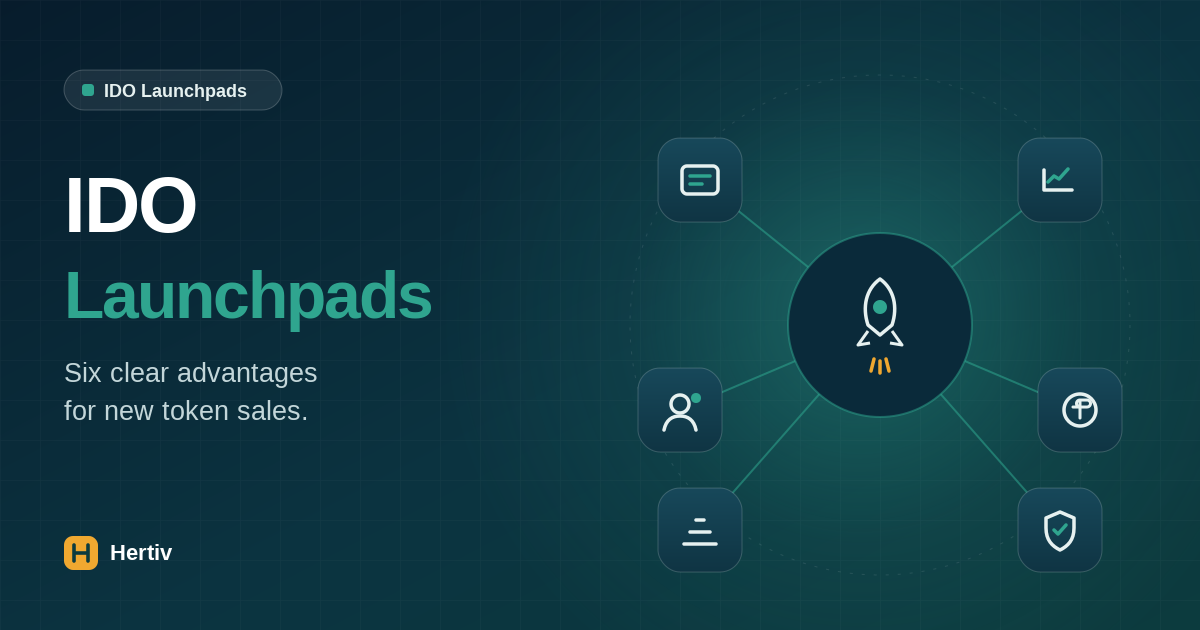
An IDO launchpad lets new token projects raise funds from the public while giving buyers early access. Here are six advantages of building one.
On this page
Short answer
An IDO launchpad is a platform where new token projects sell to the public for the first time and list on a decentralised exchange at once. Building one has six clear advantages: faster fundraising, instant liquidity, wider reach, lower cost than an exchange listing, fairer access for small buyers and built-in checks. Each one comes with a trade-off worth knowing.
What is an IDO launchpad?
An IDO launchpad is a platform where new crypto projects sell their tokens to the public for the first time, in what is called an initial DEX offering. The launchpad handles the sale, the token distribution and the listing on a decentralised exchange, so the project team does not have to build that machinery themselves.
| Feature | Without a launchpad | With a launchpad |
|---|---|---|
| Token sale | Team builds its own sale page | Ready-made sale and payment flow |
| Buyer trust | Buyers must trust the team directly | Launchpad checks the project first |
| Liquidity | Team must arrange the pool | Tokens list on a DEX at once |
| Reach | Only the team's own audience | The launchpad's community sees it |
| Rules | Each project invents its own | Standard tiers, vesting and refunds |
Launchpads grew out of the earlier ICO model, but they add two things ICOs often lacked: a check on the project before the sale, and immediate trading once the sale ends. That combination is the source of most of the advantages below. For the earlier fundraising model, see how to launch an ICO.
<h3>1. Faster fundraising: best for teams that need capital quickly</h3>
An IDO launchpad lets a project raise funds in days rather than months. The sale page, the payment flow and the token distribution are already built, so the team can focus on the project instead of spending weeks building fundraising infrastructure.
Speed also helps the team keep momentum. A project that raises quickly can hire, build and ship while the community is still paying attention, instead of losing months to fundraising paperwork and custom development.
Pros
- Sale infrastructure is ready on day one
- The team spends time on the product, not the fundraiser
- Momentum from the sale carries into the build
Cons
- Fast sales can hide weak projects if checks are thin
- A rushed launch leaves less time to fix tokenomics
- Speed puts pressure on the team to deliver at once
<h3>2. Instant liquidity: best for buyers who want to trade at once</h3>
Tokens sold through a launchpad usually list on a decentralised exchange as soon as the sale ends, so buyers can trade them straight away. That immediate liquidity is one of the main reasons buyers prefer IDOs over private rounds, where tokens can be locked for months.
Instant liquidity also helps the project, because a live market gives the token a price that everyone can see. That price becomes a public signal of demand, which the team can use when talking to partners, exchanges and future investors.
Pros
- Buyers can trade as soon as the sale ends
- A live price gives the project a public signal
- No long lock-up before the first trade
Cons
- Early trading can be volatile while the market finds a price
- Low liquidity at launch makes large trades costly
- A falling price right after launch hurts the project's name
<h3>3. Wider reach: best for small teams without a large audience</h3>
A launchpad brings its own community to every sale, so a small team can reach thousands of potential buyers without building an audience from scratch. That reach is the hardest thing for a new project to buy, and it is the main reason teams pay a launchpad's fee.
Reach also works in the other direction: buyers on the launchpad see every new project, so they can compare several sales before choosing one. That comparison pushes projects to be clearer about what they are building and why it matters.
Pros
- Small teams reach a large ready audience
- Buyers can compare several projects in one place
- Community marketing starts on day one
Cons
- The audience belongs to the launchpad, not the project
- A crowded launch calendar splits buyer attention
- Reach does not guarantee that buyers will stay
<h3>4. Lower cost than an exchange listing: best for projects with a tight budget</h3>
Listing on a large centralised exchange can cost a project a large fee and months of negotiation. A launchpad sale costs far less to run, since the sale and the listing happen on decentralised infrastructure that the launchpad already operates.
Lower cost changes who can raise funds. A small team with a working product but no large backers can still run a public sale, which was much harder when the only route was a centralised exchange listing or a private round.
Pros
- No large exchange listing fee to pay
- The sale runs on infrastructure that already exists
- Small teams can raise without large backers
Cons
- Cheaper does not mean free: launchpads charge fees too
- A cheap launch can still fail if the product is weak
- Some launchpads charge in tokens, which dilutes the sale
<h3>5. Fairer access for small buyers: best for ordinary buyers, not just large funds</h3>
Launchpads use tiers, lotteries or whitelists to give small buyers a chance to join a sale, instead of letting large buyers take the whole allocation in seconds. A buyer who holds some of the launchpad's token, or who completes a task, can earn a guaranteed slot.
Fairer access builds a wider holder base, which helps the project in the long run. A token held by thousands of small buyers is harder to move with a single large sale than a token held by a handful of funds, and a wider base means more people who care about the project.
Pros
- Small buyers can earn a guaranteed allocation
- A wider holder base spreads the token further
- Tiers reward people who support the launchpad
Cons
- Tiers can favour people who already hold the launchpad token
- Lotteries still leave many buyers out
- Fair rules need enforcement, or large buyers find a way around them
<h3>6. Built-in trust and checks: best for buyers who want some protection</h3>
Most launchpads check a project before listing it: they review the team, the code, the token plan and the legal setup. That check does not guarantee success, but it filters out the weakest projects and gives buyers a reason to trust the sale more than an unlisted one.
The launchpad also holds the funds in a smart contract and releases them under set rules, which reduces the chance that a team disappears with the money. Vesting schedules, which release tokens over time, are another standard protection that launchpads enforce.
Pros
- Projects are reviewed before the sale goes live
- Smart contracts hold funds under set rules
- Vesting schedules limit how fast insiders can sell
Cons
- A check is not a guarantee: reviewed projects can still fail
- The quality of checks varies a lot between launchpads
- Buyers may trust the launchpad more than they should
How to use these advantages when building a launchpad
Building a launchpad means turning these six advantages into features that actually work. The sale flow, the listing, the tiers and the checks all need to be built and tested before the first project goes live, because a failure during a live sale is public and hard to undo.
- Start with the sale flow: payments, token distribution and refunds.
- Add the DEX listing so tokens trade the moment the sale ends.
- Build the tier system so small buyers get a fair chance.
- Set up the project review process and publish the criteria.
- Add vesting and fund-release rules in the smart contracts.
Test the whole flow with a small sale first, using a friendly project and a limited audience. A small test finds the bugs in payment, distribution and listing before they affect thousands of buyers. For the smart contracts behind the sale, see smart contract development.
What are the common mistakes?
The most common mistakes in IDO launchpad development are skipping the project checks, promising instant success and ignoring the token economics. Each one turns an advantage into a liability, and the damage shows up in public.
- Listing projects without real checks. One failed project damages the launchpad's name more than ten good sales help it.
- Promising guaranteed returns. No launchpad can promise a price, and saying so invites trouble.
- Ignoring vesting. If insiders can sell everything on day one, the price collapses and buyers leave.
- Building tiers that favour insiders. A tier system that only rewards large holders is not fair access.
- Skipping the audit. A smart contract bug in a live sale can lock or lose buyer funds.
- No plan for failed sales. A sale that does not reach its target needs a clear refund rule, written before the sale starts.
A launchpad earns trust one sale at a time. Publish the checks, enforce the vesting and refund buyers quickly when a sale fails. For how tokens are created in the first place, see how to create a cryptocurrency.
Key takeaways
- An IDO launchpad handles the sale, distribution and listing for new token projects
- Faster fundraising and instant liquidity are the two biggest draws for teams and buyers
- A launchpad's audience gives small teams reach they could not build alone
- Fair access and vesting rules protect small buyers and the token price
- Checks, audits and refund rules decide whether a launchpad keeps its trust
Frequently asked questions
What is the difference between an IDO and an ICO?
An ICO usually sold tokens directly from the project's own website, with no exchange listing at the end. An IDO sells tokens on a launchpad and lists them on a decentralised exchange as soon as the sale ends, so buyers can trade at once. The launchpad also checks the project before the sale.
How does a launchpad make money?
Launchpads usually charge the project a fee, often in tokens, and may take a share of the sale. Some also earn from their own token, which buyers hold to join sales. The exact fees vary a lot, so projects should compare several launchpads before choosing one.
Do buyers need the launchpad's token to join a sale?
On many launchpads, yes. Holding or staking the launchpad's token earns a tier, and higher tiers get larger allocations. Some launchpads also run lotteries or whitelists for buyers who do not hold the token. The rules differ, so read them before the sale starts.
Is an IDO launchpad the same as a crowdfunding site?
The idea is similar, but the mechanics differ. A crowdfunding site collects money and delivers a product later, while a launchpad sells tokens that list and trade at once. The token, the smart contract and the exchange listing make an IDO a different kind of sale.
What happens if an IDO sale fails to reach its target?
A well-run launchpad refunds buyers when a sale misses its target, using rules written into the smart contract before the sale. A launchpad without a clear refund rule leaves buyers guessing, so check the rule before you join any sale.
Can anyone build an IDO launchpad?
Technically yes, but a launchpad needs more than code: it needs a review process, audited smart contracts, a community of buyers and projects willing to list. A new launchpad without buyers cannot offer reach, which is the main reason projects use one.


