How to Build a Tokenized Asset-Backed Lending Platform
A tokenized asset-backed lending platform turns real-world collateral into on-chain tokens that secure a loan. Here is how the parts fit and how to build one.
On this page
Short answer
A tokenized asset-backed lending platform works by turning collateral such as invoices, property or bonds into tokens, locking those tokens in a smart contract, and lending against them up to a set loan-to-value limit. The build needs a token model, a valuation method, loan contracts with liquidation rules, custody, and a licence for the jurisdiction where it operates.
What is a tokenized asset-backed lending platform?
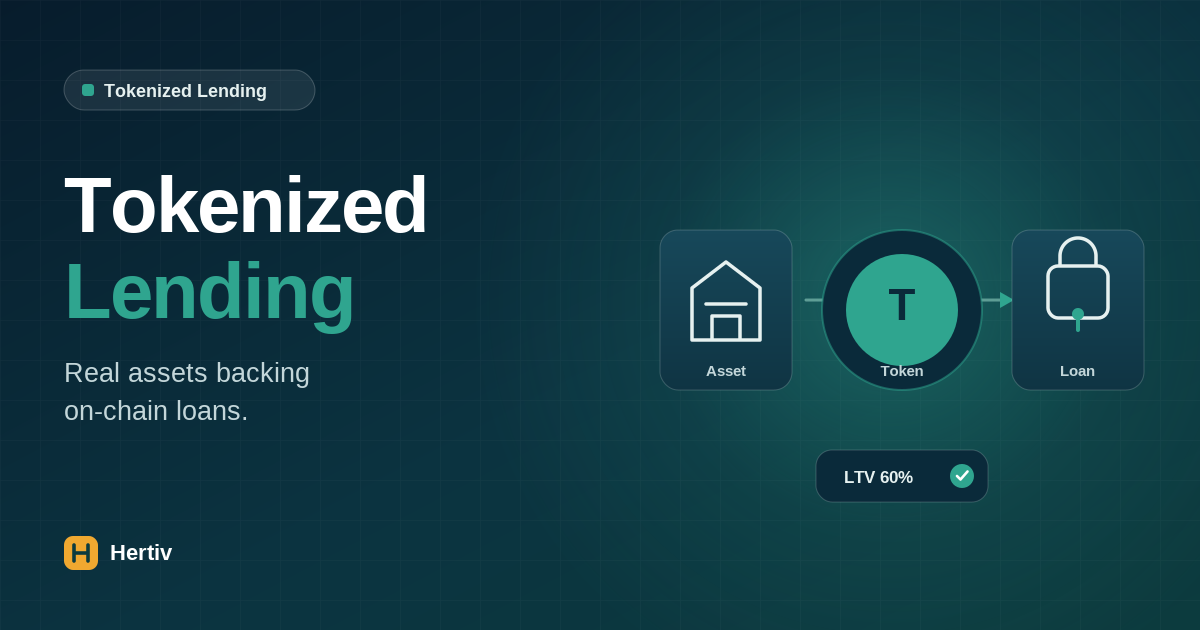
A tokenized asset-backed lending platform is a lending system where the collateral is a real-world asset represented by tokens on a blockchain, and the loan is secured against those tokens. A borrower locks tokenized invoices, property shares or bonds into a smart contract, and the platform lends money up to a set share of the collateral value, known as the loan-to-value ratio.
Tokenization matters because it makes collateral divisible and transferable. A $1,000,000 invoice can be split into 10,000 tokens of $100 each, so a small business can borrow against part of it, and the lender can sell the tokens if the borrower defaults. Without tokens, the same invoice would need paper contracts and a slow manual process to pledge and release.
The platform has four parts that must work together: the token that stands for the asset, the valuation method that prices it, the loan contract that sets the terms and the liquidation trigger, and the custody setup that holds the tokens safely. For teams planning this kind of build, DeFi development experience helps, since the loan logic sits on-chain while the asset and the licence live off-chain.
| Part | What it does | Main risk if it fails |
|---|---|---|
| Asset token | Stands for the real-world asset | Token does not match the legal claim |
| Valuation | Prices the collateral honestly | Overvalued collateral, bad loans |
| Loan contract | Sets terms and liquidation | Loans cannot be closed on default |
| Custody | Holds tokens and keys safely | Loss or theft of collateral |
How does a tokenized loan work, step by step?
A tokenized loan runs in seven steps, from the asset to repayment or liquidation, and each step needs both on-chain and off-chain work. The off-chain steps prove the asset is real; the on-chain steps move the tokens and the money.
- Verify the asset. Check the invoice, property title or bond exists, is owned by the borrower, and is not already pledged elsewhere.
- Tokenize it. Mint tokens that stand for the asset, with a legal link between the token and the claim on the asset.
- Value the collateral. Price the asset with a stated method, such as the invoice face value less a haircut, or an independent appraisal.
- Lock the tokens. Move the tokens into the loan contract, which holds them until the loan is repaid or liquidated.
- Release the loan. Pay the borrower in stablecoins or fiat, up to the loan-to-value limit for that asset type.
- Track the position. Watch the collateral value and the loan balance, and warn the borrower before the liquidation trigger is hit.
- Repay or liquidate. On repayment, return the tokens; on default, sell the tokens to recover the loan.
The valuation step is the one teams underinvest in. A token is only as good as the price behind it, and a loan against an overvalued invoice is a bad loan from day one. That is why most platforms use a haircut: they lend less than the stated value to cover price falls and sale costs.
Which assets work as collateral?
The assets that work best as collateral are the ones with a clear owner, a regular price and a buyer if the loan goes bad. Invoices, property shares, bonds and commodities fit that test; art and collectibles usually do not, because their price is hard to agree and slow to sell.
| Asset | Why it suits lending | Typical loan-to-value |
|---|---|---|
| Invoices | Short term, clear payer, fixed amount | 60 to 80 percent |
| Property shares | Stable value, rental income | 50 to 65 percent |
| Bonds | Traded price, regular coupons | 70 to 85 percent |
| Commodities | Market price, stored and insured | 50 to 70 percent |
| Art and collectibles | Hard to price, slow to sell | 30 to 50 percent, if at all |
The loan-to-value figures above are planning ranges, not a rulebook: each platform sets its own limits by asset type and by jurisdiction. A short-term invoice from a large payer can support a higher ratio than a property share in a slow market, because the invoice pays out soon and the payer is known. Check the rules that apply in the jurisdiction where the platform operates before fixing the ratios.
What does the smart contract layer need to do?
The smart contract layer needs to do four jobs: hold the collateral tokens, track each loan, enforce the liquidation trigger, and pay out on repayment. If any of these is missing, the platform has to do the work by hand, which removes the point of building on-chain.
Start with the loan contract. It records the borrower, the collateral tokens locked, the amount lent, the interest rate, the due date and the liquidation trigger. It should only release tokens on full repayment, and only sell them when the trigger is met and the grace period has passed.
Next, the valuation feed. The contract needs a price for the collateral, which comes from an off-chain source such as an appraiser, an invoice registry or a market feed. That feed is a single point of failure, so it needs more than one source or a manual override with a clear owner. Where the build involves holding user assets, crypto wallet development and custody design deserve the same care as the loan logic itself.
Finally, plan for upgrades and pauses. Contracts that cannot be paused leave the team with no way to stop a bad loan run, and contracts that cannot be fixed leave a bug in place for years. A pause function with a named owner is a safety feature, not a weakness.
Example (hypothetical): a $500,000 loan against tokenized invoices
Example (hypothetical): a supplier holds $1,000,000 of invoices from a large retailer, due in 90 days. It tokenizes the invoices into 10,000 tokens of $100 each and locks them into the platform, which lends at 60 percent loan-to-value, so the maximum loan is $600,000. The supplier borrows $500,000 for 90 days at 8 percent annual interest.
The arithmetic: interest is $500,000 times 8 percent times 90 divided by 365, which is $9,863. On the due date the supplier repays $500,000 plus $9,863, a total of $509,863, and the platform returns the 10,000 tokens. If the retailer pays the invoices early, the supplier can repay early and the interest is charged only for the days used.
The liquidation trigger is set at 125 percent collateral cover, which is $625,000 of collateral value for a $500,000 loan. If the invoices are marked down below $625,000, the borrower gets a warning and a grace period to add collateral or repay part of the loan. If it does nothing, the platform sells enough tokens to recover the loan and the unpaid interest.
The numbers show why invoices suit this model: the loan is short, the payer is known, and the amount is fixed, so the platform can price the risk without guessing. The same arithmetic on art would need a much larger haircut, because the sale price is uncertain and the sale itself takes time.
How do you handle compliance and custody?
Compliance and custody decide whether the platform can operate at all, so they belong in the plan from the start, not as a step added before launch. The rules depend on the jurisdiction: lending, securities and custody each have their own regime, and tokenized assets can fall under more than one at once.
Get a legal opinion before writing the loan contracts. It should cover whether the token is a security in the target jurisdiction, what licence the lending needs, and how the token holder's claim on the asset is recorded. That opinion shapes the token design, the user checks and the documents, so changing it later means rework.
For custody, use a regulated custodian or a multi-signature setup with clear key holders, and never hold borrower collateral in the same wallet as operating funds. Borrower identity checks and sanctions screening are part of the onboarding flow, and the platform needs records that show who borrowed, what was pledged and when. Pricing for a full build varies by scope, so check the tokenization platform cost guide for the factors that drive the budget.
What are the common mistakes?
The most common mistakes in tokenized lending are trusting the token instead of the legal claim, setting the loan-to-value too high, and building the contracts before the licence.
- Trusting the token, not the claim. A token with no legal link to the asset is worth nothing in a dispute, however good the code is.
- Setting loan-to-value too high. A small price fall wipes out the buffer and forces a sale at the worst moment.
- One price source. A single valuation feed is a single point of failure; use two sources or a manual check.
- Building before the licence. A platform that cannot legally lend has to stop and rebuild, whatever the contracts say.
- No grace period. Liquidating the moment the trigger is hit destroys borrowers over short price dips.
Key takeaways
- A tokenized loan locks asset tokens in a contract and lends up to a loan-to-value limit
- Invoices, bonds and property shares suit collateral; art rarely does
- The token needs a legal link to the asset, or it is worth nothing in a dispute
- Use a haircut and a liquidation trigger with a grace period for the borrower
- The valuation feed is a single point of failure, so use two sources
- Get the legal opinion and licence plan before writing the loan contracts
Frequently asked questions
What is tokenized asset-backed lending?
Tokenized asset-backed lending is a loan secured by tokens that stand for a real-world asset, such as invoices, property shares or bonds. The borrower locks the tokens in a smart contract and borrows up to a set share of their value. If the borrower defaults, the platform sells the tokens to recover the loan.
Which assets can be tokenized as loan collateral?
Invoices, property shares, bonds and commodities work best, because they have a clear owner, a regular price and a buyer if the loan goes bad. Art and collectibles are harder, since their price is uncertain and slow to agree. Each platform sets its own list by asset type and jurisdiction.
What is loan-to-value in tokenized lending?
Loan-to-value is the share of the collateral value that the platform will lend, such as 60 percent of a $1,000,000 invoice pool, which is $600,000. A lower ratio gives a bigger buffer against price falls. The ratio varies by asset type, with short-term invoices usually supporting higher ratios than property or art.
How does liquidation work on a tokenized lending platform?
When the collateral value falls below the trigger, the borrower gets a warning and a grace period to add collateral or repay part of the loan. If it does nothing, the smart contract sells enough tokens to recover the loan and unpaid interest. The trigger and grace period should be written into the loan terms.
Do tokenized lending platforms need a licence?
Usually yes, and the rules depend on the jurisdiction. Lending, securities and custody each have their own regime, and a tokenized asset can fall under more than one. Get a legal opinion before building, covering whether the token is a security and what licence the lending needs.
What is the difference between tokenized lending and DeFi lending?
DeFi lending usually takes crypto as collateral, with prices from on-chain markets and instant liquidation. Tokenized lending takes real-world assets as collateral, so it needs off-chain verification, valuation and legal links, plus a licence. The smart contracts are similar; the asset and the rules around it are different.


