How to Build an IDO Launchpad Like BSCPad
A BSCPad-style IDO launchpad is a set of smart contracts for token sales, staking tiers and vesting, plus a vetted project pipeline. Here is the build, step by step.
On this page
Short answer
An IDO launchpad like BSCPad is a platform where new blockchain projects sell tokens to the public through an initial DEX offering, and where buyers earn access by staking the platform token. BSCPad is the first decentralised IDO launchpad on BNB Smart Chain, and its model pairs sale contracts with a tiered staking system and vesting schedules.
What is an IDO launchpad like BSCPad?
An IDO launchpad like BSCPad is a platform where new blockchain projects sell tokens to the public through an initial DEX offering, and where buyers earn access by staking the platform token. The launchpad handles the sale, the allocation and the token release, so a project can raise funds without building its own sale system.
BSCPad is the first decentralised IDO launchpad on BNB Smart Chain. Projects apply to list, pass a vetting process, and then sell tokens to BSCPad stakers at an early price. Buyers stake the platform token, $BSCPAD, to qualify for an allocation.
The model solves two problems at once. Projects get funding and an audience of token holders, and buyers get early access that would otherwise go to private investors. A decentralised exchange listing usually follows the sale, which is where the token starts trading.
What contracts does a BSCPad-style launchpad need?
A BSCPad-style launchpad needs five contracts working together: a token contract, a sale contract, a staking contract, a vesting contract and a treasury. Each one has a narrow job, which keeps the system easier to audit.
| Contract | Job | Key risk |
|---|---|---|
| Platform token | BEP-20 token for staking and tiers | Supply and minting rules |
| Sale contract | Takes payment, records allocations | Price and cap errors |
| Staking contract | Locks tokens, sets tiers | Reward and lock bugs |
| Vesting contract | Releases tokens over time | Schedule mistakes |
| Treasury | Holds raised funds | Access control |
Build these from audited libraries rather than writing them from scratch. OpenZeppelin contracts are the usual starting point for token, staking and access control logic, and every contract should be reviewed by an independent auditor before mainnet. Smart contract development done this way costs more up front and far less later.
How do staking tiers and allocations work?
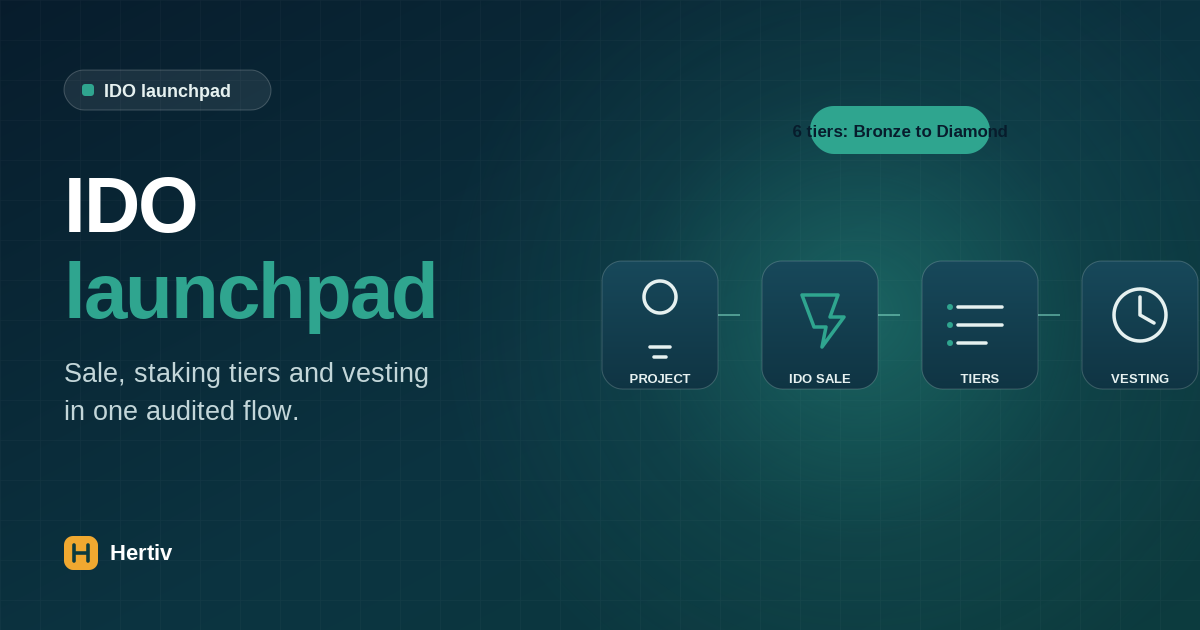
Staking tiers decide who can buy and how much. BSCPad uses six tiers, Bronze, Silver, Gold, Platinum, Diamond and Blue Diamond, set by how much $BSCPAD a user stakes. Higher tiers get larger allocations and fewer conditions.
The lower three tiers are lottery tiers. Users stake between 1,000 and 5,000 $BSCPAD tokens to enter a draw for a share of 20% of the tokens on sale. The upper three tiers get a guaranteed allocation from the remaining 80%. This split gives small holders a fair chance while rewarding larger stakers.
Tiers are snapshotted before each sale, so staking at the last minute does not work. Lower tiers must also stake at least three hours before allocation begins and complete whitelist tasks, while higher tiers are exempt from those tasks. Design your tier rules before writing code, because changing them after launch breaks trust with existing stakers.
How do you build the launchpad, step by step?
You build the launchpad by shipping the contracts first, then the staking system, then the sale flow, then the project pipeline. Each step should be tested on a testnet before the next one starts.
- Define the model. Fix the chain, the payment token, the tier levels, the allocation split and the vesting schedule in writing.
- Build the platform token. Deploy a BEP-20 token with fixed supply rules and no hidden minting.
- Build staking and tiers. Write the staking contract so tiers update from staked balances, with a snapshot before each sale.
- Build the sale contract. Handle payments, allocation caps per tier, refunds for failed sales and a claim function for bought tokens.
- Build vesting. Release tokens on a schedule with a cliff, so early buyers cannot dump the full allocation at listing.
- Add KYC and vetting. Use a third-party KYC provider for buyers and a written vetting checklist for projects.
- Audit, then testnet, then launch. Get an independent audit, run a full sale on testnet with real users, fix what breaks, and only then go live.
The frontend is the last piece, not the first. A clean sale page matters, but the contracts are the product. If the contracts are wrong, no interface will save the launch.
Example (hypothetical): a $200,000 IDO sale split across tiers
Example (hypothetical): a project raises $200,000 through your launchpad. The lottery pool is 20% of the raise, which is $40,000, and the guaranteed pool is 80%, which is $160,000.
If 200 Bronze stakers win lottery tickets, each one can buy $200 of tokens, because 200 times $200 equals $40,000. If 40 Diamond stakers share the guaranteed pool equally, each one can buy $4,000 of tokens, because 40 times $4,000 equals $160,000.
Vesting then releases the tokens over six months with a one-month cliff. A Bronze buyer who bought $200 of tokens receives nothing in month one, then about $40 a month for five months, which keeps early selling pressure low and gives the project time to ship.
What about KYC, compliance and audits?
KYC, compliance and audits are part of the product, not an afterthought. Buyers complete identity checks through a third-party provider, projects pass a vetting checklist, and every contract is audited before mainnet.
BSCPad itself does not run KYC directly; it uses third-party companies for identity checks, and buyers must hold a minimum stake to start the process. Copy that pattern: let specialists handle identity while your team handles the sale logic.
Compliance depends on where your users live, and the rules change often. Get legal advice for your target markets before launch, and keep records of every sale, allocation and distribution. A smart contract audit is the minimum before real money moves, and a second audit after fixes is normal.
The rules for launching a token are covered in how to launch a stablecoin where the token design questions overlap.
What are the common mistakes?
The most common launchpad mistakes are unaudited contracts, tier rules that change after launch, and listing projects without real vetting. Each one destroys trust faster than any marketing can rebuild it.
- Skipping the audit. A sale contract holding user funds is the worst place to save money.
- Changing tiers mid-sale. Stakers plan around published rules, so changes after staking starts look like a rug pull.
- No project vetting. Listing a weak project hurts every future sale, because buyers remember the loss.
- No refund path. If a sale fails, users must be able to take their money back on-chain without asking permission.
- Bot-friendly sales. First-come-first-served sales get dominated by bots; tiers and snapshots are the fix.
Key takeaways
- A BSCPad-style launchpad pairs sale contracts with staking tiers and vesting
- Five contracts do the work: token, sale, staking, vesting and treasury
- Six tiers split access: lottery tiers share 20% of a sale, top tiers get guaranteed allocations
- KYC runs through a third-party provider and every contract needs an independent audit
- Build contracts first, audit, run a testnet sale, and only then go live
- Never change tier rules after staking starts or promise buyers a return
Frequently asked questions
What is an IDO?
An IDO, or initial DEX offering, is the first public sale of a new token on a decentralised exchange. A launchpad runs the sale, sets who can buy and how much, and releases the tokens on a vesting schedule after the sale closes.
How does BSCPad decide who can buy?
Buyers stake $BSCPAD tokens to reach one of six tiers, from Bronze to Blue Diamond. Lower tiers enter a lottery for a share of 20% of the sale, while the top three tiers get a guaranteed allocation from the remaining 80%.
How much does it cost to build a launchpad?
Costs vary with scope, audit depth and chain, so treat any figure as a planning range and ask vendors for quotes. The audit is a large share of the budget, and a second audit after fixes is normal. See vendor site for current audit pricing.
Do launchpad buyers need KYC?
Yes, on most launchpads. BSCPad uses third-party companies for identity checks, and buyers must hold a minimum stake to start the process. The exact requirements vary by platform and by where the buyer lives.
What is vesting and why does it matter?
Vesting releases bought tokens gradually instead of all at once, often with a cliff month where nothing is released. It stops early buyers from selling the full allocation at listing and gives the project time to ship.
Can a launchpad run on a chain other than BNB Smart Chain?
Yes. The same model works on any chain with smart contracts, including Ethereum, Solana and Polygon. The chain choice affects gas costs, wallet support and which projects apply, so pick the chain your target projects already build on.


