GameFi and SocialFi: The New Frontiers of Decentralised Apps
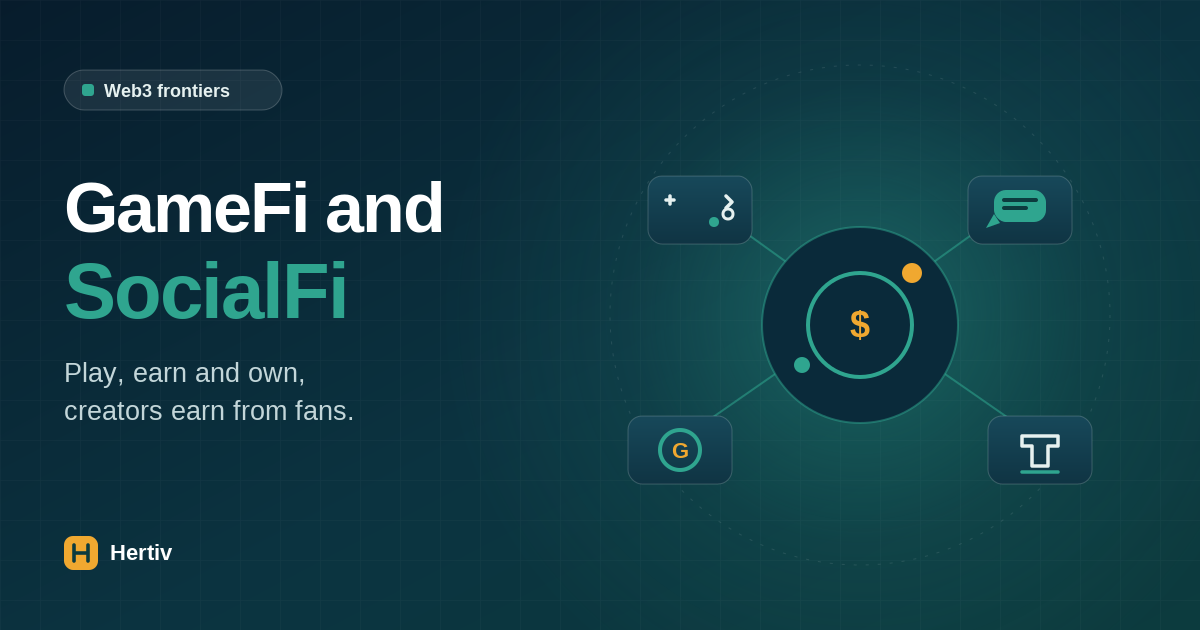
GameFi and SocialFi move blockchain beyond trading: games that pay players in tokens they own, and social apps where creators earn from fans. Here is how each works.
On this page
Short answer
GameFi and SocialFi are two frontiers of decentralised apps. GameFi turns in-game items and rewards into tokens that players own and can trade outside the game. SocialFi gives creators tokens, subscriptions or tips inside a social app, so earnings flow to the people who make the content instead of only to the platform. Both use blockchains, wallets and smart contracts, but they serve different users.
What are GameFi and SocialFi?
GameFi and SocialFi are decentralised apps built for play and for social life, rather than for trading or lending. GameFi is short for game finance: video games where in-game items, characters and rewards are tokens that players own and can trade. SocialFi is short for social finance: social apps where creators earn tokens, tips or subscription income directly from their audience.
Both are frontiers because they take blockchain tools into markets that decentralised finance never reached. A GameFi player is not a trader; they are someone who plays a game and happens to own what they win. A SocialFi user is not an investor; they are a creator or a fan who wants a closer link to the people they follow.
Under the surface they share the same building blocks: a wallet for identity and payments, tokens for value, smart contracts for rules, and a marketplace or feed where the value moves. What differs is the experience around those blocks, and who gets paid for it.
How does GameFi work?
GameFi works by recording in-game items and rewards as tokens on a blockchain, so the player owns them instead of renting them from the game company. A sword, a character or a plot of land becomes a token in the player's wallet, and the player can keep it, trade it or sell it on a marketplace.
| Model | How players earn | What they own |
|---|---|---|
| Play to earn | Tokens for quests and wins | Reward tokens, items |
| Asset ownership | Buying and trading items | Characters, land, gear |
| Move to earn | Tokens for physical activity | Reward tokens, gear |
| Guild play | Shared rewards, split by rules | Guild assets, shares |
| Marketplaces | Fees on trades and sales | Listings, storefronts |
| Tournaments | Prizes from entry pools | Prize tokens, trophies |
Smart contracts run the rules: how rewards are earned, how items can be bred or combined, and how trades settle. The game itself usually runs on normal servers, with only the ownership and trading parts on-chain. For the mechanics in more detail, how GameFi works explains the loop from play to payout.
How does SocialFi work?
SocialFi works by giving creators a way to earn from their audience without a platform taking most of the value. A creator can issue their own token, sell a subscription pass, or receive tips in tokens, and fans who hold the token get access to private posts, chats or early content.
The profile itself can also be decentralised. Instead of an account owned by one company, a creator's profile, followers and posts can live on a shared social graph that several apps can read. That means a creator can move between apps without losing their audience, and a fan can follow someone across apps with one identity.
Monetisation usually mixes several streams: token sales, subscription passes, tips, and a share of marketplace fees when fans trade creator tokens or collectibles. The common thread is that the creator sets the terms in a smart contract, and the platform cannot change the revenue split after the fact.
What makes them different from earlier decentralised apps?
Earlier decentralised apps were mostly built for finance: exchanges, lending and stablecoins. Their users were traders and investors who already understood wallets and gas fees. GameFi and SocialFi are built for people who may never have used a wallet before, which changes the design completely.
The first difference is the user. A player cares about the game, not the token; a fan cares about the creator, not the contract. If the wallet setup, the fees or the jargon get in the way, those users leave. Successful projects hide the blockchain parts behind familiar screens and only surface them when ownership or payment matters.
The second difference is the value. In finance apps, value comes from yields and price moves. In GameFi and SocialFi, value comes from play, status and belonging: a rare item, a creator's attention, a place in a community. That value is harder to price, and it fades fast if the game stops being fun or the creator stops posting.
Where do GameFi and SocialFi overlap?
GameFi and SocialFi overlap wherever a game is also a community. Many games have guilds, chats, fan art and streaming, and many social apps have games, quests and leaderboards. The line between a game with social features and a social app with game features is thin, and teams on both sides borrow from each other.
They share the same infrastructure: wallets for identity, tokens for rewards and access, and marketplaces where items and passes change hands. A creator token from a SocialFi app can be a prize in a game, and a rare game item can be a status symbol in a social feed.
They also share the same hard problems: keeping bots and cheaters out, making earnings fair for ordinary players and fans, and keeping the experience fun when token prices fall. Projects that treat the token as the product usually fade; projects that treat it as a tool for play and community tend to last longer.
Example (hypothetical): a small game studio adds SocialFi
Example (hypothetical): a small studio has a game with 5,000 regular players. It adds a creator pass: fans can buy a pass for 10 units that gives access to developer streams, early builds and a private chat. In the first season, 200 fans buy a pass, which is 200 times 10, or 2,000 units of income.
The studio also opens a marketplace where players trade in-game items. In the same season, players trade 8,000 units worth of items, and the studio takes a 5% fee, which is 400 units. Together the pass sales and the marketplace fee bring in 2,400 units.
The studio keeps the split simple: pass income funds the next season's content, and the marketplace fee pays for moderation. The important rule is that the pass is a membership, not an investment, and the studio says so in plain language before anyone buys.
What are the common mistakes?
The most common mistakes are promising earnings instead of fun, and treating a token launch as the product instead of the game or the community.
- Selling earnings, not play. If players join only to earn, they leave the moment earnings fall, and the game empties out.
- Token-first design. A game or social app that only works when the token price rises is a market, not a product.
- Ignoring bots. Bots farm rewards and crowd out real players and fans, so anti-bot checks belong in the design.
- Hidden fees. Gas fees and marketplace cuts that appear late in the flow drive new users away.
- No plan for a price fall. Rewards, passes and items should still make sense when token prices drop.
Teams that do this well start with a game people want to play or a creator people want to support, then add tokens where they genuinely help. If you are planning a decentralised app in this space, dApp development covers the wallet, contract and marketplace pieces.
Key takeaways
- GameFi turns in-game items and rewards into tokens players own and can trade
- SocialFi lets creators earn directly from fans through tokens, passes and tips
- Both use wallets, tokens and smart contracts, but serve players and fans, not traders
- The token should be a tool for play and community, not the product itself
- Design for fun first; earnings that depend on token prices will not last
Frequently asked questions
What is GameFi?
GameFi is short for game finance: video games where in-game items, characters and rewards are tokens on a blockchain that players own. Players can keep, trade or sell what they earn, and smart contracts run the rules for earning, breeding and trading items.
What is SocialFi?
SocialFi is short for social finance: social apps where creators earn tokens, tips or subscription income directly from their audience. A creator can issue a token, sell a pass for private content, and keep a larger share of earnings than on a traditional platform.
Are GameFi and SocialFi the same thing?
No. GameFi is built around play: games, items, quests and tournaments. SocialFi is built around creators and audiences: profiles, posts, passes and tips. They share wallets, tokens and marketplaces, and many products mix the two, but the core experience differs.
Do you need crypto to use GameFi or SocialFi?
Usually yes, at least a wallet and a small amount of the chain's token for fees. Some apps let new users start with an email login and handle the wallet behind the scenes, then let them take full control later. Check the fees before you start.
Can you lose money in GameFi or SocialFi?
Yes. Tokens and items can fall in value, a game can lose players, and a creator token is only worth what other fans will pay for it. Treat spending as payment for play or access, not as an investment, and never spend more than you can afford to lose.
What is a creator token?
A creator token is a token issued by a creator that fans can buy, hold or trade. Holding it can give access to private content, chats or early releases. Its value comes from demand among fans, not from any promise of returns, so it can rise and fall with the creator's audience.


