What Does a Fintech App Cost to Build in the UK?
A UK fintech app costs more than a standard app because of regulation, security and banking integrations. Here is what drives the price and how to plan it.
On this page
Short answer
A fintech app in the UK usually costs more than a standard consumer app because it must meet financial rules, protect money and data, and connect to banks and payment providers. The final price depends on features, security needs and how much of the build is regulated work.
What is a fintech app?
A fintech app is software that handles money: payments, banking, lending, investing or insurance. In the UK it may need to follow rules from the Financial Conduct Authority, the UK regulator for financial services, and it must protect customer funds and personal data.
Common types include payment apps, digital wallets, budgeting tools, lending apps and investment platforms. Each type has different rules and integrations, so the cost of one does not tell you the cost of another.
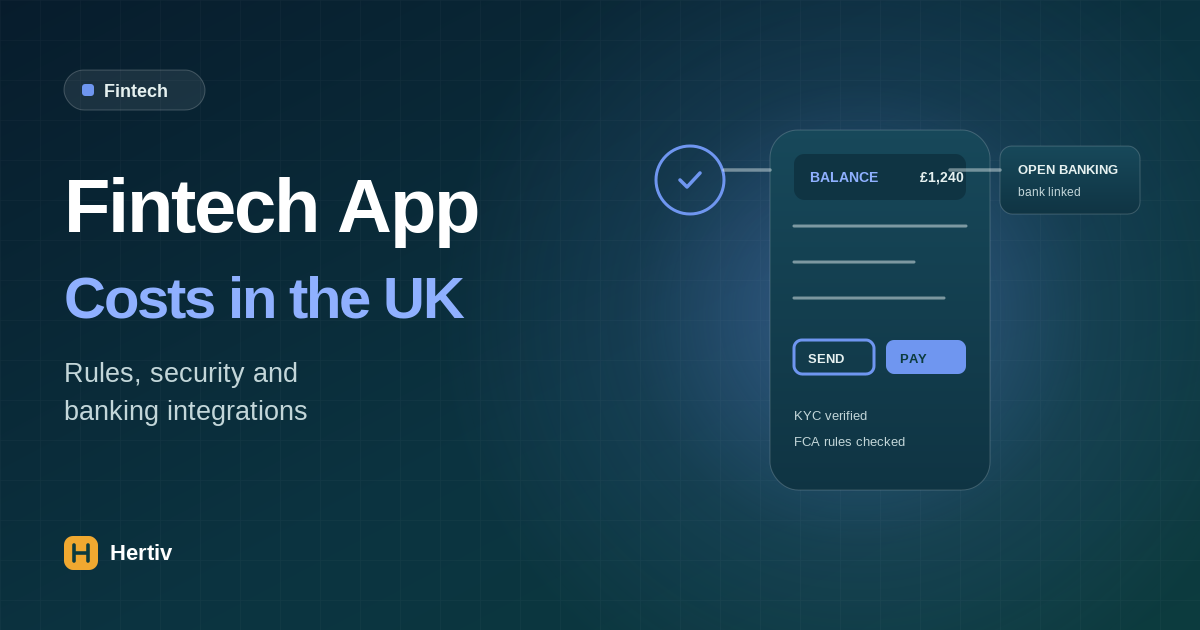
Most UK fintech apps start as a phone app with a simple account screen, a balance, and a way to move money. The harder work sits behind the screen: secure storage, fraud checks, audit logs and connections to banks. That hidden work is why two apps that look alike can cost very different amounts to build.
| App type | Key features | Main cost driver |
|---|---|---|
| Payments | Send money, cards, QR pay | Payment provider fees |
| Digital wallet | Balances, top-ups, transfers | Security and KYC checks |
| Lending | Applications, scoring, repayments | Credit checks and compliance |
| Investing | Portfolios, trading, reporting | Market data and regulation |
| Budgeting | Open banking, insights, alerts | Bank connections |
What drives the cost of a UK fintech app?
Four things drive most of the cost. The first is features: accounts, cards, payments, KYC identity checks, notifications and reporting each add build time. The second is security: encryption, fraud checks, audit logs and penetration testing are not optional when money moves.
The third is integrations. A UK app usually connects to a payment provider, a bank through open banking, and an identity-check service. Each connection needs testing and ongoing fees. The fourth is compliance work: documents, policies and testing that prove the app follows the rules.
A simple budgeting app with open banking is far cheaper than a lending app with credit scoring and FCA authorisation. Teams that price the whole build, including compliance, avoid the most common budget surprise.
Running costs add up too. Payment processing, KYC identity checks, hosting and security monitoring are monthly costs that continue after launch. Bank connections usually go through open banking APIs; our post on the use of APIs in fintech explains how these connections work and what they cost to run.
What UK rules change the build?
UK fintech apps must follow rules that change how they are built. If your app holds customer money or offers regulated services, you may need FCA authorisation or a partnership with an authorised firm. This process takes months and needs legal advice, so plan it before you build.
Open banking rules let customers share bank data with your app, but only with clear consent and strong security. Data protection law also applies: you must explain what data you collect, keep it safe, and delete it when asked.
Anti-money-laundering rules add identity checks, transaction monitoring and record keeping. These are features in the app, not paperwork: KYC checks at sign-up, limits on large transfers, and flags for unusual activity all need to be designed and tested.
How do you plan the build?
Plan the build in stages, with regulation first. A common plan is:
- Check the rules. Confirm with a lawyer whether you need authorisation or a partner firm.
- Define the first version. List the smallest set of features that proves the idea.
- Pick providers. Choose payment, KYC and banking providers before coding starts.
- Build the core. Build accounts, payments and security first, then extras.
- Test security. Run security tests and fix the findings before launch.
- Launch small. Release to a limited group and watch transactions closely.
Starting with a clear first version keeps the budget under control. If you are unsure how small to start, our guide to what an MVP is explains how to pick the smallest version worth building.
Example (hypothetical): a first-version payments app
A London startup plans a first-version payments app. The build is estimated at 1,500 hours of development at £80 an hour, which is 1,500 times 80, or £120,000. Design adds £10,000, and testing plus compliance checks add £15,000.
The total is £120,000 plus £10,000 plus £15,000, which is £145,000 for the first version. That figure does not include FCA advice, which the startup budgets separately at £20,000, or monthly provider fees.
The team keeps the first version small: sign-up with KYC, send and receive money, and a transaction list. Features such as cards, budgeting and business accounts wait for the second version, once real users prove the core works.
How can you keep the cost down?
The cheapest way to cut cost is to cut scope. A first version with three core features costs far less than one with ten, and it reaches users months sooner. Each feature you delay is money you do not spend until you know users want it.
It also helps to agree the first version in writing before the build starts, with a short list of features and a clear definition of done. When new ideas come up during the build, they go on a list for the second version instead of stretching the first one.
Use established providers instead of building your own payments, KYC or banking connections. A payment gateway or banking provider charges a fee, but building the same connection yourself takes months and adds security risk.
Choosing who builds the app also affects the price. An in-house team gives you control but costs more month to month, while an agency can start faster and bring fintech experience with it. Either way, ask for examples of regulated apps the team has shipped before, and check who will handle security testing.
Finally, test security early. A penetration test in the first build costs far less than fixing a breach after launch, and it is often required before a regulated partner will work with you.
Common mistakes
The most common mistake is starting the build before checking the rules. Teams that code for months and then learn they need authorisation lose time and money, and sometimes have to rebuild core features to meet the rules.
Other mistakes include underestimating security work, picking providers late, and adding too many features to the first version. Each of these pushes the launch back by months.
- Building before legal checks. Confirm authorisation needs before you code.
- Underestimating security. Budget for encryption, fraud checks and testing from day one.
- Too many features. Launch with the smallest set that proves the idea.
- Picking providers late. Choose payment and KYC providers before the build starts.
Key takeaways
- UK rules, security and banking integrations make fintech apps cost more.
- Features, security, integrations and compliance are the four main cost drivers.
- Check FCA authorisation needs with a lawyer before you start building.
- Launch a small first version, then add features once real users prove the core.
- Use established payment and KYC providers instead of building your own.
Frequently asked questions
Do I need FCA authorisation for a fintech app?
It depends on what the app does. Holding customer money or offering regulated services usually needs authorisation or a partnership with an authorised firm. Ask a UK financial lawyer early, because the process takes months.
How long does it take to build a fintech app in the UK?
A small first version usually takes four to seven months, including design, build and security testing. Authorisation, if needed, can add several more months, so start the legal process before or alongside the build.
What is the cheapest way to start a fintech app?
Start with the smallest first version that proves the idea, and use established providers for payments, KYC and banking connections. Cutting scope saves more than cutting developer rates, and it reaches users sooner.
What is open banking and why does it matter?
Open banking lets customers share their bank data with your app, with their consent and strong security. It powers budgeting, payments and account checks in UK fintech apps, but it adds integration and security work to the build.
How much do payment providers charge?
Provider fees vary by volume, payment type and contract, so check the vendor site for current pricing. Budget for both the build cost and the monthly fees, since provider costs continue for as long as the app runs.
Can I build a fintech app without a UK company?
You can build the software from anywhere, but serving UK customers usually needs a UK entity, UK data handling and the right regulatory setup. Get legal advice before launch, since the rules depend on what the app does.


