Crypto Wallet Development Use Cases That Matter
Crypto wallets do more than hold coins: they pay merchants, connect users to DeFi, store NFTs, sign in without passwords and manage company treasuries.
On this page
Short answer
Crypto wallet development use cases cover the real jobs a wallet does: paying merchants, connecting users to DeFi, storing NFTs, signing in without passwords and managing company funds. Each use case shapes the wallet differently, so the job should be chosen before the architecture.
What are crypto wallet development use cases?
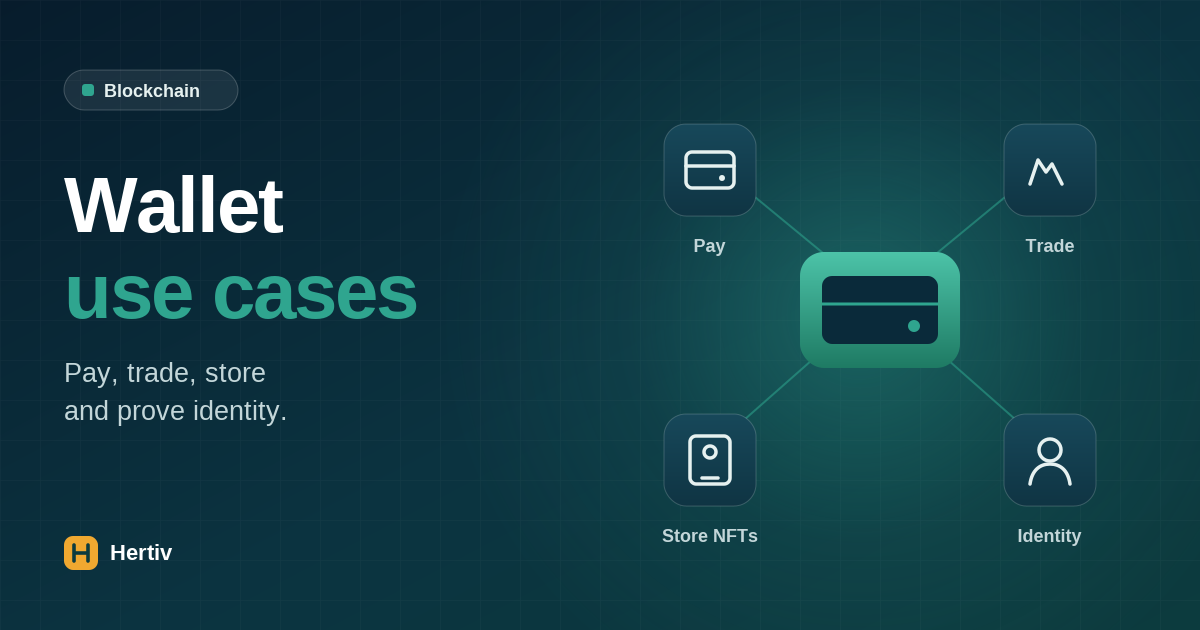
Crypto wallet development use cases are the real jobs a wallet does for its users: holding assets, paying for things, connecting to decentralised apps, trading tokens, storing NFTs and proving identity. A wallet is not one product. It is the front door to everything a person does on-chain, and each use case shapes what the wallet must do well.
The word wallet is slightly misleading. A crypto wallet does not hold coins the way a leather wallet holds cash. It holds the private keys that control assets recorded on a blockchain, and it signs transactions on the owner's behalf. The use case decides which keys, which chains and which features matter.
Teams build wallets for different users: consumers who want simple payments, traders who want fast swaps, businesses that want controlled spending, and developers who want a wallet inside their own app. The use case should be chosen before the architecture, because a payments wallet and a trading wallet are built differently.
Which crypto wallet use cases matter most?
The use cases that matter most are the ones people repeat weekly: paying, trading, earning and proving who they are. A wallet that does one of these well is more useful than a wallet that does all of them badly.
| Use case | What the user does | What the wallet must do well |
|---|---|---|
| Payments | Pays merchants and friends | Fast confirmation, low fees |
| DeFi access | Lends, borrows and swaps | Safe approvals, clear signing |
| NFT custody | Stores and shows collectibles | Media display, transfer safety |
| Gaming | Owns and trades game items | Quick sign-in, low friction |
| Identity | Signs in without passwords | Key recovery, privacy |
| Treasury | Manages company funds | Multi-signature, audit trail |
Pick one row to build first. A wallet that starts with payments and adds DeFi later will be simpler and safer than a wallet that tries to launch with every feature at once.
How do wallets support payments and everyday spending?
Wallets support payments by letting users send stablecoins or crypto to a merchant address, usually by scanning a code or tapping a saved contact. The wallet shows the amount, the fee and the recipient before the user signs, so the payment is confirmed in seconds rather than days.
For everyday spending, the details matter more than the technology. Users want to see the amount in their own currency, know the fee before they confirm, and recover access if they lose their phone. A wallet that hides fees until after confirmation, or that loses funds with a lost device, will not be used twice.
Stablecoins are the usual choice for payments, because their value does not swing between the time a price is quoted and the time the payment settles. The wallet's job is to make that payment feel as ordinary as tapping a card, while keeping the keys under the user's control.
What do wallets do for DeFi and token trading?
Wallets connect users to decentralised finance by signing transactions for lending, borrowing, swapping and staking. The user browses a DeFi app, the wallet asks them to approve a specific action, and the transaction runs on-chain once they sign.
The critical feature here is clear signing. A wallet should show exactly what is being approved: which token, how much, and to which contract. Unlimited approvals, where a contract can spend any amount of a token forever, are a common source of losses, and a good wallet warns about them or limits them by default.
Trading through a wallet also means the user holds their own assets instead of leaving them on an exchange. That is the point of self-custody, but it also means there is no support desk to reverse a mistake. Clear signing screens and sensible defaults are what keep self-custody safe in practice.
How do wallets handle NFTs, identity and gaming?
Wallets store NFTs by holding the keys that control the token, and they display the art, tickets or items the token represents. For a collector, the wallet is the gallery. For a game, the wallet is the inventory: items earned or bought in the game are tokens the player actually owns and can trade outside the game.
For identity, a wallet can sign a message to prove ownership of an address, which replaces a password for sign-in. This is useful for apps that want login without storing passwords, and for communities that gate access by token ownership. The wallet becomes the identity, so recovery matters: losing the keys means losing the identity.
Gaming wallets need low friction above all. A player should not approve a transaction for every small action, so gaming wallets often use session keys with limited permissions and spending caps. The design question is always how much convenience to trade for how much safety, and the answer should be written down before building.
Example (hypothetical): a retailer accepts stablecoin payments through a wallet
Example (hypothetical): a small retailer takes 200 card payments a month, averaging $50 each. That is $10,000 a month in sales. Card fees at 2.9% cost $290 a month, and settlement takes one to two days.
The retailer adds a wallet payment option for stablecoins. Customers scan a code at the till, confirm the amount in the wallet, and the payment settles in minutes. Each wallet payment costs about $0.30 in network fees, so 200 payments cost $60 a month.
The saving is $230 a month, or $2,760 over a year, plus faster settlement. The retailer keeps card payments as well, because most customers still prefer them, and treats the wallet option as a cheaper channel for the customers who already hold stablecoins.
What are the common mistakes?
The most common mistakes in crypto wallet development are unclear signing, no recovery plan, and building every feature at once.
- Unclear signing screens. If users cannot tell what they are approving, they will approve the wrong thing. Show token, amount and contract.
- No key recovery. A lost phone should not mean lost funds. Offer recovery through social recovery, multi-signature or a backup method.
- Unlimited approvals by default. Approving any amount forever is a loss waiting to happen. Limit approvals or warn clearly.
- Every feature at launch. Payments, DeFi, NFTs and gaming in one release is too much. Ship one use case well.
- Ignoring the fee display. Users need to see the fee in their own currency before they confirm, not after.
How to pick the first wallet use case to build
You pick the first wallet use case by finding the job your users already do, then building the smallest wallet that does that job safely.
- Name the user. A consumer, a trader, a gamer or a business treasurer will need a different wallet.
- Pick one job. Payments, DeFi access or NFT custody are each a full product. Choose one.
- Define the signing rules. Decide what the wallet shows before every signature, and what it refuses.
- Plan recovery first. Key recovery is not a later feature. Design it before the first release.
- Test with real users. Watch five people send a payment or approve a swap, and fix what confuses them.
Starting narrow is how a wallet earns trust. If you want background on the direction of the market, crypto wallet development trends covers what is changing.
Web3 wallet development covers the build.
For the service side, crypto wallet development is the place to start.
Key takeaways
- A wallet is the front door to on-chain activity, not just a place to hold coins
- Pick one use case to build first; a wallet that does one job well beats one that does five badly
- Clear signing screens are the security boundary: show token, amount and contract
- Key recovery must be designed before launch, not added later
- Stablecoins are the usual choice for payments because their value holds steady
Frequently asked questions
What is a crypto wallet used for?
A crypto wallet holds the private keys that control assets on a blockchain and signs transactions for the owner. Its main uses are payments, DeFi access, NFT storage, gaming items, password-free sign-in and company treasury management.
What is the difference between a custodial and a non-custodial wallet?
A custodial wallet is run by a company that holds the keys for the user, like a bank account. A non-custodial wallet leaves the keys with the user, who alone can sign transactions and who is responsible for recovery if access is lost.
Do crypto wallets hold the coins themselves?
No. The coins live on the blockchain. The wallet holds the private keys that prove ownership and allow the owner to move the assets. Losing the keys means losing access, even though the assets still exist on-chain.
What is the safest wallet use case to build first?
Payments is usually the safest first use case, because the flows are simple and well understood. DeFi and trading need more careful signing design, so they are better added once the payments wallet is proven.
How do wallets handle lost phones or keys?
Good wallets offer recovery through social recovery, multi-signature approval or a backup method set up in advance. A wallet with no recovery plan turns a lost phone into lost funds, so recovery should be designed before launch.
Can a wallet be built inside another app?
Yes. Embedded wallets let users sign in and transact inside an app without installing a separate wallet. The same rules apply: clear signing, limited approvals and a recovery plan must be built in from the start.


