8 Crypto Payment Gateway Companies Startups Can Shortlist
A crypto payment gateway lets a startup accept Bitcoin and stablecoins at checkout without holding crypto. Here are eight providers worth comparing.
On this page
Short answer
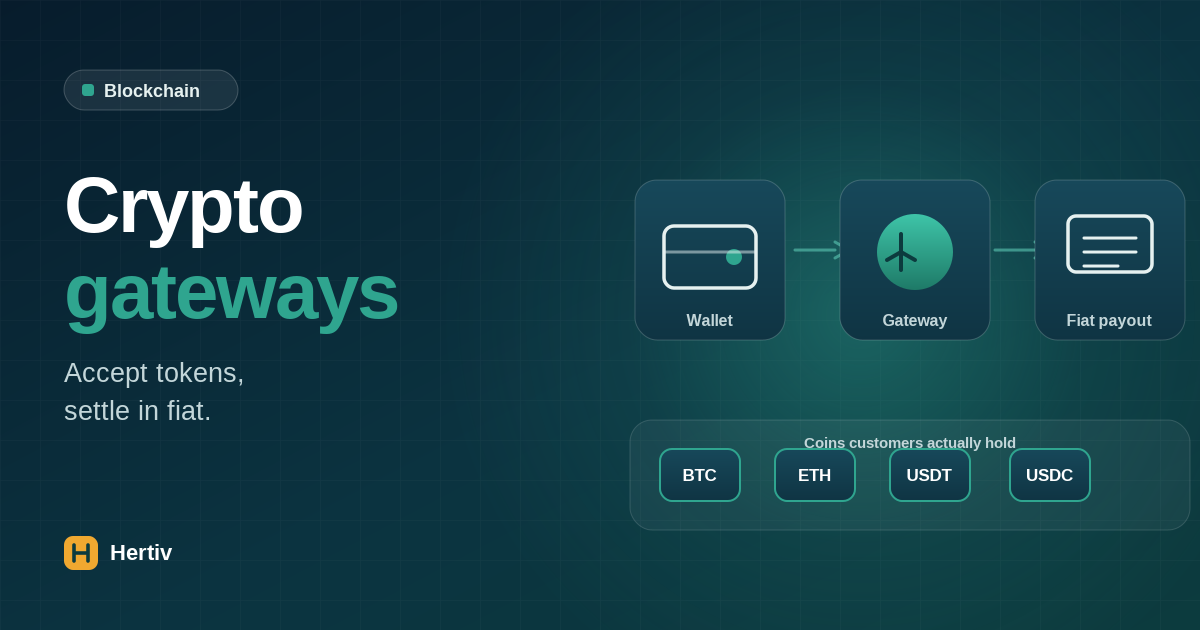
A crypto payment gateway lets a startup accept Bitcoin, stablecoins and other tokens at checkout, then settle in crypto or in fiat. The best choice depends on which coins your customers hold, whether you want fiat settlement, and what the full fee picture looks like.
Which crypto payment gateway companies should startups shortlist?
A crypto payment gateway lets a startup accept Bitcoin, stablecoins and other tokens at checkout, then settle in crypto or in fiat. The eight providers below cover the main choices for a small team: simple checkout, many coins, low fees, or regulated fiat payout.
Use this comparison to shortlist two or three, then test one with a small real payment before committing. Fees and coin support change often, so check the vendor site for current pricing.
| Provider | Coins and networks | Settlement | Best for |
|---|---|---|---|
| BitPay | Bitcoin, Ethereum, stablecoins | Crypto or fiat | Simple checkout |
| Coinbase Commerce | Bitcoin, Ethereum, stablecoins | Crypto or fiat | Coinbase users |
| NOWPayments | Many coins and tokens | Crypto or fiat | Low fees |
| CoinGate | Bitcoin, Ethereum, stablecoins | Crypto or fiat | Small shops |
| CoinPayments | Many altcoins | Crypto or fiat | Many coins |
| BVNK | Stablecoins first | Stablecoins or fiat | Stablecoin volume |
| Triple-A | Bitcoin, Ethereum, stablecoins | Fiat payout | Regulated payout |
| Helio | Solana, Ethereum, Bitcoin | Crypto or fiat | Solana checkout |
Pick the provider whose settlement matches how your business handles money. If you never want to hold crypto, a fiat-payout gateway removes that risk entirely.
BitPay and Coinbase Commerce
1. BitPay: best for simple Bitcoin and stablecoin checkout
BitPay is one of the longest-running crypto payment processors, and its checkout is built for merchants who want to accept Bitcoin and stablecoins without running their own wallet infrastructure. A customer pays from a wallet, BitPay confirms the payment on chain, and the merchant is settled in crypto or in fiat.
The setup is a hosted checkout page or a payment button, plus plugins for common store platforms. That makes it a good fit for a startup that wants crypto payments live in days rather than weeks, and that would rather pay a processing fee than build and maintain its own payment flow.
Pros:
- Long track record and wide store-platform support
- Fiat settlement so the merchant never holds crypto
- Simple hosted checkout with little code to write
Cons:
- Fewer coins supported than multi-coin gateways
- Fees apply on every payment, so volume costs add up
- Availability and payout options vary by country
2. Coinbase Commerce: best for businesses already using Coinbase
Coinbase Commerce is the merchant product from Coinbase, and it fits teams that already hold or trade crypto through Coinbase. Payments arrive in the merchant's Coinbase account, where they can be held as crypto or converted to fiat, and the checkout supports Bitcoin, Ethereum and popular stablecoins.
Integration is a hosted checkout or an API, and the dashboard shows each payment, its confirmation state and its settlement. For a startup that already uses Coinbase for treasury or trading, keeping payments in the same place reduces the number of accounts and reconciliations to manage.
Pros:
- Shares an account with the wider Coinbase platform
- Clear dashboard for payments and settlements
- Supports the most widely used coins and stablecoins
Cons:
- Less useful if the team does not use Coinbase elsewhere
- Conversion and payout options depend on the country
- Fewer altcoins than specialist multi-coin gateways
NOWPayments and CoinGate
3. NOWPayments: best for low fees and many coins
NOWPayments is a non-custodial gateway that supports a wide range of coins and tokens, with a fee that is lower than most hosted gateways. The merchant receives payments directly to its own wallet, which means the gateway never holds the funds, and the merchant keeps control of its keys.
The trade-off is that the merchant takes on more of the work: wallet setup, conversion and accounting all sit with the team rather than the provider. For a startup with someone comfortable managing wallets, that trade is often worth it for the lower fee and the wide coin choice.
Pros:
- Wide coin and token support
- Low processing fee and non-custodial setup
- Payments go straight to the merchant's wallet
Cons:
- Merchant handles wallets, conversion and accounting
- No hosted fiat settlement in the same way as custodial rivals
- Support and dashboard are thinner than larger providers
4. CoinGate: best for small shops that want fiat payout
CoinGate is a payment gateway aimed at smaller merchants, with a hosted checkout, store plugins and fiat payout in several currencies. A shop adds a payment button or plugin, a customer pays in Bitcoin, Ethereum or a stablecoin, and CoinGate converts and pays out in fiat on a set schedule.
The product is built for teams without a payments engineer: the dashboard covers invoices, refunds and payouts, and the plugin route needs little code. That makes it a practical choice for a small ecommerce store testing whether its customers will actually pay in crypto.
Pros:
- Store plugins that need little code
- Fiat payout for merchants that avoid holding crypto
- Dashboard covers invoices, refunds and payouts
Cons:
- Coin range is narrower than multi-coin gateways
- Payout currencies and timing depend on the country
- Fees vary by payment method, so check the vendor site
CoinPayments and BVNK
5. CoinPayments: best for accepting many altcoins
CoinPayments is one of the broadest multi-coin gateways, supporting a large number of coins and tokens through a hosted checkout, payment buttons and an API. A merchant that sells to crypto holders who pay in many different coins can accept them all through one integration instead of adding a gateway per coin.
The breadth is the point: niche coins that other gateways skip are often listed here. The merchant still needs a clear policy on which coins to accept, because supporting every coin adds reconciliation work and exposes the business to coins with thin liquidity.
Pros:
- Very wide coin and token support
- Hosted checkout, buttons and API options
- Useful for stores with a crypto-native audience
Cons:
- Wide coin choice adds reconciliation work
- Some supported coins have thin liquidity
- Interface and reporting feel dated next to newer rivals
6. BVNK: best for stablecoin settlement at scale
BVNK is a payments platform built around stablecoins, aimed at businesses that move larger volumes and want to settle in stablecoins or fiat across borders. It offers hosted checkout, payment links and APIs, plus accounts that hold stablecoins and convert them to fiat when the business needs it.
The product fits teams whose customers already pay in stablecoins, such as cross-border services and digital goods. A startup that only takes a few crypto payments a month will find simpler gateways cheaper, but a team settling stablecoin volume every week will value the accounts and conversion tools.
Pros:
- Stablecoin accounts with fiat conversion built in
- Built for larger and cross-border volumes
- Checkout, links and API in one platform
Cons:
- More platform than a small shop needs at first
- Onboarding and compliance checks take longer
- Less useful for Bitcoin-only checkout
Triple-A and Helio
7. Triple-A: best for regulated fiat payout
Triple-A is a licensed crypto payment gateway that settles merchants in fiat, with compliance and licensing in the markets where it operates. A customer pays in crypto, Triple-A converts it, and the merchant receives fiat in its bank account, which keeps the business clear of holding crypto on its balance sheet.
The licensed setup matters for teams that sell to regulated customers or operate in markets where an unlicensed gateway creates risk. The trade-off is a longer onboarding process, because the provider runs the identity and business checks its licences require before the first payment.
Pros:
- Licensed operation in the markets it serves
- Fiat settlement keeps crypto off the balance sheet
- Good fit for regulated or enterprise customers
Cons:
- Onboarding takes longer than simpler gateways
- Available countries are narrower than global rivals
- Fees and payout timing need checking on the vendor site
8. Helio: best for Solana-first checkout
Helio is a crypto payments platform built first for Solana, with support for Ethereum and Bitcoin as well. It offers checkout pages, payment links and plugins, and it is popular with teams that already run on Solana, such as NFT projects, token sales and Solana-native stores.
The Solana focus means fast, low-fee payments for customers who hold Solana-based tokens, and the checkout is designed for the wallets those customers already use. A team whose customers pay mainly in Bitcoin or Ethereum will get more from a gateway built around those networks instead.
Pros:
- Fast, low-fee Solana payments
- Checkout built for Solana wallets
- Payment links and plugins for quick setup
Cons:
- Less suited to Bitcoin- or Ethereum-first customers
- Smaller provider than the long-running gateways
- Feature set is narrower outside Solana
How to choose a crypto payment gateway
You choose a crypto payment gateway by matching settlement, coins, fees and compliance to how your business actually takes money, then testing one provider with real payments before rolling it out.
- Decide how you want to be paid. If you never want to hold crypto, shortlist only gateways with fiat settlement.
- List the coins your customers hold. Ask a few customers which coins they would pay with, and pick a gateway that covers them.
- Compare the full fee picture. Add the processing fee, conversion spread and payout fee together, and check the vendor site for current rates.
- Check availability in your country. Some gateways do not serve every market, and payout currencies vary by region.
- Test with a small real payment. Pay yourself, confirm the settlement lands, test a refund, and check the accounting records before going live.
Refunds deserve attention before launch. A crypto payment cannot be reversed by the network, so refunds are new transactions you send, which means you need a clear policy and a wallet with funds available. Crypto payment gateway development covers the integration work if you build a custom flow.
What are the common mistakes?
The most common mistakes are accepting coins nobody holds, ignoring the fee picture, and launching without a refund plan. Each is cheap to avoid early and expensive to fix after launch.
- Accepting every coin. Supporting coins your customers never use adds reconciliation work for no sales.
- Ignoring conversion costs. The processing fee is only part of the cost; conversion spreads and payout fees matter too.
- No refund plan. Crypto payments cannot be reversed, so refunds need a policy and a funded wallet.
- Holding crypto by accident. If the gateway settles in crypto and nobody converts it, the business holds a volatile asset.
- Skipping tax and accounting. Crypto income still needs records, and the rules vary by country.
- Choosing on fees alone. The cheapest gateway is a poor choice if it does not serve your country or settle the way you need.
Start with one gateway, one coin set and fiat settlement, then expand only when customers ask for more. Stablecoin payments explains why most merchants start with stablecoins.
Key takeaways
- A gateway accepts crypto at checkout and settles in crypto or in fiat
- Fiat settlement removes the need to hold volatile crypto on the balance sheet
- Compare the full fee picture: processing fee, conversion spread and payout fee
- Check country availability and payout currencies before you commit
- Test with a small real payment and a refund before going live
- Refunds are new transactions, so plan them before launch
Frequently asked questions
What is a crypto payment gateway?
A crypto payment gateway is a service that lets a business accept cryptocurrency at checkout. The customer pays from a wallet, the gateway confirms the payment on the blockchain, and the merchant is settled in crypto or in fiat, depending on what the merchant chose.
Do I need to hold crypto to accept crypto payments?
No. Most gateways offer fiat settlement, which converts the payment and pays the merchant in its local currency. The merchant never holds crypto, which removes price risk and keeps accounting simple, though conversion fees still apply.
Which coins should a startup accept first?
Start with Bitcoin and the most widely used stablecoins, such as USDT and USDC, because those are the coins most customers hold. Add other coins only when customers ask for them, since each extra coin adds reconciliation work.
How much does a crypto payment gateway cost?
Gateways charge a processing fee on each payment, plus conversion and payout costs in some cases. The rates vary by provider and by country, so check the vendor site for current pricing and add all three costs together before comparing.
Can customers get a refund for a crypto payment?
Yes, but a refund is a new transaction the merchant sends, not a reversal, because blockchain payments cannot be undone. The merchant needs a refund policy, a wallet with funds available, and a way to record the refund for accounting.
Is it legal for a startup to accept crypto payments?
In most markets it is legal, but the rules on taxes, accounting and licences vary by country. Some gateways are licensed in the markets they serve, which helps, but the merchant should still check local rules before accepting its first payment.


