How to Build a Tokenization Platform Like Liquefy
A Liquefy-style platform issues security tokens for high-value property. Learn the dual-company structure, the compliance checks and the build steps.
On this page
Short answer
A tokenization platform like Liquefy issues security tokens backed by high-value real estate, using a white-label issuance platform, a dual-company legal structure and a compliance protocol that checks every investor and transfer. Building one means setting up the legal structure, the issuance and register system, the investor checks and a controlled secondary market.
What is a tokenization platform like Liquefy?
A tokenization platform like Liquefy is a white-label system that lets property owners issue security tokens backed by high-value real estate. Liquefy, a Hong Kong-based platform founded in 2018, provides the technology for owners to create and distribute security tokens that follow local rules, with a compliance protocol covering more than 50 jurisdictions.
The Liquefy model differs from retail fractional platforms in who it serves. Instead of selling $50 tokens to thousands of small investors, it works with professional investors and large single assets, such as a hotel or a commercial building. Its best-known early project tokenized about 49% of a luxury hotel in London's Mayfair district, valued at around $600 million.
For a team building a similar platform, the lesson is that the product is the issuance and compliance system, not a marketplace for small buyers. The platform must handle legal structuring, investor checks, a register of members and controlled secondary trading, all for assets where one deal can be worth tens of millions of dollars.
How does the Liquefy model differ from retail fractional platforms?
The Liquefy model and the retail fractional model solve different problems, and the table below shows the main differences. A team that copies the wrong model for its market will build the wrong product.
| Feature | Liquefy-style | Retail fractional (RealT-style) |
|---|---|---|
| Typical asset | Single high-value property or fund | Many small rental houses |
| Typical investor | Professional or accredited investors | Small investors, from about $50 |
| Legal structure | Dual-company structure with an offshore issuer | One company per property |
| Trading | Controlled trading among verified investors | Open marketplace for verified holders |
| Income | Capital gain and fund distributions | Regular rental income in stablecoins |
The investor type drives most of the design. Professional investors expect detailed documents, audited accounts and a clear exit, while small investors expect a simple app and a low minimum. A platform built for one group will feel wrong to the other, so the choice of investor type should be made before any code is written.
The asset type matters too. A single hotel or office building needs one large, careful deal with lawyers, valuers and auditors. A portfolio of small rental houses needs repeatable processes that work hundreds of times. The Liquefy model fits the first case, where each deal is large and few in number.
What parts does a Liquefy-style platform need?
A Liquefy-style platform needs five parts that work together, and the compliance parts are as large as the software parts. The table below lists each part and what it does.
| Part | What it does |
|---|---|
| Issuance system | Creates security tokens and links them to the asset |
| Compliance protocol | Checks investors, jurisdictions and transfer rules |
| Register of members | Records who owns each token, on-chain |
| Custody and settlement | Holds assets and settles trades safely |
| Secondary trading | Controlled trading among verified investors |
The register of members is the heart of the platform. Liquefy built its system on a digital register recorded on the blockchain, so every transaction is hashed and recorded, and ownership is clear at any moment. A platform without a reliable register cannot prove who owns what, and that is a fatal gap for a security token.
Custody is the second hard part. The property or the fund interests must be held by a trusted custodian, and the token must be linked to that custody in a way a court would accept. A token that points to an asset nobody controls is just a receipt for nothing.
How do you build one, step by step?
Building a Liquefy-style platform follows a different order from a retail platform, because the legal structure comes first and the investor base is small. The steps below keep the build on track.
- Choose the asset and the investor type. Pick one high-value property or fund, and decide whether investors will be professional, accredited or retail.
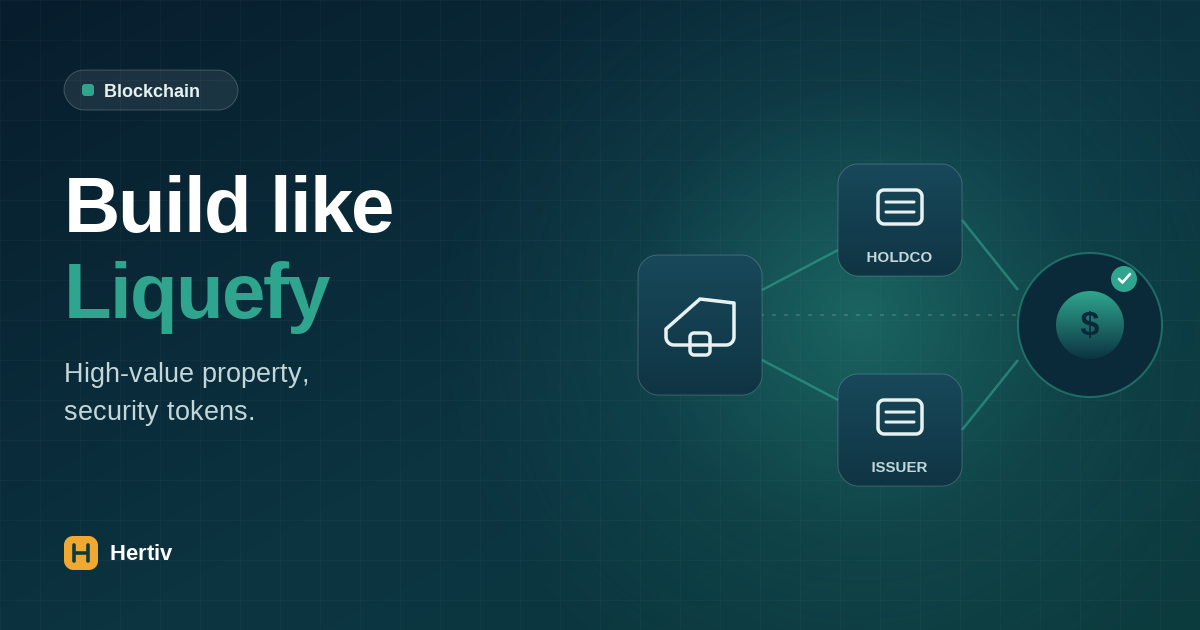
- Design the legal structure. For a cross-border deal, this often means a dual-company structure: one company holds the property, and another issues the tokens.
- Build the compliance protocol. Map the rules of each jurisdiction involved, set the investor checks, and write the transfer rules into the token contract.
- Build the issuance and register system. Create the tokens, link them to the register of members, and test the full issue and transfer flow with lawyers watching.
- Arrange custody and settlement. Appoint a custodian, agree how trades settle, and test a full trade from order to settlement.
- Launch with one asset, then add more. Prove the full cycle on the first property before taking on a second, and publish the results to the next investors.
The legal structure usually takes the longest, because a cross-border deal touches the rules of two or more countries. Teams that start with the software and add the legal work later often find they must rebuild the token contract to fit the rules.
How does compliance work across jurisdictions?
Compliance across jurisdictions is the hardest part of a Liquefy-style platform, because each country has its own rules for who can buy a security token and how it can be traded. Liquefy's answer was a compliance protocol covering more than 50 jurisdictions, so the same platform could check an investor in Hong Kong, Singapore or the Gulf against the right local rules.
In practice, the protocol works as a set of checks before any transfer. The platform checks the investor's identity, whether they qualify as a professional investor, whether their country allows the sale, and whether the token's own rules allow the transfer. A transfer that fails any check is blocked, and the block is recorded.
A team building a similar platform should start with the smallest set of jurisdictions it truly needs. Covering two countries well is better than claiming to cover fifty and checking none of them properly. Each new jurisdiction adds lawyers, documents and ongoing monitoring, so the list should grow only when a real deal needs it.
Example (hypothetical): tokenizing a share of a hotel
Example (hypothetical): a team tokenizes 49% of a hotel valued at $60 million. The tokenized share is worth $29.4 million, and the team issues 29,400 tokens at $1,000 each. Only professional investors can buy, and each must pass identity and suitability checks before the sale.
The hotel earns $2.4 million of net income a year. The tokenized 49% share of that income is $1,176,000 a year, which works out at $40 per token a year. On a $1,000 token that is a 4% annual return from income alone, before any change in the value of the hotel.
The example also shows why the legal structure matters. The hotel is held by one company and the tokens are issued by another, so a dispute about the hotel does not directly reach the token issuer. If the hotel is sold, token holders receive 49% of the sale price, less costs, in proportion to the tokens they hold.
What are the common mistakes?
The most common mistakes in a Liquefy-style platform are copying a retail model, promising liquidity that does not exist, and treating compliance as a checkbox. The list below covers the ones that hurt most.
- Copying a retail fractional model. A platform built for $50 buyers will not satisfy professional investors, who expect documents, audits and a clear exit.
- Promising easy secondary trading. Security tokens trade slowly and only among verified investors, so a platform that promises instant liquidity will disappoint holders.
- Covering too many jurisdictions at once. Each new country adds legal work, and a thin protocol that checks nothing properly is worse than a narrow one that works.
- Weak custody links. A token that is not clearly linked to a custodied asset is hard to defend in a dispute, and professional investors will walk away.
- No exit plan. Holders need a clear rule for how and when the asset is sold, and who decides, before they buy.
A simple test helps: would a professional investor's lawyer accept the documents, the custody and the register without changes? If the answer is no, the platform is not ready for its first large deal.
Key takeaways
- A Liquefy-style platform issues security tokens for high-value property, aimed at professional investors
- The model uses a dual-company structure, a compliance protocol and a blockchain register of members
- Each deal is large and few in number, unlike retail fractional platforms built for many small buyers
- Compliance must be checked per jurisdiction, per investor and per transfer
- Custody and a clear exit plan matter more to professional investors than a slick app
Frequently asked questions
What is Liquefy?
Liquefy is a Hong Kong-based platform founded in 2018 that provides white-label technology for issuing security tokens backed by real estate. It offers issuance, compliance checks, a register of members and controlled secondary trading for property owners and developers.
How is Liquefy different from RealT?
Liquefy serves professional investors and large single assets, such as hotels, while RealT sells small tokens in rental houses to many small investors. The Liquefy model is built around large, careful deals; the RealT model is built around many small, repeatable ones.
What is a dual-SPV structure?
A dual-SPV structure uses two companies: one holds the property and another issues the tokens. This separates the asset from the issuer, which helps with cross-border rules and protects token holders if one company has a dispute.
Who can buy these tokens?
Usually only professional or accredited investors, because the tokens are securities. Each buyer must pass identity and suitability checks, and the rules depend on the buyer's country and the platform's compliance protocol.
Can the tokens be traded?
Trading is possible but limited. Tokens can usually only change hands among verified investors, often over the counter, and the platform must check every transfer against the rules of the relevant jurisdictions.
What does white-label mean here?
White-label means the platform provides the technology under the property owner's own brand. The owner runs the offer and the investor relationships, while the platform supplies the issuance, compliance and register systems behind the scenes.


