Blockchain Property Management Software: How It Works
Blockchain property management software records rent, deposits and repairs on a shared ledger tenants and owners can check. What it changes and what it does not.
On this page
Short answer
Blockchain property management software runs rent collection, deposits, maintenance and owner statements on a shared ledger that tenants, managers and owners can all read. Rent arrives through smart contracts, deposits sit in escrow-style wallets, and every repair has a timestamped record. It cuts disputes about what was paid and when, but it does not replace the people who fix things, inspect homes or talk to tenants.
What is blockchain property management software?
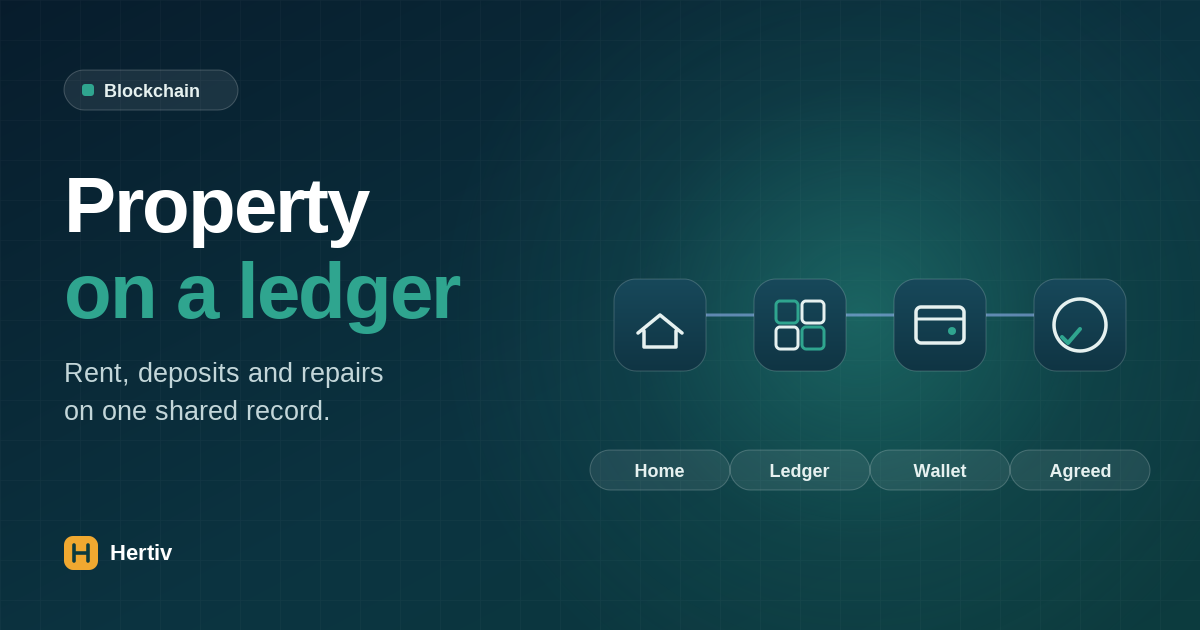
Blockchain property management software is property management software that records its key events on a shared ledger instead of only in one company's database. Rent payments, deposits, maintenance requests and owner statements are written to the ledger, where tenants, managers and owners can each check them.
The ledger does not change what property management is. Someone still finds tenants, inspects homes and arranges repairs. What changes is the record: instead of each side keeping its own version of what happened, everyone reads the same one, and past entries cannot be quietly rewritten. Blockchain in real estate is the wider story, and property management is one of its most practical uses.
| Task | Usual way | Blockchain way |
|---|---|---|
| Rent collection | Bank transfer, then a receipt | Smart contract takes rent on the due date |
| Deposit | Held in the manager's account | Held in an escrow-style wallet |
| Maintenance | Phone call and paper trail | Request, quote and sign-off on the ledger |
| Owner statements | Monthly report from the manager | Owner reads the same ledger live |
| Disputes | Each side checks its own records | Both sides read the same record |
How do rent and deposits work on a ledger?
Rent is usually paid in normal money through a smart contract that runs on the due date. The tenant pays as usual, the contract records the payment and the time, and the money moves to the owner minus the agreed fee. If the payment is late, the contract sends the reminder the tenancy agreement already allows, and the late fee is calculated the same way for everyone.
Deposits sit in an escrow-style wallet that no single side controls alone. The deposit is released when both sides agree, or when the rules in the agreement are met, such as the end of the tenancy with no damage claim. Neither the manager nor the tenant can move it on their own.
The point is not the currency. Most of these systems still settle in normal money, and the ledger is there to record the payment, not to change how the tenant pays.
How does maintenance work on a ledger?
A maintenance request starts the same way it always has: the tenant reports the problem. The difference is the trail. The request, the contractor's quote, the approval and the completion photo are each recorded with a time, so anyone can see what was agreed and when it was done.
That trail helps in the two places maintenance usually goes wrong. First, nobody can claim a repair was reported months ago when the record shows it was reported last week. Second, the owner can see the quote and the photo before approving payment, instead of taking the manager's word for it.
Approval still needs a person. A smart contract can release payment when the work is marked complete, but a person must check that the work is actually done, because a photo can hide a bad repair. Cloud property management software handles the same workflow without a ledger, so the choice is about the shared record, not about the features.
What changes for owners and tenants?
For owners, the change is visibility. Instead of waiting for a monthly statement, an owner can read the ledger and see rent received, fees taken and repairs approved, as they happen. That makes it easier to spot a problem early, such as rent that is late three months in a row.
For tenants, the change is proof. A tenant can show the record of every payment made and every repair reported, without asking the manager for a copy. That matters most when a deposit is disputed at the end of a tenancy, because the record both sides read is the same one.
For managers, the change is less arguing. When the record is shared, the conversation starts from what happened, not from whose spreadsheet is right. Over a year, that saves hours of back-and-forth on the same few questions: was the rent paid, when was the repair reported, and what did the owner approve.
What should you check before choosing one?
First, check what is actually on the ledger and what still lives in the company's own database. Some products record only the payment, and the rest of the work happens in a normal system. That is fine, as long as you know which parts you are trusting the ledger for. The features that matter in property management software are the same either way, so compare the feature list before the ledger.
Second, check the money rules. How are deposits held, who can release them, and what happens if the software company closes? A deposit held in a wallet you control is different from a deposit held in the vendor's account.
Third, check the law where the property sits. Deposit protection, tenancy rules and data rules differ by place, and a ledger does not make a tenancy legal. If the vendor cannot explain how it fits local rules, do not buy it.
Example (hypothetical): a manager with 60 units
A manager looks after 60 flats at 1,200 dollars a month each, which is 72,000 dollars of rent a month. Nine tenants pay late most months, and the manager spends a morning each month chasing them and answering the same question: did you get my payment?
After moving rent to smart contracts with automatic receipts, late payments fall from nine a month to three, because tenants get a reminder before the due date and a receipt the moment they pay. Deposit disputes fall from twelve a year to two, because both sides read the same payment and repair record at the end of the tenancy.
The manager still spends time on repairs and inspections, which is the real work. What the ledger removes is the arguing about payments, which was about a day a month of phone calls and emails.
What are the common mistakes?
The most common mistake is buying the ledger and keeping the old habits. If requests still arrive by phone and are written up days later, the ledger records a late version of the truth, and the shared record is no better than the old spreadsheet.
Other mistakes follow. Teams put personal data on a ledger that cannot be deleted, which clashes with privacy rules. They promise tenants that a smart contract will handle evictions, which it cannot and should not. Or they choose a product without checking who holds the deposits.
A ledger is a record, not a manager. It works when the work is recorded as it happens, the money rules are clear, and a person still checks the repairs.
Key takeaways
- One shared record replaces three versions of the truth
- Rent, deposits and repairs are timestamped
- Owners see rent and repairs as they happen
- Check deposit rules and local law first
- A ledger records work; it does not do it
Frequently asked questions
Does blockchain property management use crypto?
Usually not for the rent itself. Most systems settle in normal money and use the ledger to record the payment, not to change how the tenant pays. If a product asks tenants to pay in crypto, check the local rules first, because that is a different product.
Who can read the ledger?
Tenants see their own payments and requests, owners see their own properties, and managers see what they manage. Personal data should stay off the shared ledger or be stored in a way that can be removed, because a ledger entry cannot easily be deleted.
What happens to deposits on a ledger?
The deposit sits in an escrow-style wallet that no single side controls alone. It is released when both sides agree or when the rules in the tenancy agreement are met. Check who holds the wallet before signing up.
Does it work for small portfolios?
Yes, if the manager already records payments and repairs carefully. A manager with ten units gets the same shared record as one with a thousand, but the setup cost only pays off if the records are kept up to date.
Can a smart contract evict a tenant?
No. Eviction is a legal process that needs a court and a person, and no software can replace that. A smart contract can record payments and send reminders, but it cannot end a tenancy or change the locks.
How is this different from normal property software?
Normal software keeps the record in one company's database, so each side has its own version. Blockchain software writes key events to a shared ledger that tenants, managers and owners can all read, so disputes start from the same record.


